
Last updated November 24, 2026
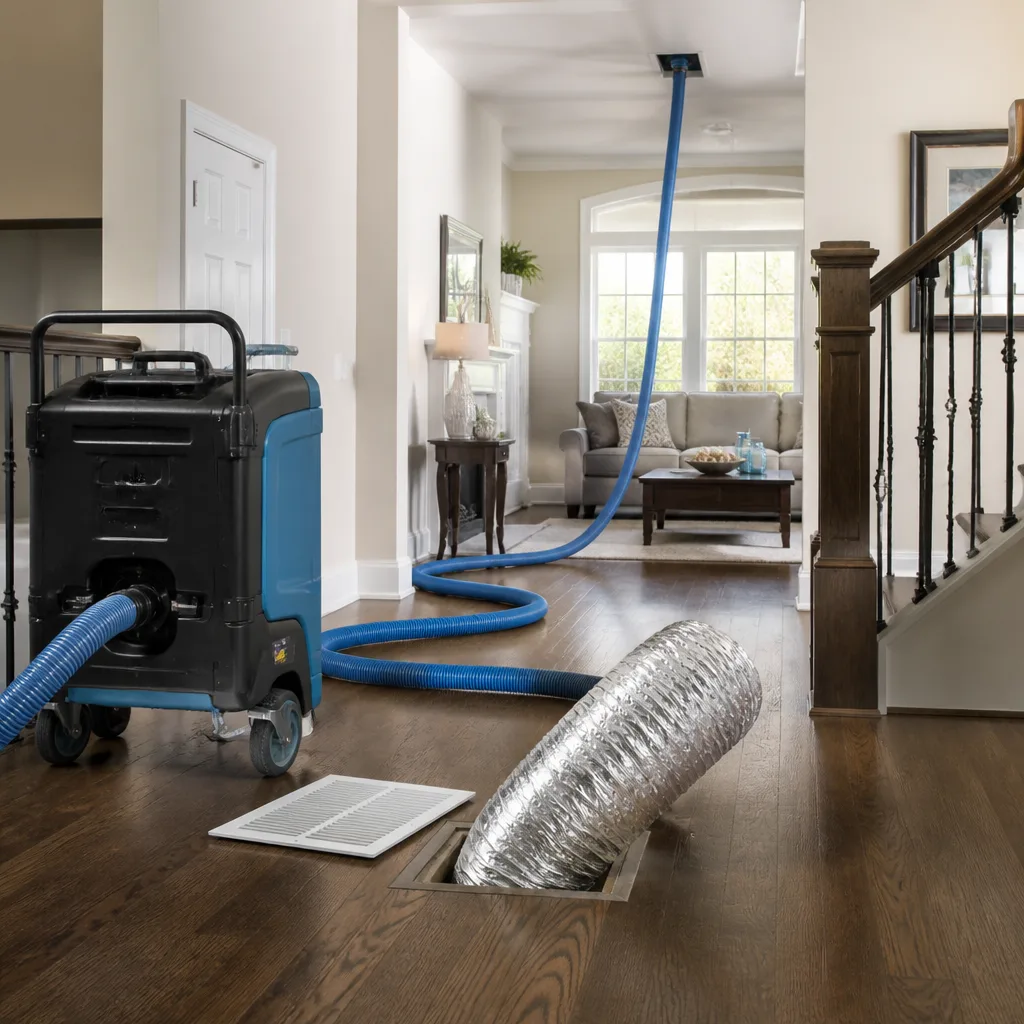 Whole-home duct cleaning
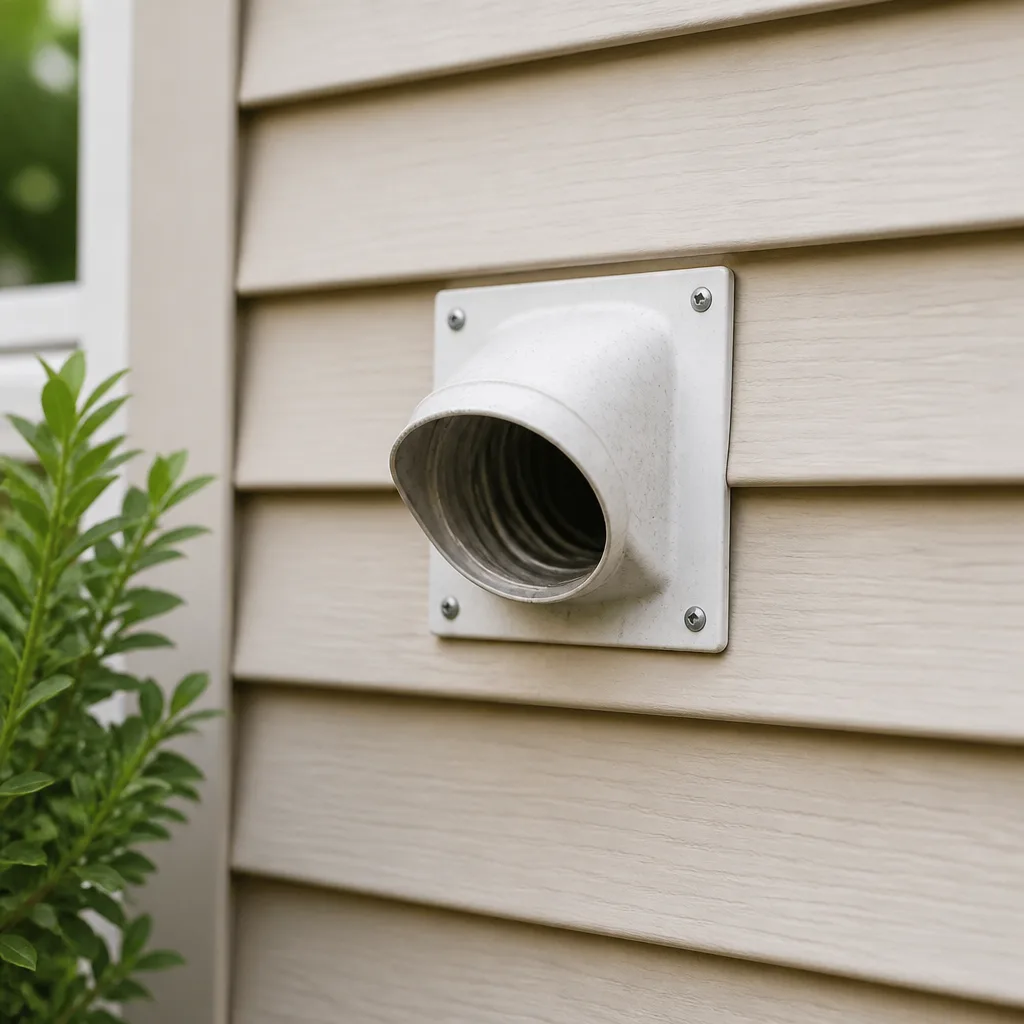 Dryer vent cleaning
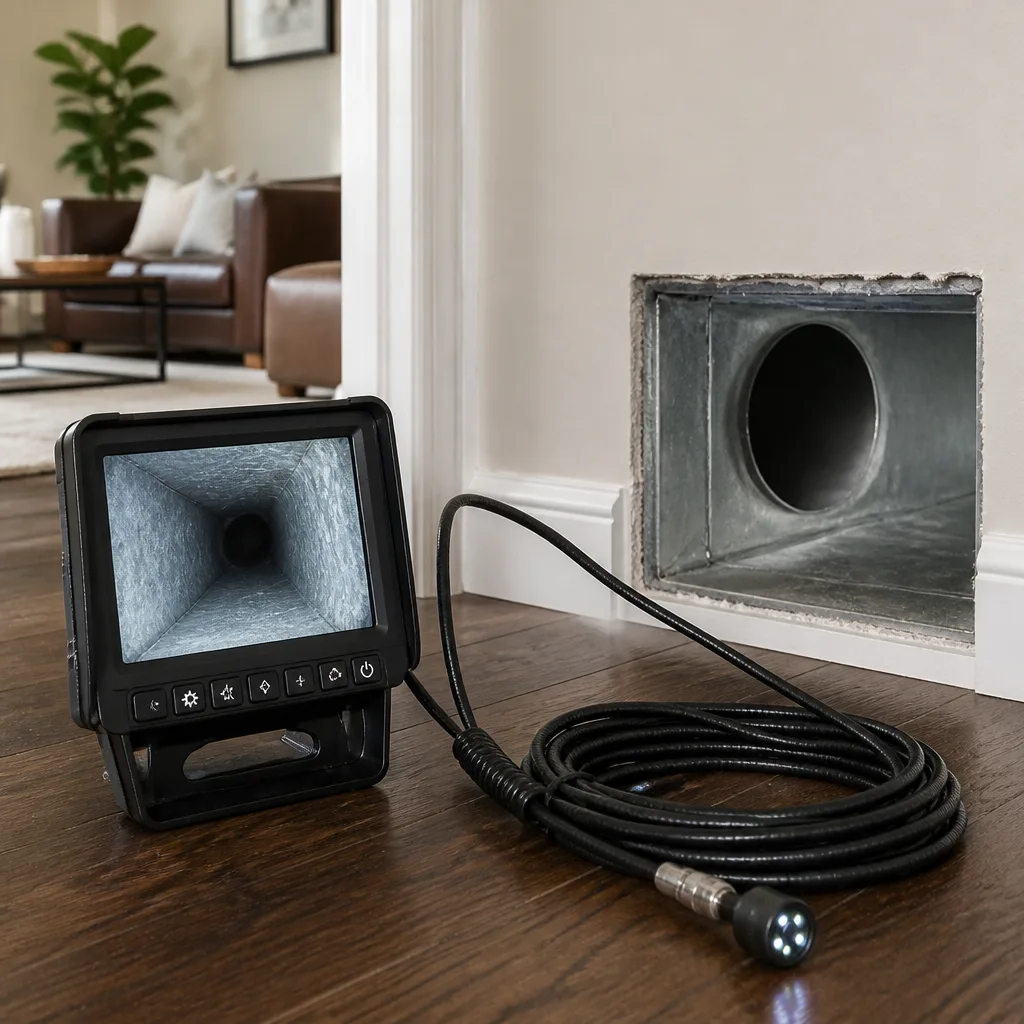 Camera inspection
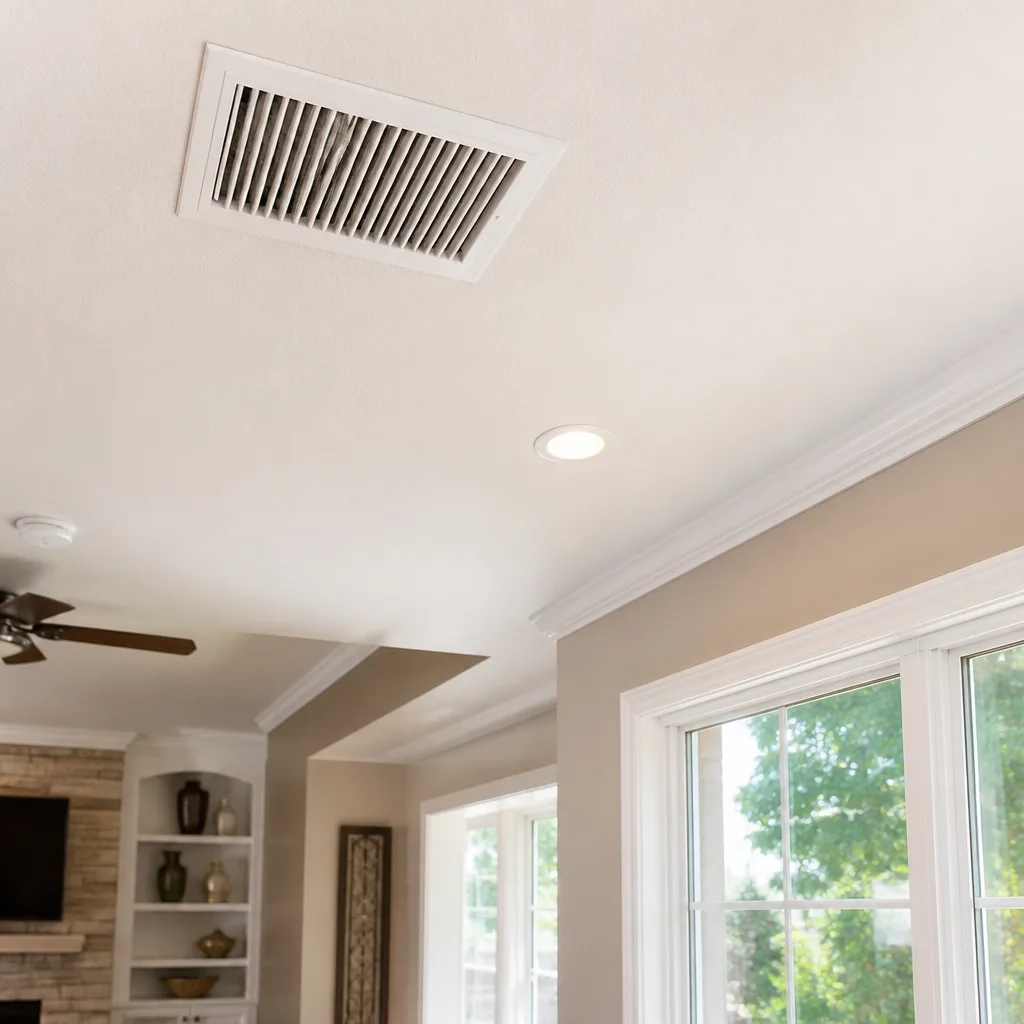 Sanitizing & deodorizing
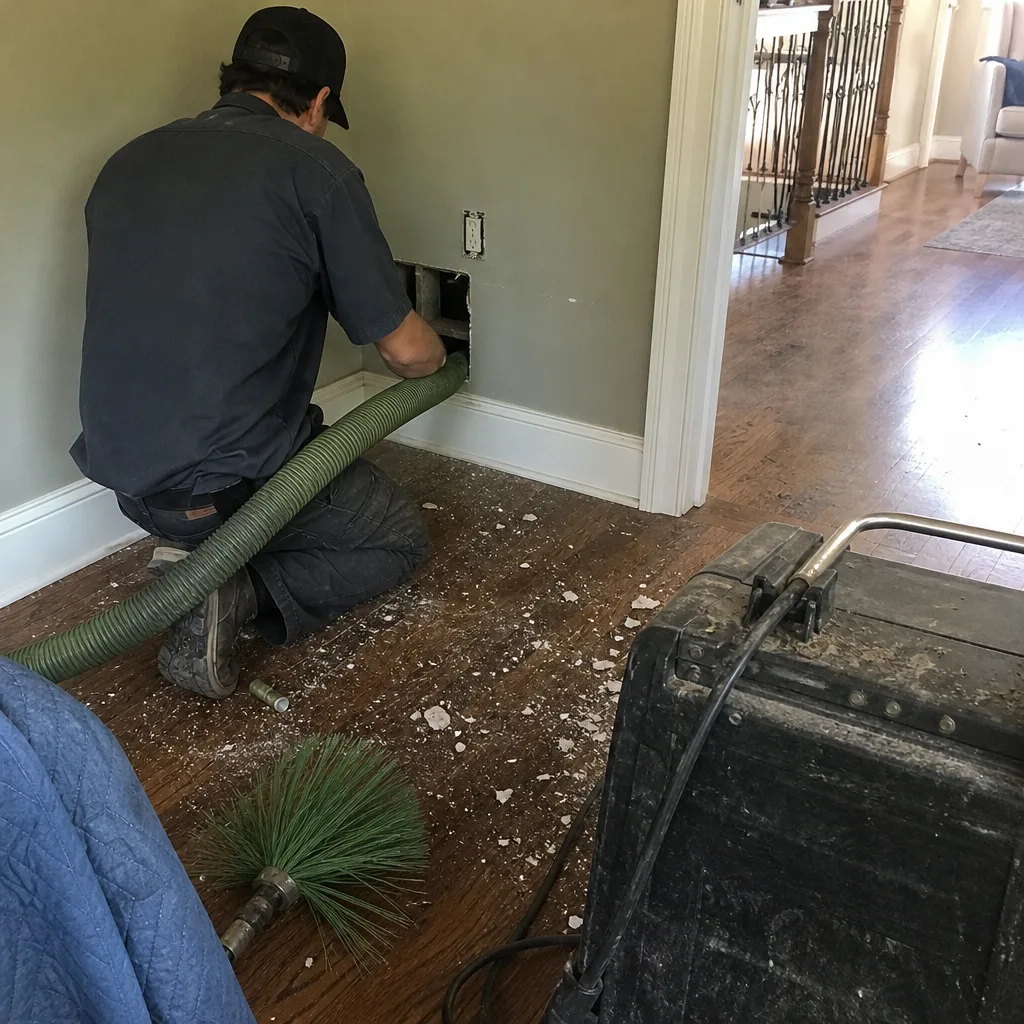
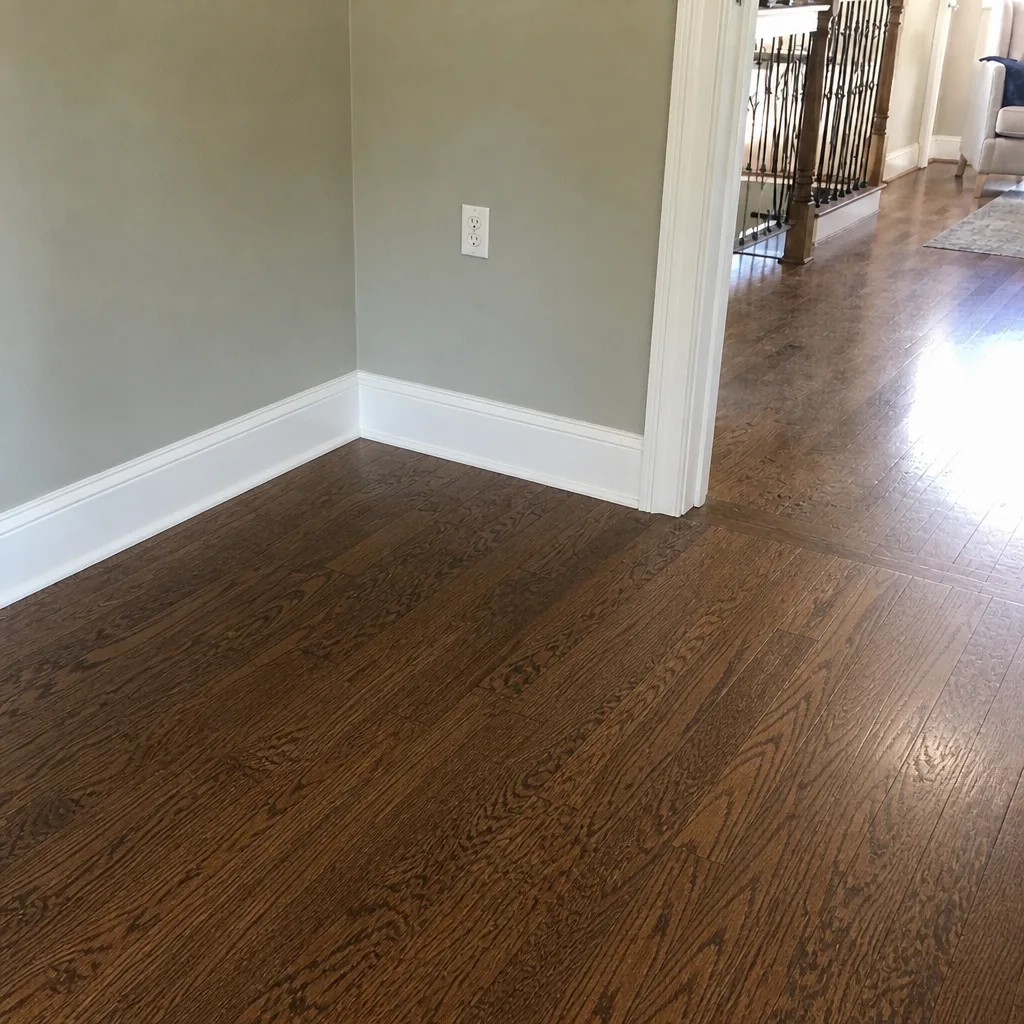
Whole-system duct and dryer vent check with before-and-after photos - you see exactly what came out of your vents
That "$99 whole-house special" is a bait ad - the real number appears once they are in your hallway, or the "clean" is a shop-vac at the register. We photograph the inside of your ducts before and after instead.
Air Duct Cleaning Warning Signs: A Ballantyne Homeowner’s Reference Guide
Most homeowners wait for something dramatic before they call anyone about their ducts. A collapse. A smell they can’t track down. A visible plume of dust from a register. In our experience, the real warning signs are far quieter than that, and they show up as a pattern rather than a single event. A register that resoils in two days. A five-minute smell at startup that fades. A cabinet door that opens onto a drain pan you’d rather not look at twice. Any one of these on its own is easy to explain away. Three of them together is a system telling you something. This guide walks through the specific, mundane observations that actually point to duct contamination in a Ballantyne home, how to test for them yourself, and where the line sits between a cleaning and something more involved.
Quick Answer
The clearest warning signs that a Ballantyne home needs professional duct cleaning are rapid register resoiling (dust returning within 48 hours to a week), a musty or sweet odor in the first five minutes of a heating or cooling cycle, visible dust or biological growth at the air handler cabinet, allergy symptoms that track HVAC runtime rather than pollen season, and uneven airflow between rooms. Two or more of these together usually means the duct interior is acting as a source of contamination, not just a passageway. A professional assessment is the only way to confirm what’s actually inside the system.
Styles & brands we work with
- Whole-home duct cleaning
- Dryer vent cleaning
- Camera inspection
- Sanitizing & deodorizing
Table of Contents
- The First-Run Smell Test: What Each Odor Tells You
- The 48-Hour and 7-Day Register Resoiling Tests
- Reading the Air Handler Cabinet Without Opening a Duct
- Allergy Symptoms That Track HVAC Runtime, Not Season
- Mold Versus General Debris: Why the Distinction Matters
- How Ballantyne’s Climate Shapes Duct Problems
- Six More Warning Signs Worth Writing Down
- What a Professional Assessment Actually Involves
The First-Run Smell Test: What Each Odor Tells You
When your system kicks on after sitting idle for a few hours, the first air that comes out of the registers is the most concentrated sample you’ll ever get. It’s duct air that’s been sitting against duct surfaces, in the plenum, and across the coil for hours. That first wave carries information about what’s growing or accumulating in the system, and the character of the smell narrows down the cause faster than almost anything else you can observe as a homeowner. Pay attention to the first five minutes, not the tenth. By then the system has flushed itself with fresh air and the signal is gone.
Here’s how to interpret what you smell:
- Musty, damp, or like a basement or wet towel. This is the classic microbial signature. It suggests moisture is collecting somewhere in the system (often the evaporator coil, drain pan, or interior duct lining) and that biological growth is present. Microbial growth in a forced-air system is the reason air quality and sanitizing exists as a distinct service from plain mechanical cleaning.
- Burning dust, like a heater running for the first cold snap of the year. This is usually normal. Dust that settled on the heat exchanger during the off-season burns off within the first cycle or two. If it persists past the first week of the heating season, the system is likely pulling more dust than it should, or the filter isn’t doing its job.
- Burning plastic or a hot electrical smell. Never ignore this. It points to an electrical or mechanical problem, not contamination. Turn the system off at the thermostat and have an HVAC professional inspect it before running it again.
- A faint sweetness, or a smell like old urine or a rodent nest. Sweet or animal-like odors in a duct system often trace back to rodent activity. Rodents shed hair, droppings, and eventually decompose, and their nesting material gets pulled into the supply side. This is a contaminant removal job, not a routine cleaning, and it’s one of the cases where we route through Abatement Technologies containment products to keep what we remove from spreading elsewhere in the house.
- Chemical, paint, or construction dust smell. Common in Ballantyne homes that have recently been renovated. Fine drywall dust and paint solvents settle into duct interiors during construction and get recirculated for months. New-build and post-renovation homes are a frequent starting point for us.
If you do the smell test at every season change, you’ll build a baseline. That baseline is worth more than any single reading, because it lets you spot a change rather than guess at one.
The 48-Hour and 7-Day Register Resoiling Tests
This is the single most useful thing a Ballantyne homeowner can do without calling anyone. A clean, healthy duct system delivers air that’s been filtered at the air handler. It does not redistribute enough particulate to recoating a surface in two days. If your registers resoil that fast, the interior of the system is shedding or carrying dust, which means the ducts are acting as an active source, not a passive channel.
Here’s the test, done properly:
- Pick three registers in different parts of the house. Ideally one in a bedroom, one in a high-traffic living area, and one in a room you rarely use. Comparing rooms helps you separate a system problem from a room problem.
- Wipe each grille clean with a dry white cloth or paper towel. No cleaner, no furniture polish. You want a plain baseline. Photograph each grille with the cloth next to it.
- Do not vacuum, sweep, or dust the room for the test window. Run the HVAC normally.
- Check at 48 hours. Hold a fresh white cloth against the same grille and wipe. A light, even haze is normal. A visible grey or brown load, or any dark film, is a sign the system is pushing particulate.
- Check again at 7 days. If the grilles still look clean at a week, the system is probably fine even if the 48-hour check showed a light haze. If they’re noticeably dirty at 7 days, the system is carrying more than a healthy filter should allow.
Two details make the test meaningful. First, confirm the filter is clean and correctly seated before you start; a bad filter makes every system look contaminated. Second, only test during a week when the system runs normally. A cold spell where the heat runs constantly will resoil faster than a mild week, and that’s not a system defect. In our experience, homes across Ballantyne’s newer subdivisions (where construction dust often lingers for the first year) resoil faster than established neighborhoods, and a week-long pattern confirms it.
Reading the Air Handler Cabinet Without Opening a Duct
The air handler is the heart of the system, and the cabinet door is the one place a homeowner can safely look at the working parts without opening a duct. Open the cabinet door only if it’s on a hinge or a simple latch and the power to the unit is off. Never open a sealed cabinet, and never reach inside. What you’re looking for is a pattern, not a diagnosis.
- The drain pan. Standing water is normal, but cloudy, slimy, or discolored water is not. Scum lines, pink or black film, or a musty smell when the door opens all point to biological growth at the coil. The drain pan is often where “musty” starts.
- The coil face. A clean evaporator coil has visible fins with an even metallic sheen. A coil face that’s matted, grey, or coated with fuzz is a filter, and it’s not a good one. Contaminant-laden coils reduce airflow, which reduces efficiency, which is why HVAC cleaning is a separate service line from duct cleaning.
- The cabinet interior surfaces. Look at the sheet metal and insulation facing. A light dust film is normal. Caked dust, dark streaking, or visible growth on the liner indicates the contamination goes beyond the ducts and into the mechanical system.
- Filter fit. Check the filter seating while you’re there. A filter that’s collapsed, sagging, or undersized for the frame lets bypass air straight past the filter and into the system. In our experience this is one of the most common reasons a Ballantyne home shows contamination signs despite regular filter changes.
- The fiberglass liner. Interior duct lining that’s torn, frayed, or dark is a concern because it traps particulates and holds moisture. If you see it, the fix isn’t just cleaning, it’s duct repair and sealing.
Never remove insulation, cut into the cabinet, or try to look inside the supply plenum. If a cabinet check turns up any of the above, the next step is a professional inspection, not a deeper look yourself.
Allergy Symptoms That Track HVAC Runtime, Not Season
Seasonal allergies have a recognizable rhythm. They flare with pollen counts, get worse with wind, improve with rain, and settle down when the season ends. A duct-driven contamination problem behaves differently: symptoms get worse with HVAC runtime, not with weather. It’s a subtle distinction, but it’s a strong one when you notice it.
The pattern is worth writing down. If a family member wakes up congested and it clears an hour after leaving the house, that’s a bedroom air problem, and the bedroom supply duct is a prime suspect. If symptoms are worse on high-heat or high-cool days when the system runs the longest, the system itself is probably delivering the allergen. If symptoms improve after a week away from home and return within a few days of being back, the indoor environment is the likely cause.
What we’re looking for isn’t a symptom by itself. It’s the correlation. A runny nose in April is not a duct problem. A runny nose only during heavy cooling or heating cycles, in a home with two or three other warning signs, is a signal worth following. The same logic applies to a recurring cough, throat irritation, or skin reaction that follows the air handler’s schedule instead of the neighbor’s lawn mowing schedule.
This is where cleaning and sanitizing does the work that a filter change can’t, because a filter catches particles but doesn’t remove biological growth from duct surfaces. A proper air quality and sanitizing treatment removes the growth and leaves a surface that’s harder for it to return to. For ballooning pollen seasons, integrating a higher-MERV setup or an Aprilaire filter into the system is often part of the long-term answer.
Mold Versus General Debris: Why the Distinction Matters
This distinction changes the scope of the job more than any other. A duct system that’s contaminated with dry dust, pet hair, construction debris, or pollen is a mechanical cleaning problem. A duct system with active biological growth is a remediation problem, and cleaning alone isn’t enough. Every professional assessment you get should answer one question first: which of these are we dealing with?
Here’s how the two commonly present:
- General debris. Even, grey dust film on duct walls. Visible lint or hair near the return grille. Dry. No smell, or a faint “dirty house” smell. Symptoms are mild and mostly about dust settling on surfaces. The fix is professional extraction, typically with a rotary brush system like Rotobrush, followed by vacuum removal through a HEPA-filtered setup.
- Biological contamination. Visible dark spotting, staining, or fuzzy growth at the coil, drain pan, or duct liner. Persistent musty smell at first-run. Allergy symptoms that track runtime strongly. Moisture present at the air handler. The fix is professional cleaning plus sanitizing, with attention to why the moisture is there in the first place. Cleaning without addressing the moisture source gets you a repeat visit six months later.
This is why we treat air quality and sanitizing as a named service line rather than an add-on to a duct cleaning. It’s a different set of tools and a different goal. And it’s why a proper assessment includes the whole air pathway, not just the duct runs. If growth is on the coil and the ducts are clean, cleaning the ducts won’t solve the smell.
How Ballantyne’s Climate Shapes Duct Problems
Ballantyne sits in the humid subtropical zone of the Carolinas, which means long cooling seasons, high outdoor humidity for most of the year, and short but real heating seasons. That combination shapes what we look for. A cooling system that runs four or more months at high load pulls more moisture through the coil than the same system would in a drier climate. That’s normal. What’s not normal is a drain pan that doesn’t clear properly, a condensate line that plugs with algae, or a coil that stays damp between cycles because the system is oversized for the house and short-cycles.
Ballantyne’s housing stock works alongside the climate in specific ways. The newer subdivisions on the south side of the city are often built tight, with low infiltration, which makes the air handling system the primary circulation path for every particle in the home. That’s good for efficiency and less forgiving of a contaminated duct. Homes with mature landscaping in the older Ballantyne neighborhoods pull in more pollen, more leaf litter through the outdoor unit, and more of the fine particulate that ends up in the returns.
Homes with large attics and duct runs in the attic space are a third pattern. In Ballantyne, as in much of the Charlotte metro, attic duct runs see temperature swings of thirty to fifty degrees across a year. That stresses duct connections, weakens mastic joints, and opens small leaks that let attic air, insulation fibers, and dust into the supply side. If your home has attic duct runs, sealing isn’t optional, it’s part of a proper job. This is why we keep duct repair and sealing in scope alongside cleaning: when we find a leak, we can fix it the same day rather than leaving it for a second contractor to address.
Six More Warning Signs Worth Writing Down
The smells and the resoiling test catch most of the early cases, but there are others. Each of these on its own isn’t proof of a problem. Two or more together, in a home with any of the signs above, usually justifies a professional assessment.
- Uneven airflow between rooms. One bedroom blasts while another trickles. In a well-sealed system, every register gets its share. Big swings point to leaks, disconnected runs, or debris blocking a branch. In Ballantyne’s two-story homes, second-floor rooms are the common complaint.
- Visible dust plumes from a register when the system starts. A small puff of dust at startup is normal in most homes. A steady plume, or one that continues for the first minute or two, is a sign of substantial accumulation in that branch.
- Return grilles that are visibly loaded. Pull the return grille cover (not the duct, just the cover) and look at the filter housing and the first few inches of duct. Heavy, matted dust at the return is a strong indicator the supply side isn’t clean either.
- Pest activity in or around the system. Rodent droppings in the garage, attic, or utility space near the air handler are a red flag. So is the faint sweet smell noted earlier. Pest contamination is its own remediation category.
- Recent renovation or move-in. Drywall dust, paint solvents, flooring adhesives, and moving-box dust all settle into returns. New-build and post-renovation cleanings are one of the highest-value jobs on the calendar because the contamination is fresh and contained.
- A dryer that takes more than one cycle to dry a load. That’s a dryer vent problem, not a duct problem, but it’s the same warning system and it’s a genuine fire risk. Dryer vent cleaning is a dedicated service because lint accumulation is a leading cause of residential fires.
What a Professional Assessment Actually Involves
A proper assessment should tell you what’s in the system, what caused it, and what scope of work fixes it. Anything less is a sales visit. Here’s what a Ballantyne homeowner should expect when the assessment is done right:
- A visual walk of the whole air pathway. Registers, returns, duct runs (including anything accessible in the attic), the air handler cabinet, the coil, the drain pan, and the plenum. If the technician only looks at a couple of registers, ask why.
- Photo documentation. Before photos of what’s found, in-place, at each point of interest. This is as much for the technician as for you. It’s the basis for the scope of work and the estimate.
- A written scope and a flat price per system. Not per register, not per vent, not an hourly rate. A flat price for the whole system, agreed before work starts. If the scope changes because something new is found mid-job, that’s a conversation before the work continues, not an invoice surprise afterward.
- Professional equipment. Rotary brush systems like Rotobrush for mechanical removal, HEPA-filtered extraction so what’s removed doesn’t just move elsewhere, and containment products (we use Abatement Technologies for this) when the contaminant load is high or biological.
- A repair path, if needed. Disconnected flex runs, failed mastic joints, torn duct liner, and unsealed boots are all common findings. The right answer is to fix them, not to clean around them and leave the leak. That’s what duct repair and sealing is for. It’s why “we find it, we fix it” matters in this trade.
- Before-and-after photos of your own ducts. Not stock images, not a slideshow. Your duct runs, before and after. It’s the only way to know the work was actually done.
Our technicians have up to 8 years of experience and see all of these findings weekly. We connect Ballantyne homeowners with independent local professionals who carry the equipment to handle the whole system: cleaning, sealing, sanitizing, and repair. Call (855) 726-7841 for a free estimate. We answer 24/7. Fast dispatch from 7am to 7pm, Sunday through Friday.
Common Mistakes to Avoid
- Cleaning because a coupon came in the mail. A $99 whole-house duct cleaning is not a service, it’s a lead-in. The coupon price typically gets replaced on-site with a much larger scope. Ask for a flat price per system in writing before anyone shows up, and walk away if the number is vague.
- Trusting a “one-hour” job. Cleaning a whole forced-air system properly takes time. A van that shows up with a shop vac and leaves in forty-five minutes didn’t clean the system. Ask what equipment they use. If they can’t name it, that’s your answer.
- Cleaning without asking about the leak. In Ballantyne’s attic-run homes, a duct leak is a common cause of contamination. Cleaning a leaky system just recontaminates it. If the contractor won’t repair and seal, the job isn’t finished.
- Skipping the air handler. Ducts and coil share the air. Cleaning the ducts while leaving a contaminated coil in place is like showering with dirty clothes on. HVAC cleaning is a separate service because the coil and cabinet need their own treatment.
- Assuming new construction doesn’t need it. New Ballantyne builds come with construction dust in the returns, drywall dust settled into every joint, and debris from the trades. The first cleaning is often the most important one.
- Ignoring the dryer vent. Lint buildup in a dryer vent is a fire hazard. If a load takes two cycles to dry, that’s not a dryer problem, it’s a vent problem, and it’s worth a separate appointment.
- Not asking for before-and-after photos. The single most reliable difference between a real service and a sales visit is documentation of the actual ducts in the actual home. Ask to see it, and if they won’t provide it, don’t pay them.
See the difference
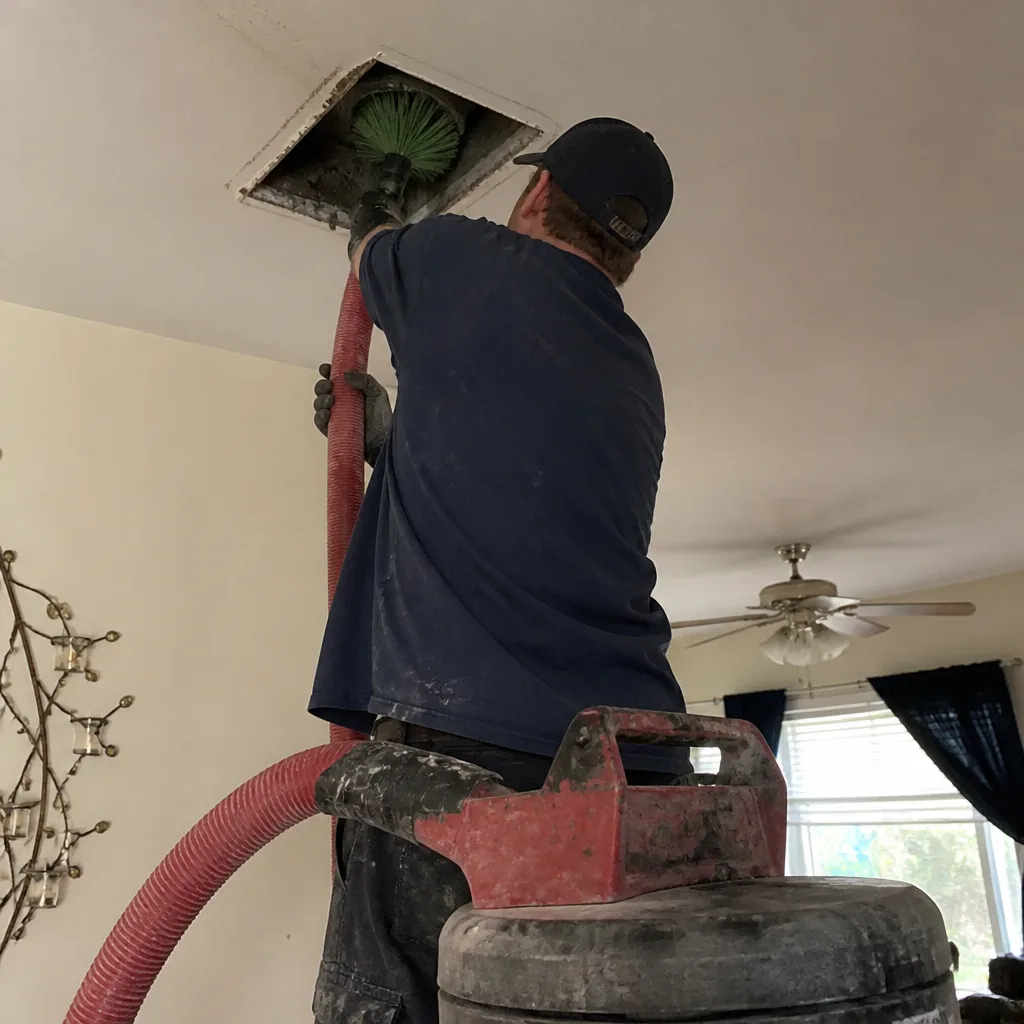 Before
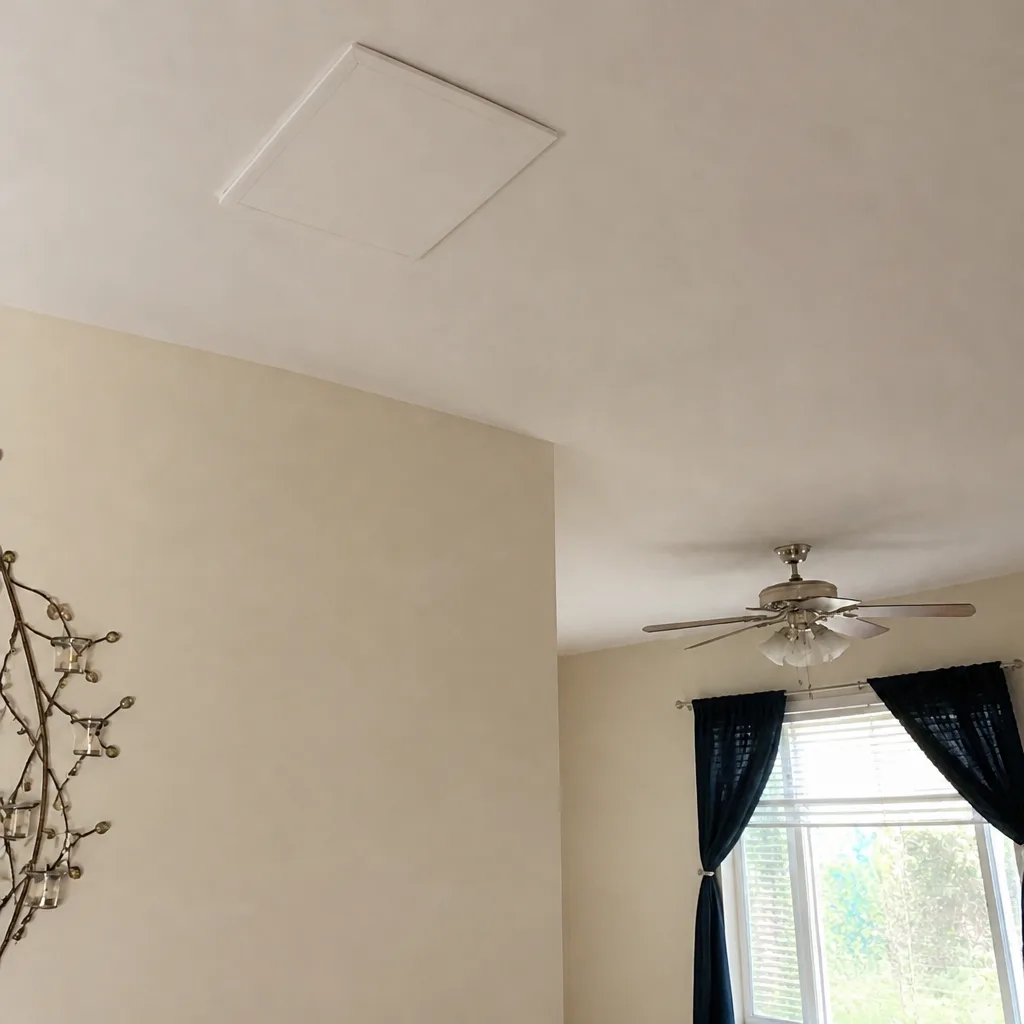 After
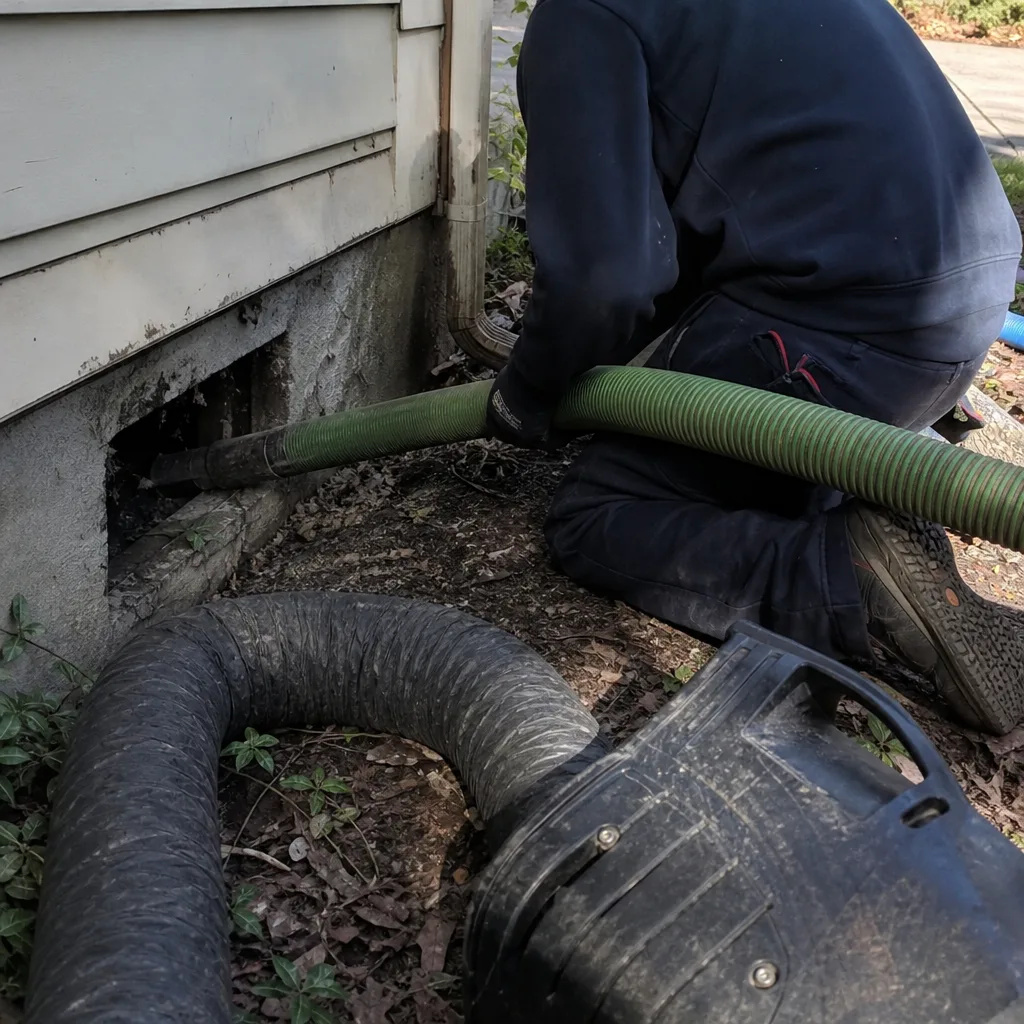 Before
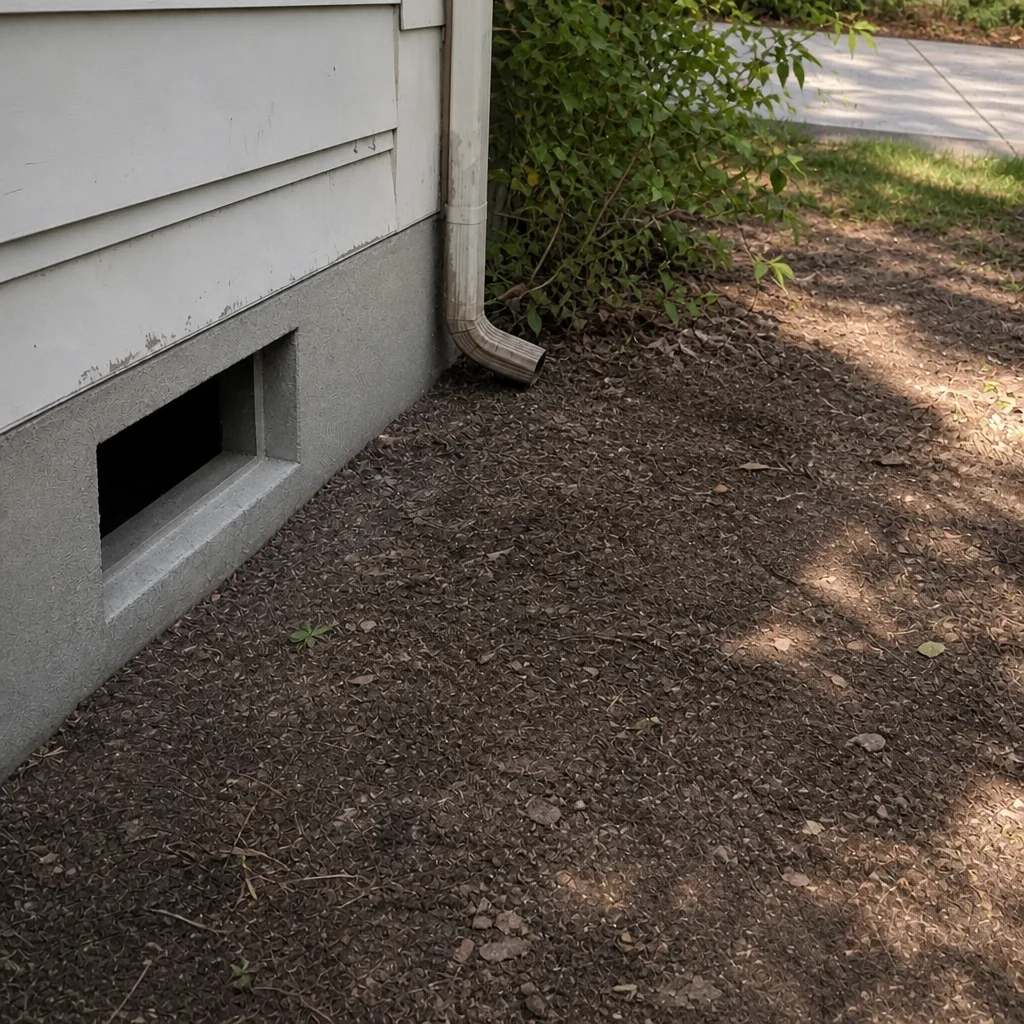 After
 Before
 After
When to Call a Professional
Call when any two of the following are true: registers resoil within a week of cleaning, a persistent musty or sweet smell appears in the first five minutes of a cycle, visible growth or heavy staining is present at the air handler, allergy symptoms track HVAC runtime, airflow is uneven across rooms, or you’ve moved into or renovated a Ballantyne home in the last year. Call sooner if you see burning-plastic smell (turn the system off first), rodent evidence near the air handler, or visible growth spreading across duct liner. A professional assessment is free, and it’s the only way to separate a filter problem from a system problem. Our team at Air Duct Cleaning Ballantyne provides free estimates across Ballantyne and the surrounding Charlotte metro. Call (855) 726-7841. We answer 24/7. Fast dispatch from 7am to 7pm, Sunday through Friday. The local pro is state-licensed and insured as their state requires, and the estimate sets the price.
Frequently Asked Questions
Look for a pattern of at least two warning signs together: rapid register resoiling, a musty or sweet smell at system startup, visible contamination at the air handler, allergy symptoms that track HVAC runtime, or uneven airflow. A single sign isn’t proof. Two or more in the same home usually means the duct interior is actively contributing contamination, not just passing air. Call (855) 726-7841 for an exact quote. Estimates are free.
That’s the most useful diagnostic you have. Musty smell in the first five minutes means the air that sat in the system against the coil and duct surfaces is picking up microbial odor. Once fresh air moves through, the smell fades because the new air isn’t sitting in the same contact. It usually points to moisture at the coil, drain pan, or duct liner. Our technicians have up to 8 years of experience reading that pattern, and an assessment tells you whether cleaning alone is enough or whether sanitizing and moisture correction are needed. Call (855) 726-7841 to schedule one. Estimates are free.
There’s no single correct interval, but most homeowners should consider professional cleaning when warning signs appear, after major renovation or move-in, or every several years in homes with pets, allergies, or heavy pollen exposure. Homes with attic duct runs and tight construction may need more frequent attention because the system carries the full circulation load. The honest answer is to let the built-up conditions tell you, not the calendar. Call (855) 726-7841 for an exact quote on your home. Estimates are free.
Ballantyne homes typically get a flat price for the whole system, not a per-vent rate, and the written estimate sets the final number. A small condo and a large two-story with attic runs are different scopes, so the range is wide. Beware any quote that arrives as a coupon price and gets rebuilt on-site. Call (855) 726-7841 for an exact quote. Estimates are free.
Cheap quotes usually cut the job somewhere: no air handler, no return-side cleaning, no containment, no documentation. They often show up as a per-vent number that grows once the technician is inside. The cheap number isn’t a cleaning, it’s a starting point for an upsell. Ask three things: what’s the flat price for the whole system, what equipment will be used, and will you see before-and-after photos of your own ducts. If any of those answers is vague, the price gap explains itself. Call (855) 726-7841 for an exact quote. Estimates are free.
Ask for before-and-after photos of your own duct runs, taken in place, on the day of the work. A finished job should include documentation of the interior of the system, not a stock brochure. Confirm what was cleaned (supply, return, air handler, plenum), what was sealed, and what products were used. If a company can’t produce photos of your specific ducts, they can’t demonstrate the job. Call (855) 726-7841 to schedule an assessment. Estimates are free.
The Bottom Line
Duct contamination rarely announces itself dramatically. It shows up as the register that recoats in two days, the five-minute musty smell at startup, and the coil that looks fuzzier than it should. Those three together are a stronger signal than any single dramatic event. If you’ve read this far and two or more of the signs match your Ballantyne home, the next step is a professional assessment, not a coupon from the mail. Ask for a flat price per system, professional equipment, before-and-after photos, and a scope that covers the whole pathway – vents, ducts, coil, cabinet, and dryer vent. For a Ballantyne home, that’s what air you can trust actually looks like. Call (855) 726-7841 for a free estimate. We answer 24/7. Fast dispatch from 7am to 7pm, Sunday through Friday. When you’re ready for a full assessment, we’ll connect you with a local pro who handles both air duct cleaning and dryer vent cleaning on the same visit, so the whole system gets handled together. For homes that also need the air handler and coil addressed, we offer HVAC cleaning as a separate scope, and for a full overview of our approach across the area, see Air Duct Cleaning Ballantyne.
Written by the team at Air Duct Cleaning Ballantyne.