
Last updated November 24, 2026
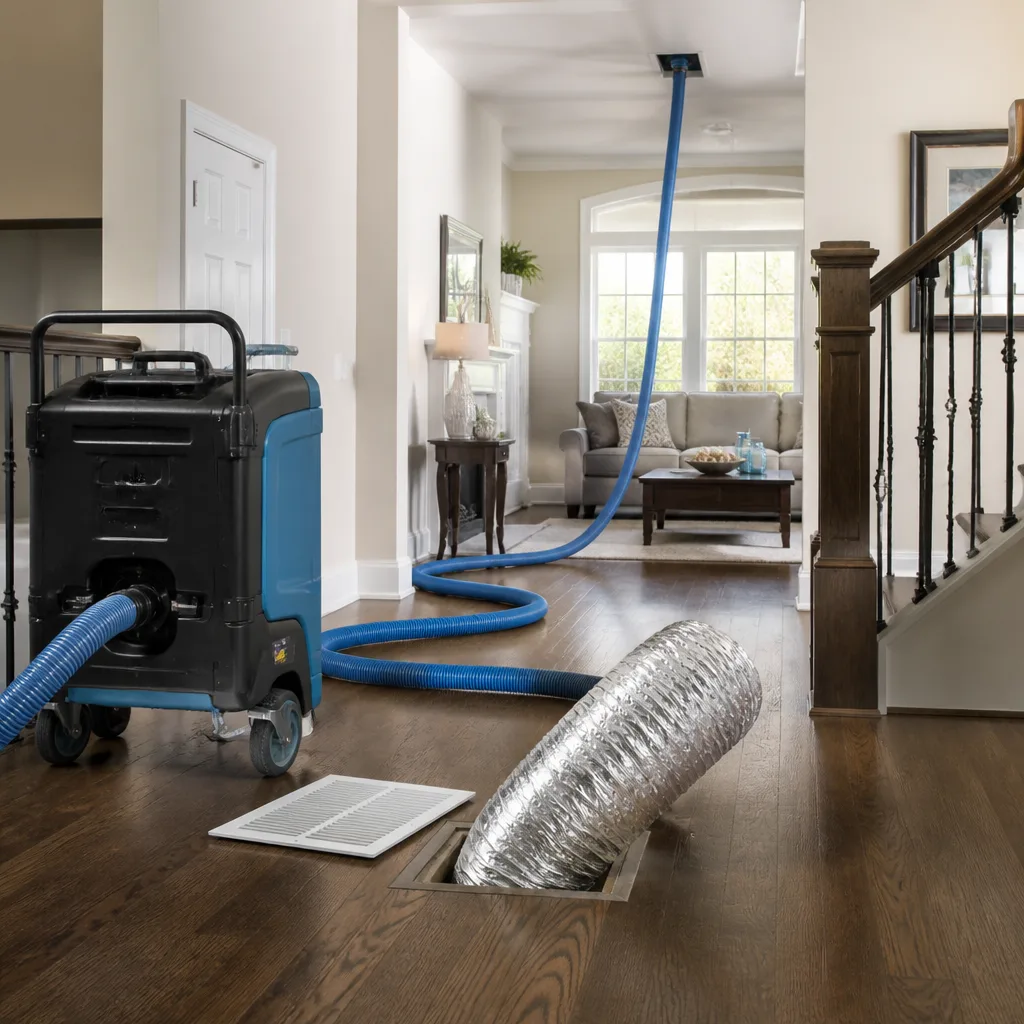 Whole-home duct cleaning
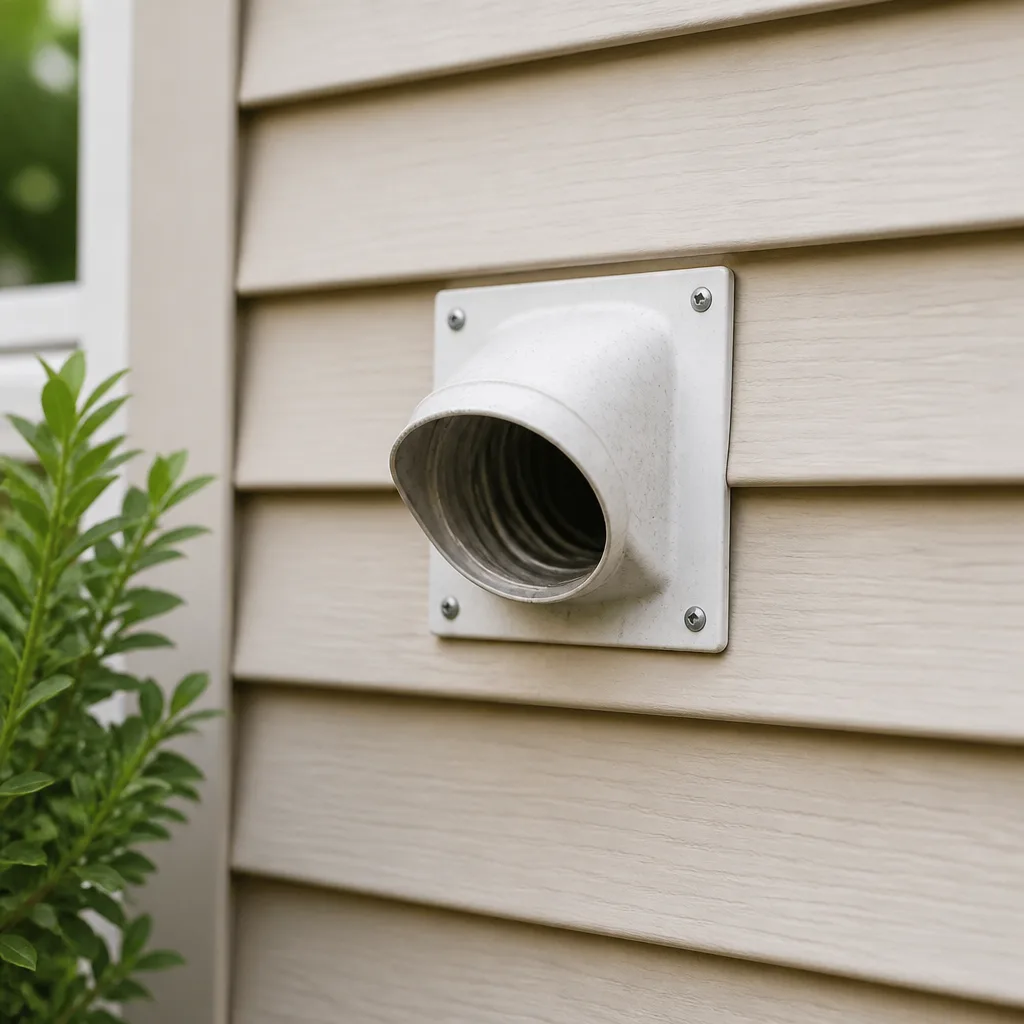 Dryer vent cleaning
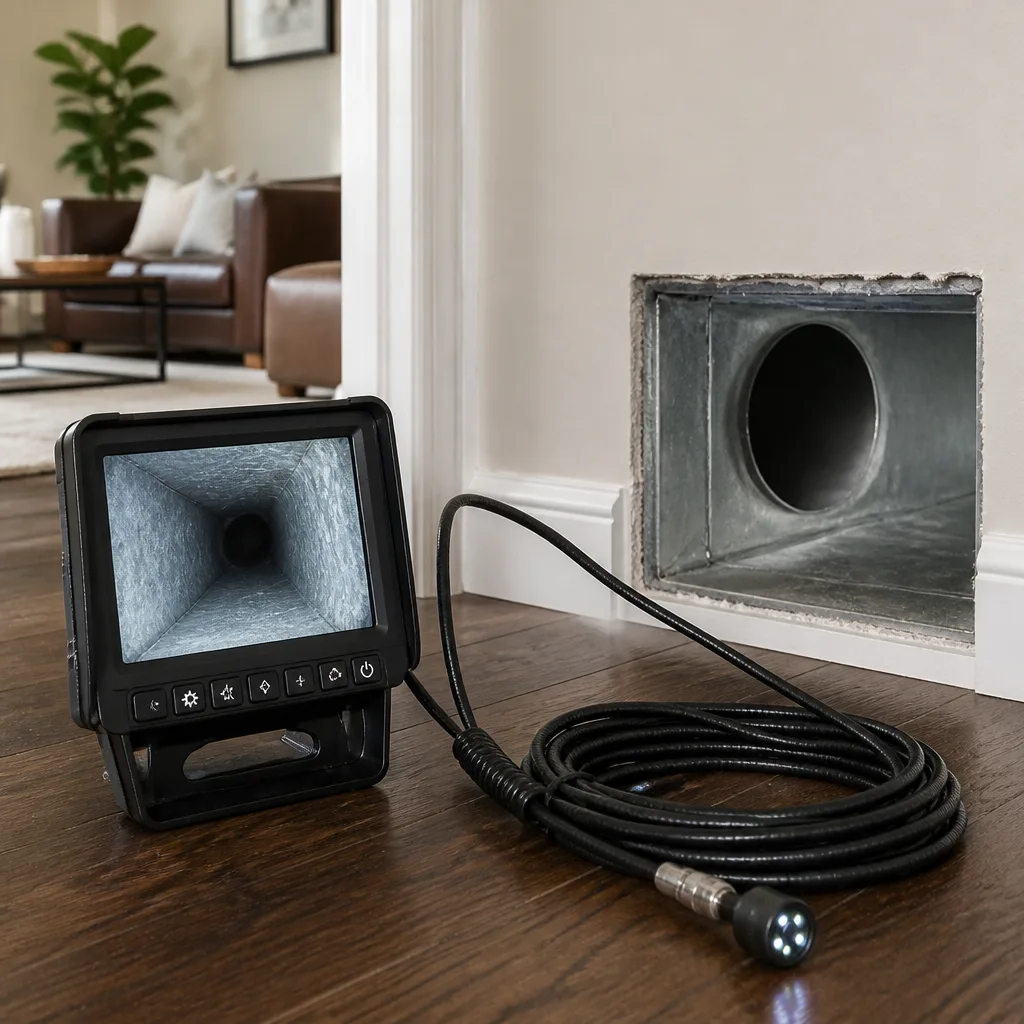 Camera inspection
 Sanitizing & deodorizing
Whole-system duct and dryer vent check with before-and-after photos - you see exactly what came out of your vents
That "$99 whole-house special" is a bait ad - the real number appears once they are in your hallway, or the "clean" is a shop-vac at the register. We photograph the inside of your ducts before and after instead.
Air Duct Cleaning Emergency Preparedness Guide for Ballantyne Homes
When a kitchen fire, a burst pipe, or a heavy storm sends water and debris through a Ballantyne house, the visible damage gets all the attention. Crews pull wet drywall. Fans dry the carpet. Someone sprays odor eliminator through the hallway. What almost nobody thinks about until weeks later is the ductwork – the miles of flexible and sheet-metal passage behind the walls that ties every room together. If smoke, water, insulation bits, or rodent debris entered the return air system during the event, your HVAC system becomes a distribution engine. Every time the air handler kicks on, it moves that contamination into bedrooms, closets, and the nursery.
This guide covers the four emergency scenarios Ballantyne homeowners actually face, what to do in the first hours, how to document duct condition for insurance, and how to tell when standard cleaning is enough versus when the job needs full remediation. It’s written for the homeowner standing in a damaged house trying to figure out the next call.
Quick Answer
After any fire, flood, renovation without containment, or rodent discovery in a Ballantyne home, shut off the HVAC system before doing anything else, photograph the duct openings and air handler, and schedule a duct inspection before turning the system back on. Contaminants that entered the return air system during the event will redistribute to every room each time the air handler runs, and cleaning within the first two weeks usually prevents the secondary damage that costs far more to fix later.
Styles & brands we work with
- Whole-home duct cleaning
- Dryer vent cleaning
- Camera inspection
- Sanitizing & deodorizing
Table of Contents
- The Four Emergency Scenarios That Require Immediate Duct Intervention
- Why Your First Move Is to Turn Off the HVAC, Not Run It
- Flooding in Ballantyne: Crawl Space Water and Your Duct Runs
- Documenting Duct Condition for Insurance Before Work Begins
- Post-Emergency Duct Cleaning vs. Duct Remediation
- Post-Renovation Ducts: The Containment Question
- Rodent Infiltration: What the Discovery Means for Your Ducts
- The First 30 Days: A Post-Emergency Timeline
The Four Emergency Scenarios That Require Immediate Duct Intervention
Not every household disruption touches the duct system. A toilet overflow that stays in the bathroom doesn’t. A grease fire on the stove that gets smothered in thirty seconds rarely does. But four specific events in a Ballantyne home almost always send contaminants into the return air path, and each one has its own timeline for getting the ducts addressed before damage compounds.
Here’s how the four break out and what distinguishes them:
Fire and Smoke Events
Smoke is the highest-priority duct contaminant we see. Combustion particles are microscopically small – small enough that standard furnace filters pass most of them through. During a fire, the return air system pulls smoke into the air handler cabinet, the blower compartment, the evaporator coil, and every supply trunk. Soot deposits on flexible duct liner like a fine film and stays there. Every time the system runs afterward, that film gets redistributed. Odor follows the same path, which is why a house can smell like smoke for months after the visible char is gone.
Flooding and Water Intrusion
Water events are trickier than fire because the damage is often hidden. A burst supply line, an HVAC condensate overflow, or a crawl space flood after a heavy rain can leave standing water under flex duct runs for days before anyone notices. Water itself doesn’t ruin ductwork – wet organic material inside the duct does. The intersection of moisture and the dust that accumulates in every duct system is where mold growth begins, and that’s the point of no return for most liner materials.
Post-Renovation Without Containment
Drywall dust, sawdust, fiberglass insulation particles, and paint overspray all migrate into ductwork if the return grilles stay open during a renovation. Contractors who seal off openings with poly and zip walls prevent most of this. Contractors who don’t leave you with a duct system that looks like the inside of a sanding booth. The dust itself is a mechanical problem, but the fine particulate also settles on wet coils and clogs filters fast.
Rodent Infiltration Discovery
Finding droppings in a crawl space or hearing scratching in the walls is the moment duct integrity becomes a health question, not a comfort question. Rodents nest in flex duct insulation, chew through the inner liner, and leave waste inside the air path. Ballantyne’s mild winters don’t kill off rodent populations the way a hard freeze does further north, so crawl space and attic activity continues year-round. The discovery triggers a duct cleaning need, but it also triggers a duct repair need – chewed liner has to be replaced, not just cleaned.
Why Your First Move Is to Turn Off the HVAC, Not Run It
The instinct after a smoke event is to crank the system to clear the air. That instinct is backwards. Running the HVAC during or immediately after a fire, flood, or rodent event turns your duct system into a distribution network for the exact contaminants you’re trying to leave behind. The air handler doesn’t filter at the quality level needed to catch smoke particles, fine drywall dust, or rodent waste. It moves them.
Here’s the sequence we recommend for Ballantyne homeowners facing any of the four scenarios above:
- Turn the thermostat to OFF. Not fan-only, not cool, not heat. Off. This stops the blower from circulating anything through the system.
- Close the return air grilles with cardboard or plastic sheeting taped over the openings. This slows the passive migration of airborne debris into the ductwork while the system is down.
- Photograph the system before anything else touches it. Air handler label, filter condition, every return and supply grille, and the visible duct connections at the air handler. This documentation matters for insurance.
- Call your restoration company and your duct professional on the same day. Restoration crews handle visible surfaces and structural drying. The duct system needs its own dedicated scope, and the two should be coordinated so nothing gets cleaned while it’s still wet.
- Do not run the system again until the ducts have been inspected. A restoration company will tell you the house is dry. That doesn’t mean the ducts are clean. Those are two different questions.
What turning the system off prevents is secondary contamination – the slow redistribution of smoke, soot, or biological material into rooms that never saw the original event. A kitchen fire that stays contained to the kitchen can end up smelling like the primary bedroom closet if the system runs for two weeks before anyone addresses the ducts. We’ve also seen water damage events where mold colonization moved from the crawl space into the supply trunks specifically because the air handler kept cycling moist air through the system.
One more thing: if the event involved standing water near the air handler, don’t just turn the system off – kill power at the breaker. Water and energized electrical components don’t mix. A licensed HVAC or electrician should confirm the air handler and blower are safe before power comes back on.
Flooding in Ballantyne: Crawl Space Water and Your Duct Runs
Ballantyne’s geography creates a specific water risk most homeowners don’t think about until it’s a problem. The area sits on clay-heavy soil that sheds water rather than absorbing it. After a heavy rain event or a multi-day soaking, low points around foundations pond water, and crawl spaces – which a large share of Ballantyne’s older housing stock has – fill up faster than the drainage systems can move it out.
When a crawl space floods, the flexible duct runs that travel through it sit directly in the water. Flex duct is a layered product: an outer vapor barrier, a fiberglass insulation layer, and an inner plastic liner. The outer barrier is not designed to be submerged. Water wicks through the insulation and either reaches the inner liner or, if the liner has any tear or poorly sealed connection, gets inside the air path. Once insulation is wet, it stays wet – there’s no airflow through a crawl space duct run that dries it out.
The mold timeline matters here. Under the right moisture and temperature conditions, mold colonization on wet organic material can begin within a day or two of the water event, and visible growth typically appears within a week to ten days. That’s the window you’re working against. If crawl space water was standing for two days before it was pumped out, the duct runs that were submerged need to be inspected, not just re-insulated.
What to check after any Ballantyne crawl space flooding:
- Any duct run that was visibly submerged during the flood event – even briefly
- Duct insulation that’s damp to the touch or shows water staining on the outer barrier
- Flexible duct that sagged into standing water and now shows mold or discoloration inside the liner
- The air handler cabinet if it sits in the crawl space, particularly the bottom pan and blower compartment
- Condensate drain lines that may have backed up during the same event
Salvageable duct is duct that stayed dry inside. Anything that got wet in the air path gets replaced, not cleaned, because cleaning wet liner embeds the contamination deeper. If you’re not sure whether a run got wet, that’s the reason to have it inspected before the system comes back online. Water intrusion that enters the duct system from a crawl space flood needs to be addressed as part of your overall air duct cleaning scope, or as a broader HVAC cleaning job if the air handler was affected too.
Documenting Duct Condition for Insurance Before Work Begins
Insurance adjusters approve duct cleaning and remediation costs when the documentation shows a clear causal connection between the emergency event and the contamination. They deny claims when the paperwork is thin, when the scope is vague, or when the work was already completed before anyone took photos. Get the documentation right at the start, and the insurance part tends to go smoothly.
Here’s what to gather in the first 24 hours:
- Date and time stamps on every photo. Use your phone’s camera with location services on so the metadata captures when and where each shot was taken.
- Wide shots of each affected room showing the ceiling and the supply or return grille. This establishes which ducts were in the event zone.
- Close-up photos of the return grilles showing visible soot, dust, moisture, or debris. Soot staining around a return is one of the strongest evidence points in a smoke claim.
- The air handler nameplate photo showing model and serial number. The adjuster needs this for the replacement or cleaning valuation.
- Photographs inside the ductwork if you can safely access removable sections. Don’t disassemble anything that would require more than a screwdriver. If the ducts aren’t accessible without tools, that’s what the professional inspection is for.
- The filter photographed in place, then removed and photographed clean side and dirty side, with the dirty side showing what the system was pulling during the event.
- A written timeline in your own words of what happened, when, and what actions were taken. Restoration companies provide their own, but your timeline covers the gap between the event and their arrival.
- The pre-inspection report from your duct professional before any cleaning. This is the piece most homeowners skip. An inspection report documenting conditions before cleaning gives the adjuster a scope of work to price against.
Adjusters also want to see whether the duct cleaning is a covered line item or part of the general cleaning budget. In our experience working with Ballantyne homeowners through claims, the cases that move fastest are the ones where the duct professional’s written scope clearly separates cleaning from remediation, itemizes what needs replacing versus what needs cleaning, and includes before-and-after photo documentation of the work itself. The adjuster isn’t going to argue with a professional scope in writing.
Two things to avoid: don’t file the claim before you have the inspection, and don’t authorise any duct work before the adjuster has seen the pre-inspection report. Emergency mitigation is typically covered even before approval – the full remediation scope is easier to argue after the documentation is in hand.
Post-Emergency Duct Cleaning vs. Duct Remediation
The two terms get used interchangeably by contractors and insurance adjusters, but they describe different scopes of work with different price points, different equipment requirements, and different end states. Getting the scope right matters because paying for remediation when cleaning would have been enough is wasteful, and paying for cleaning when the ducts really needed remediation leaves contamination behind.
Here’s how to tell which one your Ballantyne home needs.
When Standard Duct Cleaning Is Sufficient
Cleaning is the right scope when the contamination is particle-based, dry, and hasn’t penetrated the duct liner. That covers:
- Drywall dust from a renovation where the return grilles were uncovered
- Light smoke residue where the fire was contained and the HVAC was shut off within the first hour
- General dust accumulation that was already overdue before the emergency prompt
- Odor from a minor event that dissipated but left surface residue
The work involves mechanical agitation of every supply and return, high-volume negative-pressure extraction to capture the debris without redistributing it, and a final airflow verification. Rotobrush and Nikro systems are the standard for this because the rotary brush action contacts all four sides of the duct, and the HEPA-filtered vacuum systems hold the debris inside the containment envelope rather than floating it into the house.
When Remediation Is the Correct Scope
Remediation is the right call when contamination has bonded to surfaces, penetrated materials, or is biological rather than mechanical. That includes:
- Any duct liner that got wet and stayed wet for more than 24 hours
- Visible mold growth on duct surfaces, insulation, or the air handler interior
- Heavy soot deposits that have bonded to flex duct liner, particularly after a grease fire or a fire with synthetic-material smoke
- Rodent waste inside the air path, which requires liner replacement rather than cleaning
- Post-flood HVAC components – blower, coil, and cabinet – that need cleaning beyond duct scope
Remediation typically involves duct liner replacement where the liner is compromised, HEPA vacuuming under containment, antimicrobial fogging to address microbial growth, and sometimes full replacement of flex duct runs. Abatement Technologies products are used in this phase specifically because they’re designed for containment and contaminant removal in restoration environments, which is a different discipline than routine cleaning.
The short version: if the duct is dry and the contamination is on the surface, cleaning works. If the duct is wet, damaged, or the contamination has become part of the material, you’re doing remediation.
Post-Renovation Ducts: The Containment Question
Renovation dust gets into ductwork through the return air grilles. That’s just physics – the return side of the system is under negative pressure during operation, so any air in the affected space with dust in it gets pulled toward the grille. If the HVAC runs at all during the renovation and the grilles aren’t sealed, that dust goes into the system.
During a Ballantyne renovation – particularly the kind of major remodel that goes on for months and involves drywall, sanding, and cabinet work – the best-case scenario is that the contractor seals every return and supply opening with poly and tape before demo begins. Most don’t, and the ones that do often leave one or two grilles exposed because they’re still using the space for heating or cooling during the build.
What you can do without disrupting the build:
- Ask the contractor to seal every return and supply grille in the renovation zone with plastic sheeting and painter’s tape at the start, before demolition
- Change the HVAC filter at the end of the project, and again about two weeks later after the system has run enough to redistribute any dust that got in
- Run the system on fan-only for a few hours after the renovation ends to pull dust toward the filter, then change the filter again
- Schedule a duct inspection if the renovation went more than a few weeks without containment
The renovation scenarios that almost always need duct cleaning afterward: gut renovations, anything involving extensive drywall with the system running, and any project where sawdust was visible on surfaces in the return grille zone. The one that usually doesn’t: a bathroom update or a room addition where the contractor kept the zone sealed. The difference in a Ballantyne renovation is often less about the square footage and more about whether containment was done at the start.
If contamination did get into the system during a renovation, the fix is straightforward duct cleaning with professional extraction – and then a check for any ducts where dust settled on the interior of the coil or blower. That’s where the scope extends from duct cleaning into full HVAC cleaning territory, because drywall dust on a wet evaporator coil is a mechanical problem that won’t resolve itself.
Rodent Infiltration: What the Discovery Means for Your Ducts
Finding evidence of rodents in a Ballantyne home – droppings in the crawl space or attic, chew marks on insulation, or scratching sounds in the walls – is different from every other emergency in this guide because the contamination is ongoing until the ducts are addressed. A fire stops when the fire department leaves. A flood stops when the water is pumped out. Rodents keep going until the entry points are sealed and the ducts are cleaned.
What the discovery means for the duct system:
- Chewed flex duct liner needs replacement, not cleaning. Rodent teeth puncture the inner liner. Even if the hole is small, the liner is compromised and the insulation behind it may be contaminated.
- Droppings inside the air path are a biohazard. The contaminants require professional removal with proper containment – not a shop vacuum from the garage, which will redistribute whatever it pulls up.
- Nesting material tends to get pulled into the air handler during system operation. Nests near the return air intake end up partially in the filter and partially past it.
- The air handler cabinet, coil, and blower should be inspected and cleaned as part of the same scope, because material that moved from the duct into those components needs the same treatment.
Getting the ducts addressed is only half the job. The entry points the rodents used to get in have to be sealed, or the next generation moves in and the whole scope repeats. We always recommend the customer identify and seal the crawl space and attic penetration points – often co-located with plumbing and electrical rough-ins – before or in the same week as the duct work.
Because rodent contamination involves biological material, we treat these as remediation rather than routine cleaning. The work includes HEPA vacuuming under containment, replacement of chewed flex duct, antimicrobial fogging of the treated surfaces, and a final inspection. Duct Repair & Sealing is a required part of the scope on rodent jobs because there’s always at least one compromised liner or connection that opened the path in the first place. It’s the same principle that runs through our Air Duct Cleaning Ballantyne approach: find the damage, fix the damage, clean and sanitize the whole system, and leave the homeowner with a working system rather than a half-addressed one.
The First 30 Days: A Post-Emergency Timeline
The timeline for duct work after a Ballantyne home emergency breaks down differently for wet events versus dry events, but the priority order is the same: safety first, documentation second, mitigation third, full scope fourth. Here’s how that plays out day by day.
Day 1
- Turn the HVAC system off at the thermostat (or breaker if water is near the air handler).
- Photograph everything before touching it – rooms, grilles, air handler, filter.
- Call your restoration company if the event is a fire or flood.
- Call a duct professional for the pre-inspection, and mention the emergency when you call.
- Close return air grilles with plastic sheeting if smoke or dust is still airborne.
Days 2-7
- Complete the pre-inspection report. This documents the state of every duct run, the air handler, and the visible contamination inside the system.
- File the insurance claim if duct work is going to be a covered line item.
- Coordinate duct scope timing with the restoration timeline. Duct cleaning happens after structural drying is complete, not during.
- If a crawl space flood occurred, pump standing water out and get a moisture reading on any duct insulation that may have been submerged.
Days 7-14
- Duct cleaning or remediation begins once the restoration company confirms the house is dry.
- Any compromised duct liner gets replaced rather than cleaned.
- Air handler and coil get addressed in the same scope if contamination reached them.
Days 14-30
- Air quality and sanitizing treatment is applied to the cleaned system to address residual odor and microbial growth.
- Long-term air quality components – typically Honeywell or Aprilaire filtration and humidity products – get added to the system if the original equipment was undersized for the contamination load.
- Final inspection and airflow verification, and the before-and-after photo documentation is completed for the insurance file.
What compresses or extends this timeline: the restoration scope on the structural side. Duct work can’t start while the house is still under active drying equipment, and it shouldn’t start while construction debris is still being moved through the home. Coordination between the two vendors is the single biggest factor in whether the process runs smoothly or drags out for months.
Common Mistakes to Avoid
Most of what goes wrong after a Ballantyne home emergency goes wrong in the first week. These are the mistakes we see most often:
- Running the HVAC to “clear the air” after a fire. This pulls smoke and soot into the return air system and distributes it to every room. Turn the system off first, always.
- Skipping the pre-inspection photo documentation. Adjusters deny duct claims that have no documentation of pre-existing conditions. Photos take ten minutes and save the claim.
- Authorising cleaning before the ducts are dry. Cleaning wet liner embeds moisture and dust deeper. If a crawl space duct run got wet, drying or replacement comes first, cleaning comes after.
- Hiring a restoration company to clean the ducts. Restoration crews are experts at structural drying and surface repair. They don’t typically have the rotary brush and negative-pressure extraction equipment the duct system requires, and combining the scope often means the ducts get a surface pass rather than a full clean.
- Assuming the house smells fine once the visible damage is gone. Smoke odor lives in the duct system long after the walls have been painted. If your house smells normal in the hallway but smoky in a bedroom, the contamination is in the duct serving that room.
- Skipping the duct repair scope after a rodent discovery. Cleaning without replacing the chewed liner leaves the compromised duct in place and the entry point open. The problem returns within months.
- Filing the claim before the inspection is complete. The adjuster needs a written scope of work to price against. Filing first and inspecting after often leads to a partial claim and a homeowner paying the gap.
See the difference
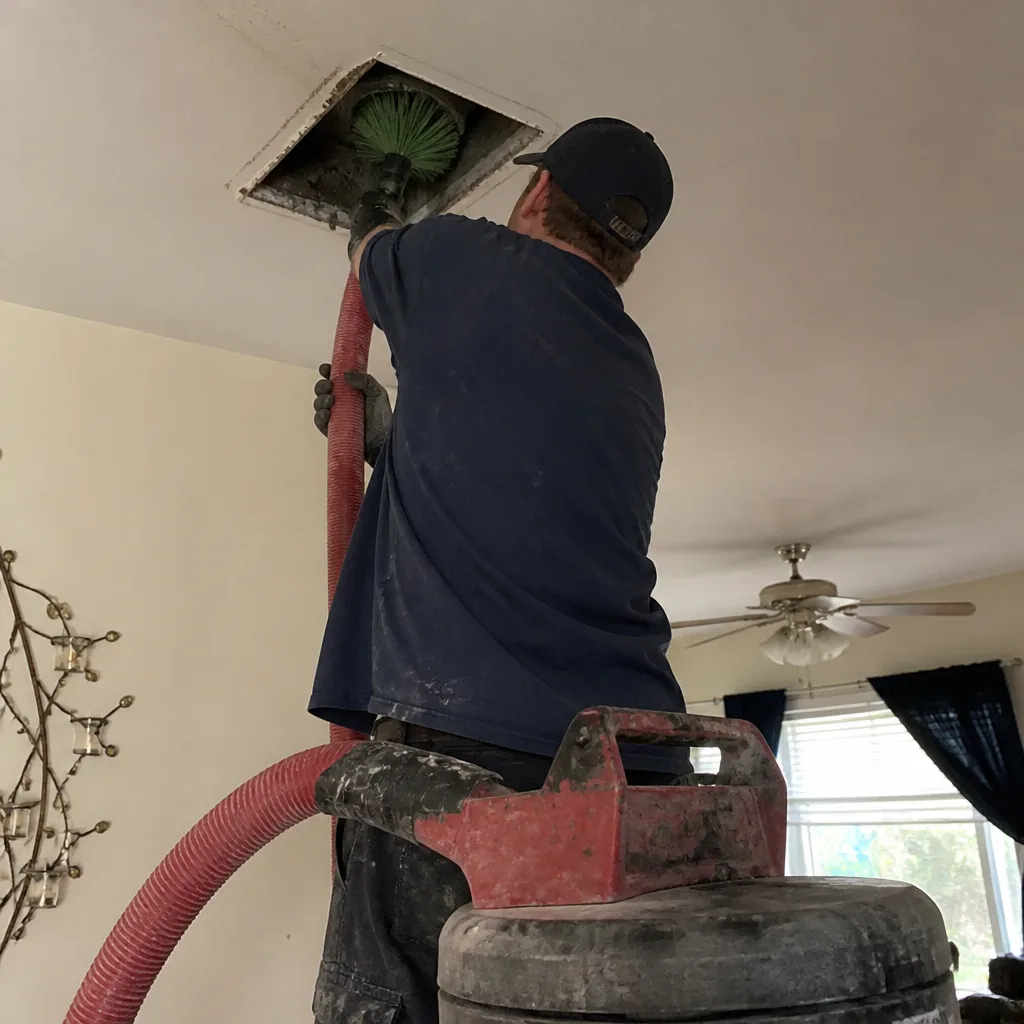 Before
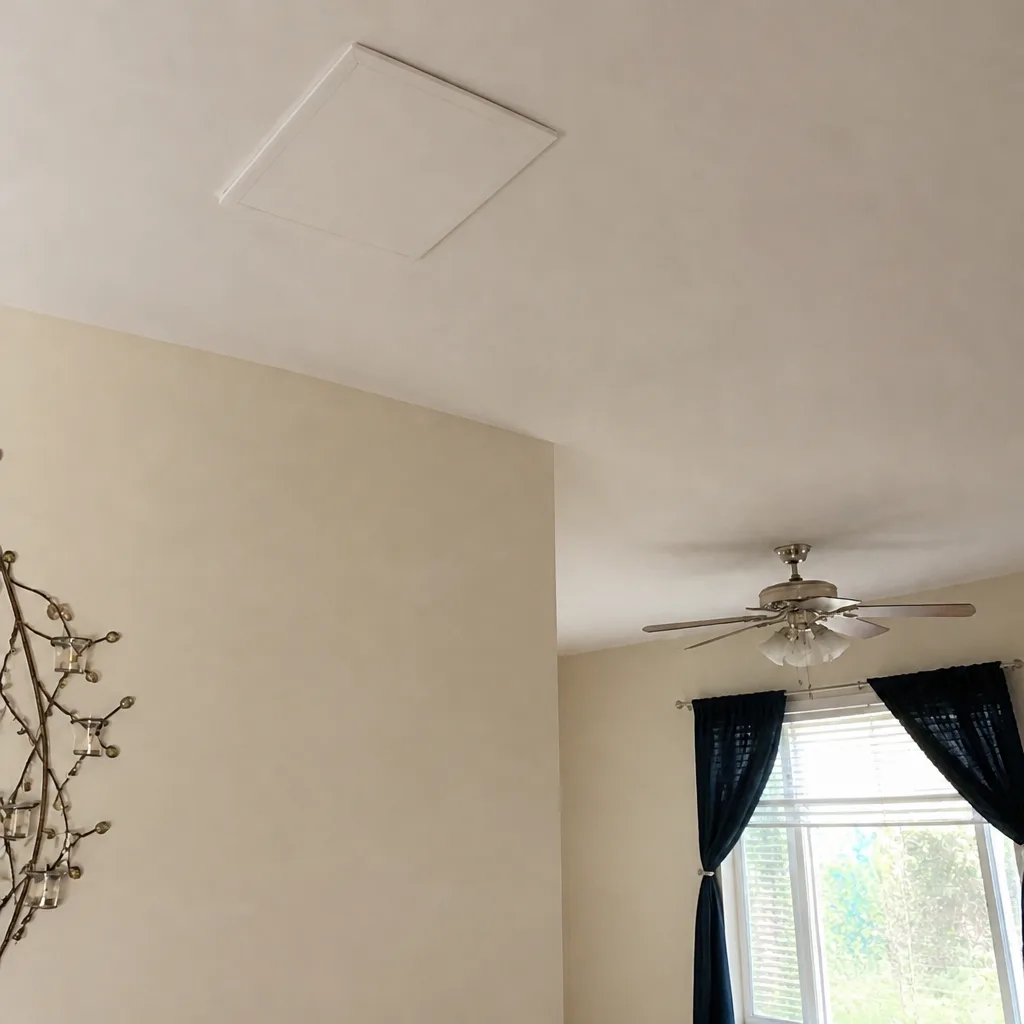 After
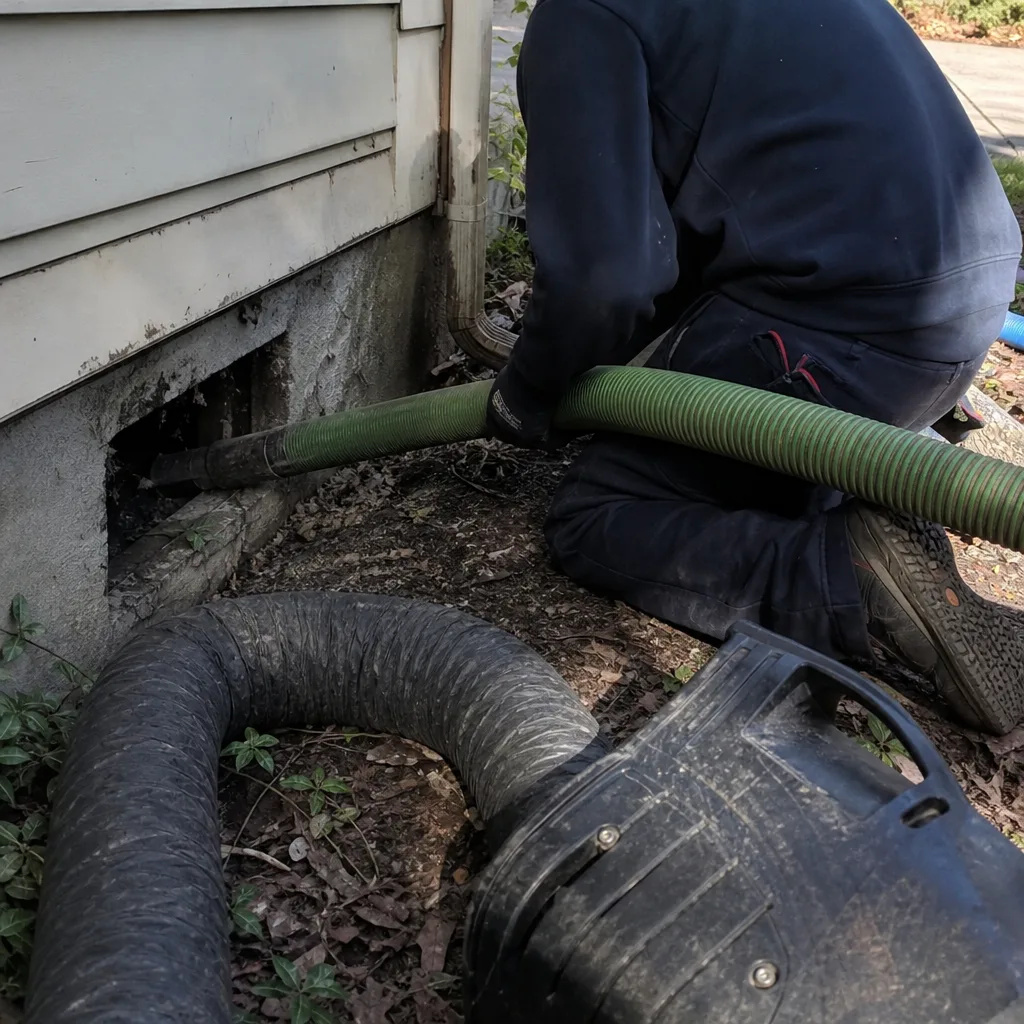 Before
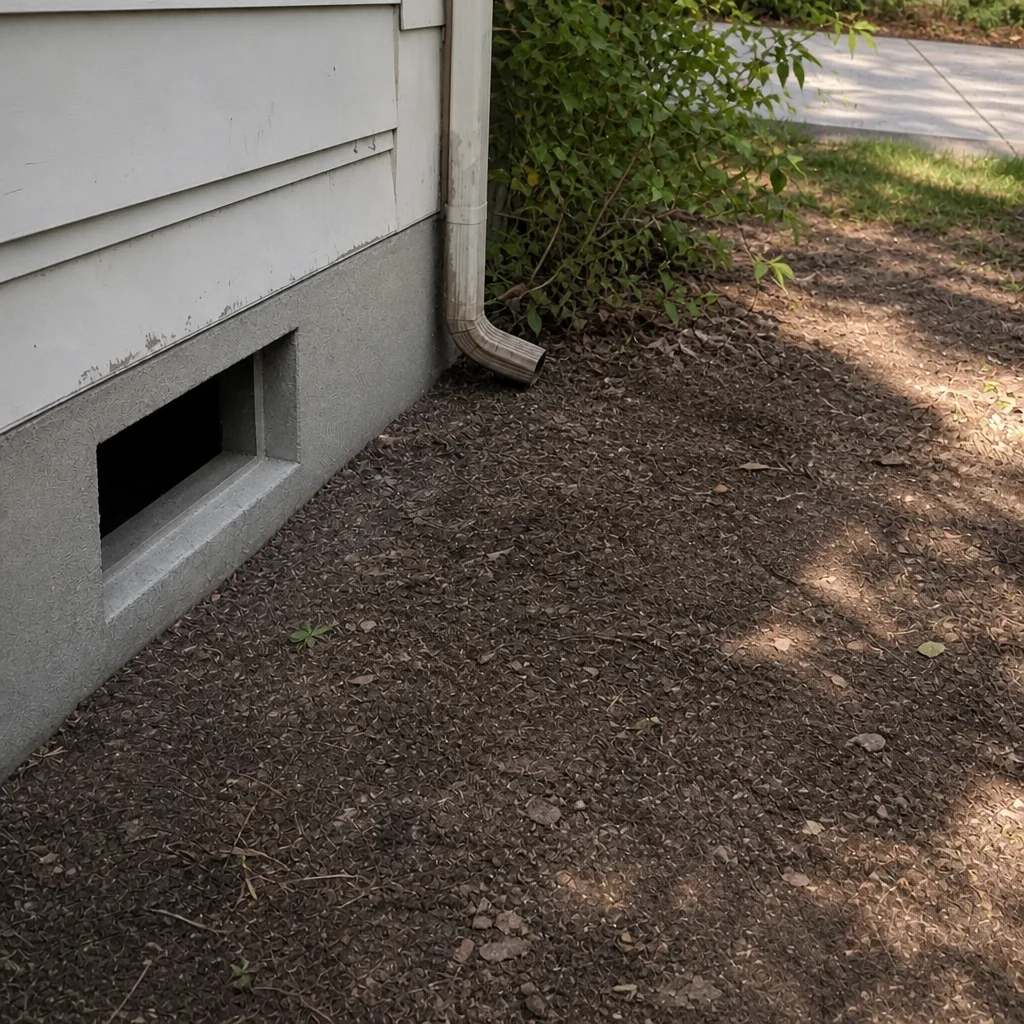 After
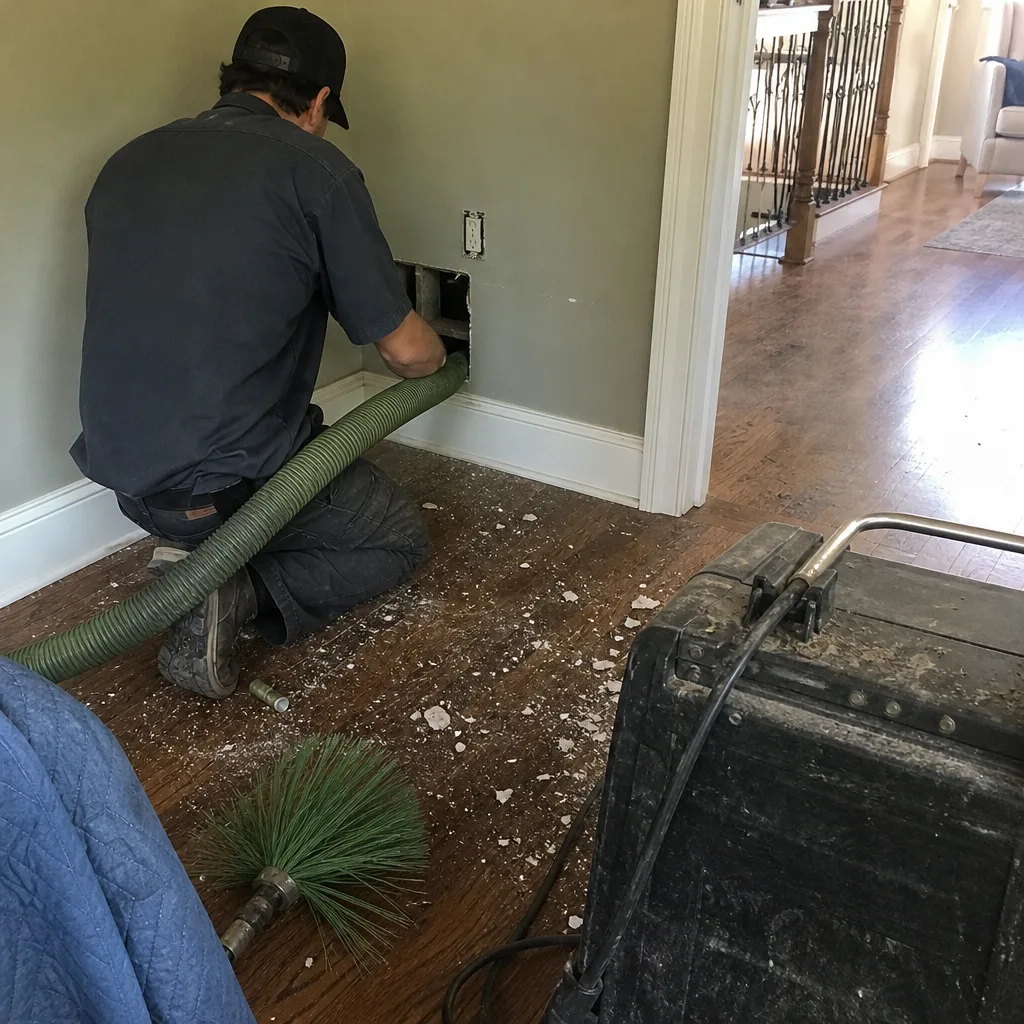 Before
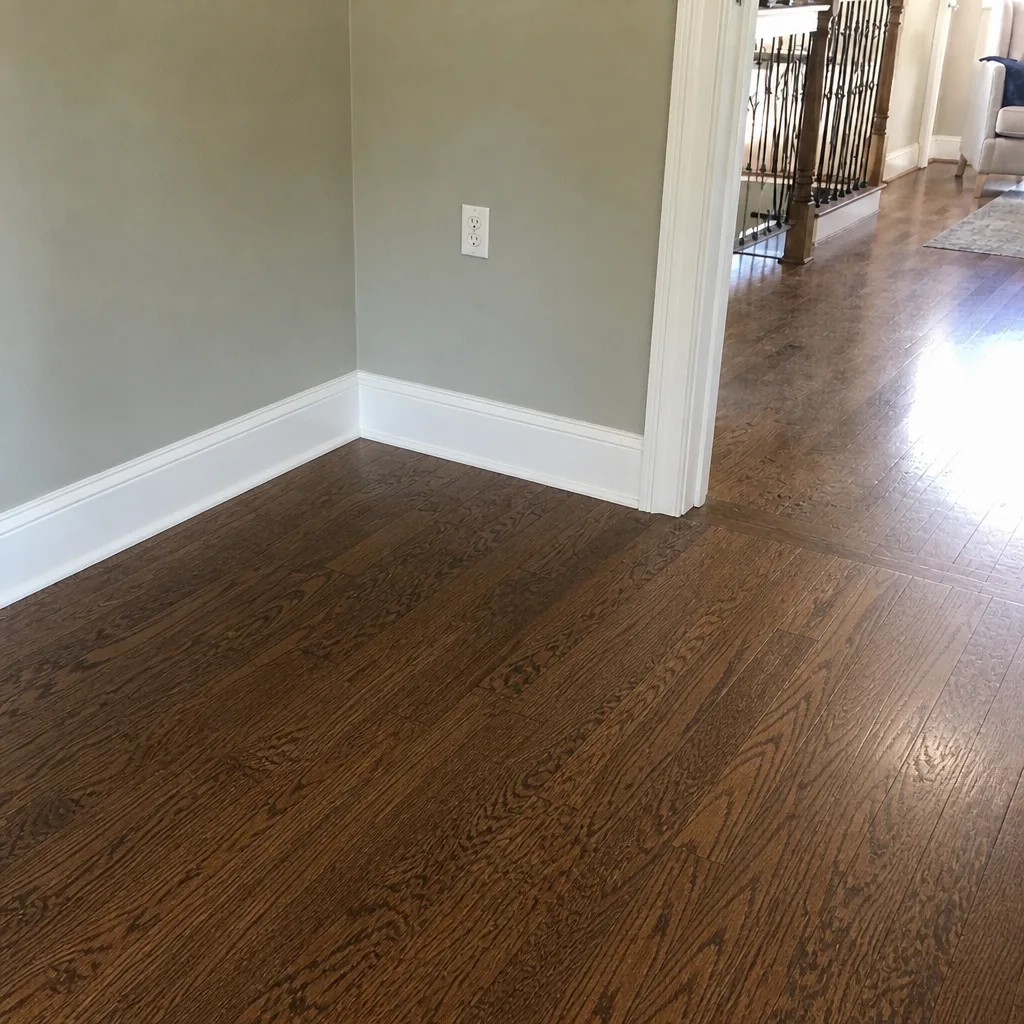 After
When to Call a Professional
You need a professional duct scope after any of the four emergency categories covered here. Specifically: any fire or smoke event that reached the HVAC zone, any flood or water intrusion that touched the air handler or duct runs in a crawl space, any renovation more than a couple of weeks long without proper containment at the return grilles, and any rodent discovery that included visible droppings in the duct or air handler. You also need one if the house has a persistent musty smell you can’t trace, or if your allergy symptoms get worse when the system is running – both point to something in the air path that needs investigation.
Air Duct Cleaning Ballantyne offers free estimates in Ballantyne – call (855) 726-7841. We answer 24/7. Fast dispatch from 7am to 7pm, Sunday through Friday. Our technicians have up to 8 years of experience, use Rotobrush and Nikro professional extraction equipment, and can handle duct cleaning, repair and sealing, air quality and sanitizing, and dryer vent work as separate scopes or as a single full-system job depending on what your home needs. You’ll have a written estimate before any work begins, and before-and-after photos when the job is done.
Frequently Asked Questions
No. Even a small kitchen fire sends smoke and combustion particles into the return air system, and running the AC pulls those particles through the entire duct network and re-distributes them into every room the system serves. Turn the thermostat to OFF, keep the system off until a professional has inspected the ducts, and get a pre-inspection before you file the insurance claim. Call (855) 726-7841 if you need the inspection scheduled quickly – estimates are free.
Cleaning is enough when the duct liner stayed dry inside and the contamination is surface-level dust or soot. Remediation is required when the liner got wet and stayed wet, when mold has started to colonize any surface inside the system, or when the contamination has bonded to the liner material. In Ballantyne crawl space flooding, the answer usually comes down to whether water reached the duct insulation – if it did, that run gets replaced. A duct professional can confirm the scope in a single inspection.
Within the first two weeks is the ideal window. Smoke residue continues to bond to duct liner surfaces as time passes, and the odor compounds settle deeper into the system. Waiting four weeks or longer usually means remediation instead of cleaning, which is a much larger scope. The best sequence is to inspect on day one or two, coordinate the cleaning with your restoration timeline, and have the work done as soon as the home is structurally dry.
Most policies cover duct cleaning when it’s tied to a covered event (fire, water damage, storm) and when the documentation supports the claim. What adjusters look for is a written pre-inspection report showing the causal connection between the event and the duct contamination, plus a professional scope of work itemizing what’s being cleaned versus replaced. Duct cleaning is typically covered as emergency mitigation when the work is done within the restoration window. Call (855) 726-7841 for a free estimate that comes with the documentation your adjuster needs.
Duct cleaning is mechanical removal of dry particles from an otherwise intact system. Duct remediation is the larger scope required when contamination has bonded to materials, when liner has been damaged or gotten wet, or when biological contaminants (mold, rodent waste) are present. Remediation involves liner replacement, containment protocols, and antimicrobial treatment using products like Abatement Technologies containment equipment. Our air duct cleaning service covers the cleaning side, and Duct Repair & Sealing plus Air Quality & Sanitizing cover the remediation side.
Yes, if the return or supply grilles were open during a renovation that involved drywall, sanding, or demolition. Dust that got pulled into the return air system doesn’t always show at the grille – it distributes through the duct run and settles on the interior surfaces where you can’t see it. A quick duct inspection after a major renovation is worth the call even if the system looks clean from the outside. Our dryer vent cleaning service is often bundled with a post-renovation duct inspection for the same reason: renovation dust accumulates in places the eye doesn’t reach.
Can duct cleaning remove smoke odor from a Ballantyne home?
Duct cleaning removes the particles carrying the odor, which is the necessary first step, but odor removal usually needs the sanitizing and fogging step in addition to the cleaning. Smoke odor lives in the duct liner as bonded residue, and cleaning with a rotary brush and negative-pressure extraction removes most of it – the sanitizing treatment addresses the remaining residue and any microbial growth that came with the moisture from firefighting efforts. If the odor returns when the system runs after cleaning, the source is usually in the air handler or coil rather than the ducts, and the scope extends into HVAC cleaning. Call (855) 726-7841 for an exact quote – estimates are free.
The Bottom Line
The duct system is the last thing most Ballantyne homeowners think to address after an emergency and the first thing that extends damage into rooms the emergency never touched. Turn the HVAC off before anything else. Photograph everything you can see. Get the pre-inspection on day one, coordinate with the restoration crew, and don’t let cleaning get scheduled before structural drying is complete. Cleaning works when the contamination is dry and the liner is intact. Remediation is the scope when water, biological contaminants, or damaged liner are in play. Either way, the documentation matters – the insurance claim moves at the speed of the paperwork. Do those things in the right order and the duct system goes back to being the invisible infrastructure it’s supposed to be.
Call (855) 726-7841 for a free estimate in Ballantyne. We answer 24/7. Fast dispatch from 7am to 7pm, Sunday through Friday. Our technicians have up to 8 years of experience and use Rotobrush, Nikro, and Abatement Technologies equipment to clean, seal, and sanitize the full forced-air system – and to leave you with before-and-after documentation that shows exactly what changed.
Written by the team at Air Duct Cleaning Ballantyne.