
Last updated November 24, 2026
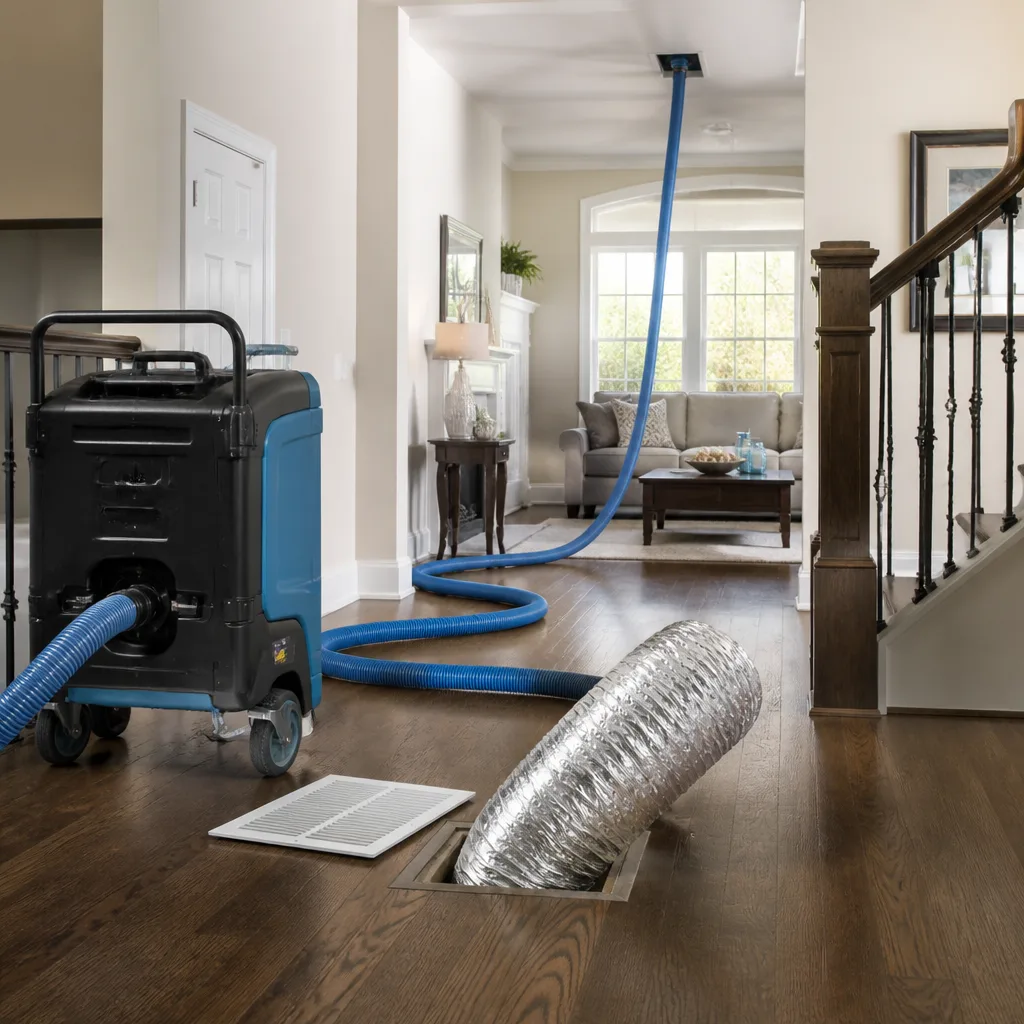 Whole-home duct cleaning
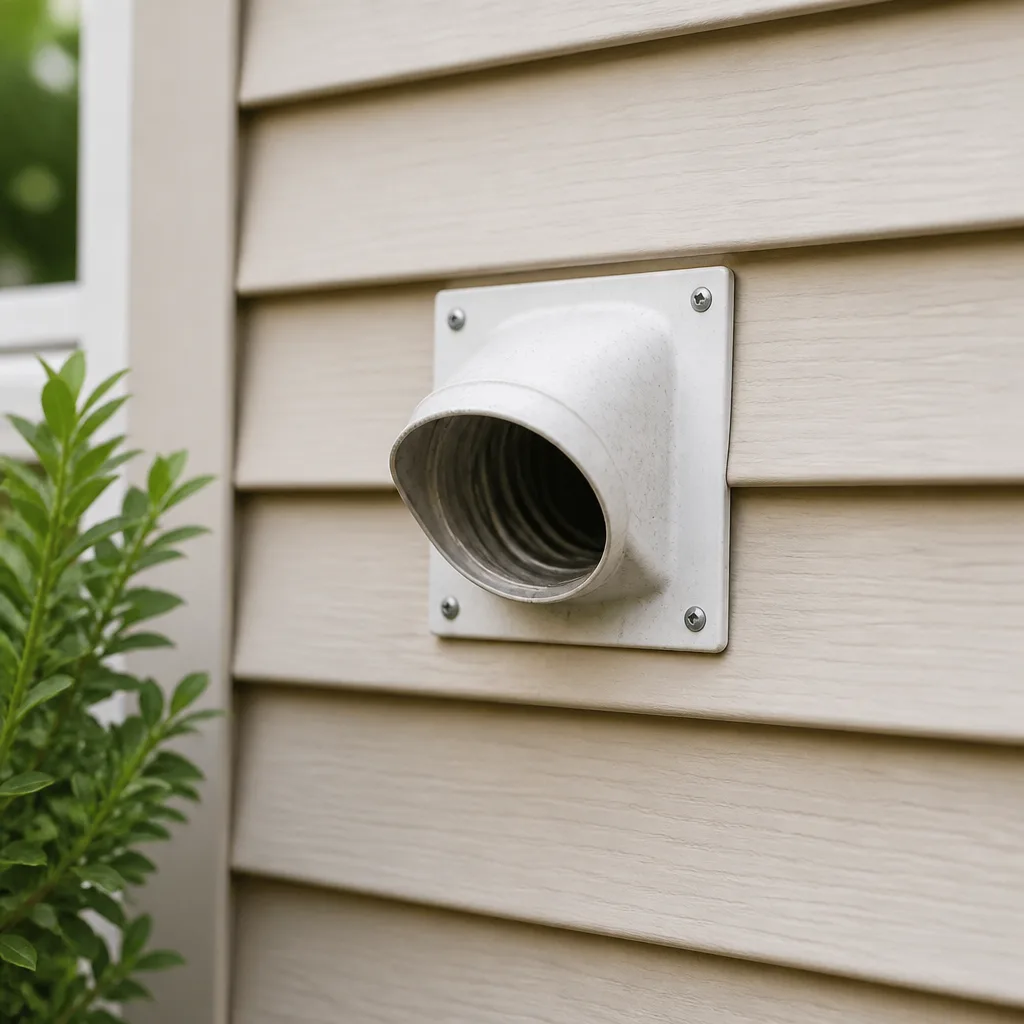 Dryer vent cleaning
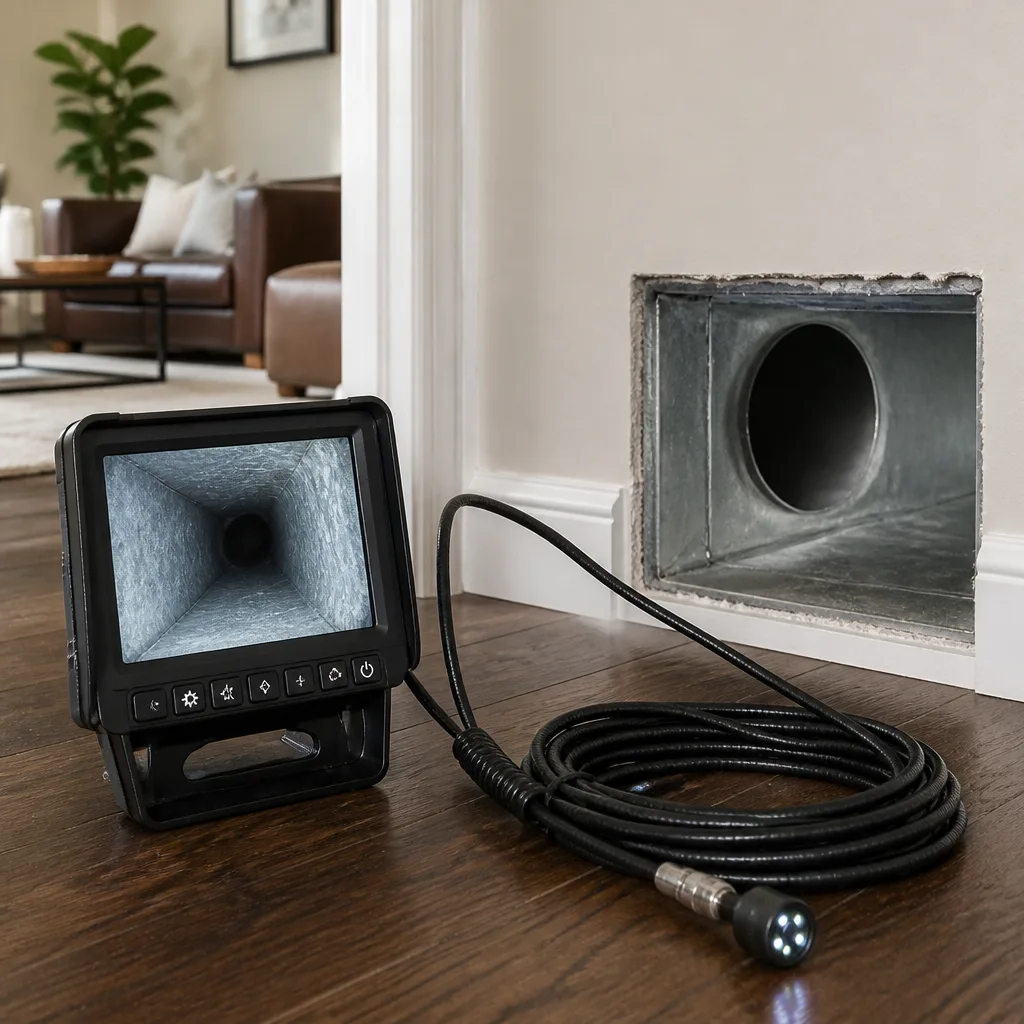 Camera inspection
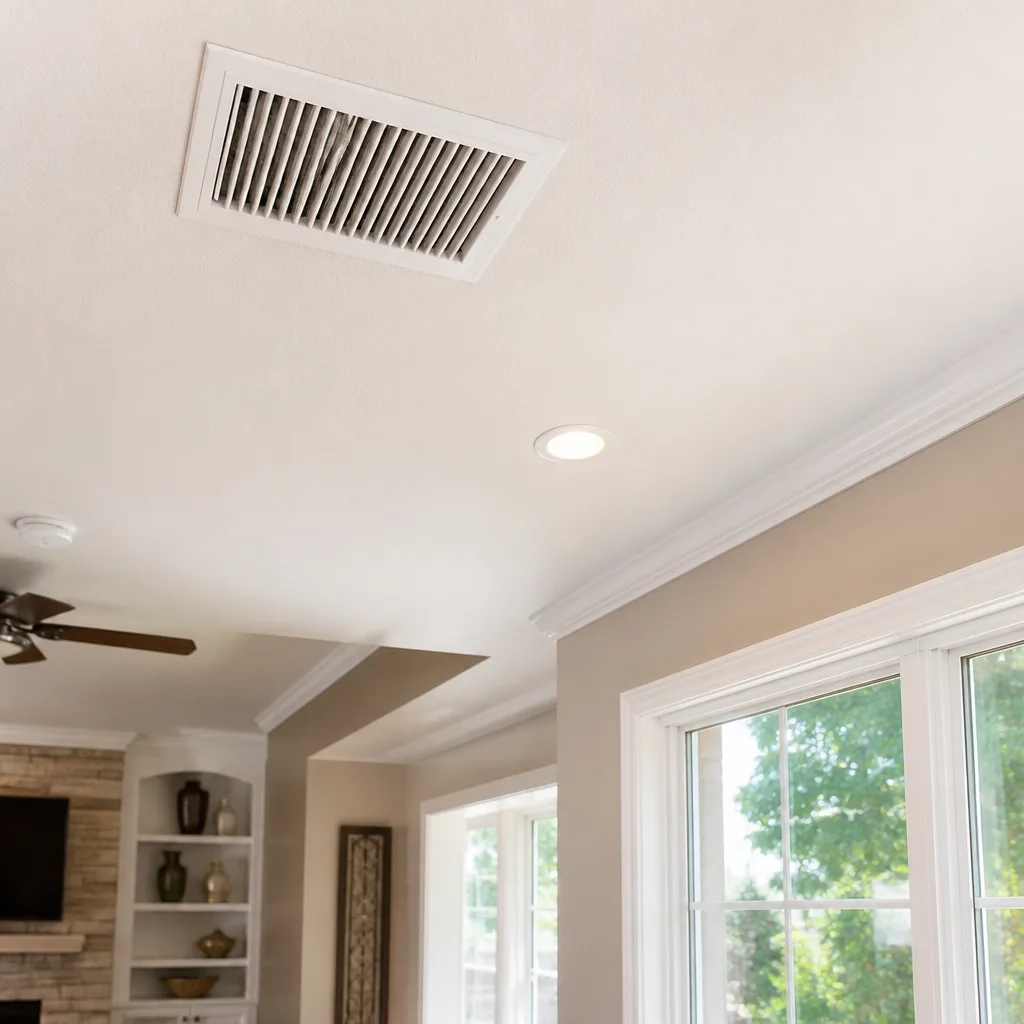 Sanitizing & deodorizing
Whole-system duct and dryer vent check with before-and-after photos - you see exactly what came out of your vents
That "$99 whole-house special" is a bait ad - the real number appears once they are in your hallway, or the "clean" is a shop-vac at the register. We photograph the inside of your ducts before and after instead.
Air Duct Cleaning Maintenance Checklist for Ballantyne Homeowners
Filter change reminders appear on every HVAC checklist. The register grille almost never does. That’s backwards, because the grille is your system’s first-stage particle collector, and in most Ballantyne homes it’s the first place you can actually see contamination building. A grille loaded with dust tells you something the filter can’t: what’s getting past it and settling in the supply runs. This guide maps every inspectable point in your air pathway, from vent cover to air handler, to a specific interval and a specific pass/fail condition. You’ll learn what to check yourself, what needs a technician’s borescope, and the exact thresholds that turn a routine check into a service call.
Quick Answer
A workable air duct maintenance checklist for Ballantyne homeowners has five inspection points (registers, return grilles, visible flex duct, air handler cabinet, drain pan), checked monthly at the grilles and annually at the equipment, with interim checks after spring pollen and again at the end of summer humidity. Full professional cleaning is typically needed every three to five years, sooner if you’ve renovated, moved in recently, or see any of the warning thresholds below.
Styles & brands we work with
- Whole-home duct cleaning
- Dryer vent cleaning
- Camera inspection
- Sanitizing & deodorizing
Table of Contents
- The Zone-by-Zone Inspection Sequence
- Ballantyne’s Two Contamination Windows
- What You Can Check Yourself vs. What Needs a Borescope
- How to Set a Baseline After Professional Cleaning
- Warning Thresholds That Mean It’s Time to Call
- Your Dryer Vent Belongs on the Same Checklist
- Upgrading the Air Itself: Filtration and Sanitizing
- Building a Realistic Annual Schedule
The Zone-by-Zone Inspection Sequence
Work through the pathway in the direction air actually travels, which is return to supply. That order matters because contamination upstream explains what you find downstream. A dusty supply register means little if the return grille two rooms over is the actual source.
- Supply registers. Remove the grille and look at the boot and the first several inches of duct. Pass: light, even dust film. Fail: dust buildup thick enough to hold a fingerprint, or visible debris stuck to the metal.
- Return grilles. These pull the most air and load up fastest. Pass: dusty grille that wipes clean. Fail: matted dust, lint sheets, or grille bars clogged enough to restrict flow.
- Visible flex duct runs. Look in the attic or crawlspace where runs are exposed. Pass: smooth, supported, sealed at joints. Fail: crushed or kinked runs, disconnected sections, torn outer jacket, or sagging between supports.
- Air handler cabinet. Look for dust trails, gaps at panel seams, and the condition of the filter slot. Pass: clean cabinet, filter seated square. Fail: dust streaking from seams, an ill-fitting filter, or visible buildup inside the blower compartment.
- Drain pan and condensate line. Pass: dry pan, clear line. Fail: standing water, biological growth, or a line that trickles instead of flows.
Our technicians have up to 8 years of experience, and this five-point sweep is where most findings start. We run it the same way in newer Ballantyne builds and older homes alike, because the sequence doesn’t change. What changes is how fast each zone fails.
Ballantyne’s Two Contamination Windows
Ballantyne has two distinct stretches each year when duct contamination builds faster than the annual average. Spring brings the region’s heavy pollen load, and summer brings sustained humidity. They load the system differently, so they call for different interim checks.
The spring pollen window. Pollen is fine and sticky. It slips through basic filters, lands in the return, and settles into supply runs where the velocity drops. The tell is a fine greenish-yellow film on return grille bars in late spring. Check returns every couple of weeks during that stretch and wipe them clean.
The summer humidity window. Long humid weeks keep the evaporator coil wet and the drain pan active. That moisture is what turns ordinary dust into biological growth. The tell here isn’t dust, it’s odor: a musty note at the registers when the system first starts up. Check the drain pan monthly through summer.
Where the Two Windows Overlap
Late spring into early summer is when pollen that settled in spring meets the moisture that arrives in June. That combination is why a home cleaned in March can smell by July. An interim inspection after pollen season and again at summer’s end catches this before it reaches the point where sanitizing is needed instead of just cleaning.
Between full cleanings, you can also extend how long the ducts stay in good shape with periodic air duct cleaning. The point isn’t to clean constantly. It’s to clean on the right schedule and inspect in between.
What You Can Check Yourself vs. What Needs a Borescope
You can monitor a surprising amount of your own ductwork with a flashlight and a phone camera. What you can’t do is see inside a horizontal run, behind a coil, or past the first bend of a flex line. That’s where a technician’s borescope comes in.
A Homeowner Can Inspect:
- Register and return grille surfaces and the first visible inches of duct
- Flex duct runs in spaces you can safely reach from a stable surface
- The drain pan, condensate line, and filter fit
- Odor at each register, described by where it’s strongest
- Photo documentation of each point for comparison over time
A Technician Needs to Inspect:
- Interior surfaces of long horizontal and vertical runs
- The downstream face of the evaporator coil
- Inside the air handler cabinet and blower compartment
- Flex duct interiors past the first visible section
- Whether a suspected leak is blowing conditioned air or pulling attic air
Never pull panels off the air handler yourself to check inside. That equipment involves electrical components and, in some configurations, refrigerant and gas connections. A trained professional handles it safely, and our HVAC cleaning work covers that side of the system properly. What you can do is photograph what you can safely see, note where the odor is strongest, and hand that to the technician. It shortens the diagnosis and often tells us exactly where the borescope should go first.
How to Set a Baseline After Professional Cleaning
Maintenance without a baseline is guesswork. After a professional cleaning, the simplest way to make all future comparisons objective is to document the clean state. Do it within a day of the service, while it’s fresh.
- Photograph the inside of each supply register and every return grille you can reach.
- Photograph the air handler cabinet with the filter in place, noting the filter brand and size.
- Photograph the dry drain pan and clean condensate line.
- Write down the date, and the next inspection date based on your schedule.
- Describe the current “clean smell” at each register, so you have language for what normal is.
- Keep it all in one folder on your phone or in a household file.
Why bother? Because “my ducts are dirty again” is subjective, and dust film that looks heavy in dim light can look ordinary in daylight. A photo from the same angle on the same grille makes the comparison honest. We leave our customers with a written record of the clean state, and it’s one of the reasons we can talk about Air Duct Cleaning Ballantyne as a full-system service rather than a one-time visit.
What a Cleaning Involves
Professional cleaning isn’t a vacuum run through the registers. Equipment like Rotobrush and Nikro uses commercial-grade rotary brush and vacuum extraction, the same systems restoration and industrial crews use. Add Abatement Technologies products for contaminant containment and you get a job where the debris leaves the system instead of re-circulating. That matters in Ballantyne homes with tight, recent construction and long duct runs.
Warning Thresholds That Mean It’s Time to Call
Some findings are routine. Others convert a maintenance check into a service call today. These are the thresholds we recommend treating as hard stops.
- Visible mold on duct surfaces, the air handler, or the coil. Anything fuzzy, spreading, or dark-patched on a moist surface. Give the area a wide berth and do not disturb it.
- Standing water in the drain pan. A pan should be dry when the system is idle. Water, slime, or a slow line means the moisture is going somewhere it shouldn’t.
- Odor that persists after the system has run for several minutes. A musty smell at startup that clears is normal in humid months. One that lingers means the source is upstream and growing.
- Debris blowing from registers. Visible dark specks or lint in the air after the fan starts.
- Disconnected or crushed duct found during inspection. Air going into the attic or nowhere at all.
- Condensate line that trickles or is blocked. Restriction here points to water accumulating where it shouldn’t.
- Persistent uneven airflow or hot spots. A sign of leaks or restriction in the runs themselves.
Two of these deserve a specific warning. If you see visible biological growth on ductwork, leave it alone and get a trained professional to assess it. Disturbing it can release particles into the airstream. The same goes for a suspected duct leak near electrical components: don’t reach in to seal it. Duct repair and sealing belongs with someone who can confirm the leak, cut and fit the seal correctly, and check the rest of the run while the system is open. That’s the “we find it, we fix it” part of the job. Catching damage during air duct cleaning is far cheaper than discovering it years later after it has been channeling attic air into every bedroom in the house.
Your Dryer Vent Belongs on the Same Checklist
A dryer vent is part of your home’s forced-air pathway, and it’s the one run most homeowners never inspect. The lint that builds up in a dryer duct is dry, fast-burning material, and a clogged run traps heat along with it. In Ballantyne, where many homes are set up with long dryer runs through unconditioned space, the buildup happens faster than people expect.
What to check yourself, on the same schedule as your register sweep:
- Look at the vent hood outside while the dryer runs. The damper should flap open easily with strong airflow.
- Pull the lint filter and check the flexible connector behind the dryer for lint accumulation.
- Feel the outside of the vent run after a cycle. A hot duct, or a heavy one, suggests restriction.
- Notice drying times. Clothes taking noticeably longer is an early signal.
What you shouldn’t do is disconnect a long, hidden run yourself. Full dryer vent cleaning uses the same extraction equipment as duct work, and it gets the lint that a homeowner can’t reach past the first bend. We treat it as a dedicated service, not an add-on, because a clear dryer vent is straightforward maintenance and a blocked one is a fire risk.
Upgrading the Air Itself: Filtration and Sanitizing
Cleaning removes what’s there. Filtration and air quality treatment are what keep it from coming back as fast, and they belong on the checklist right alongside the physical checks.
Filtration upgrades. We work with Honeywell and Aprilaire air quality components because those names are recognized across the HVAC trade for a reason: they’re designed as part of a system, not a bolt-on. If your filter slot and return capacity can handle a better filter, the upgrade is worth having a technician assess. Putting in a filter that’s too restrictive for your system is a common mistake, so the choice needs the return size checked first.
Air quality and sanitizing. When moisture has turned dust into biological growth, cleaning alone isn’t the whole answer. Sanitizing treats the surfaces the contaminants are growing on. We treat it as a named service line rather than an upsell, because the goal is clean, sealed, and sanitized, in that order. That’s what lets us talk about air you can trust without overselling. It also means the same relationship covers the Air Duct Cleaning Ballantyne and air quality conversation together.
Whole-system thinking is the point. From the vent cover to the air handler, our five service categories cover supply ducts, return ducts, HVAC components, dryer vents, and air quality treatment. That’s what makes a consistent checklist possible in the first place.
Building a Realistic Annual Schedule
Here’s the short version to put on your calendar.
- Monthly: Inspect return and supply grilles, wipe as needed; check the drain pan; check the filter and change it on its own schedule.
- Late spring, after pollen: interim check of all returns and the first visible duct sections; note any fine yellow-green film.
- Late summer, after humidity: full check including drain pan, condensate line, and odor at every register; sanitizing if moisture has driven growth.
- Annually: full inspection with a technician, including the air handler cabinet and any runs you can’t see.
- Every three to five years: professional cleaning, sooner if you’ve renovated, recently moved in, or seen a warning threshold.
- Twice a year: dryer vent check; professional cleaning on the manufacturer’s recommended interval.
Document every check with a photo. That’s what turns a schedule into real maintenance instead of a vague intention.
Common Mistakes to Avoid
- Ignoring the registers because the filter looks fine. The grille is your first-stage collector, and it catches what the filter misses. Inspect it as often as you check the filter.
- Swapping to the highest-MERV filter you can find. A filter too dense for your system chokes airflow and can freeze the coil. Match the filter to your return capacity, not the numbers on the box.
- Cleaning ducts after a renovation and calling it done. Fresh drywall dust and construction debris resettle for weeks. Schedule the cleaning after the dust has settled, and document the baseline then.
- Treating musty odor as “just a humid Ballantyne thing.” Humidity explains a lot here, but persistent odor after the system has run is a warning threshold. Have it assessed.
- Skipping dryer vent checks because the lint filter gets emptied. The filter traps some lint. The hidden run traps the rest, and that’s the part that matters.
- Assuming a seal is airtight without checking. Leaky flex duct and gaps at the cabinet seams pull attic air into the system. A borescope confirms it; a quick visual often doesn’t.
- Forgetting to filter your system’s whole pathway. Ducts, coil, blower, drain pan. Cleaning one end while the other stays loaded just moves the problem.
See the difference
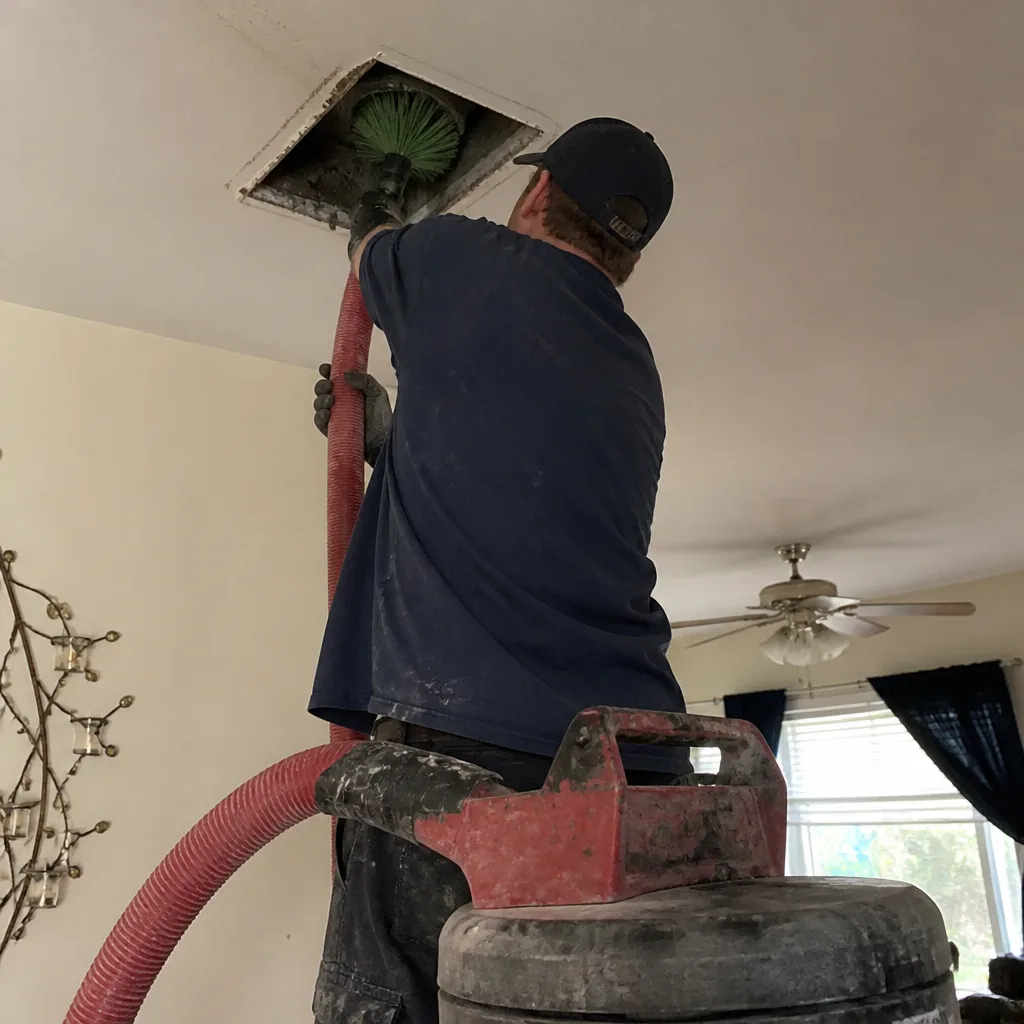 Before
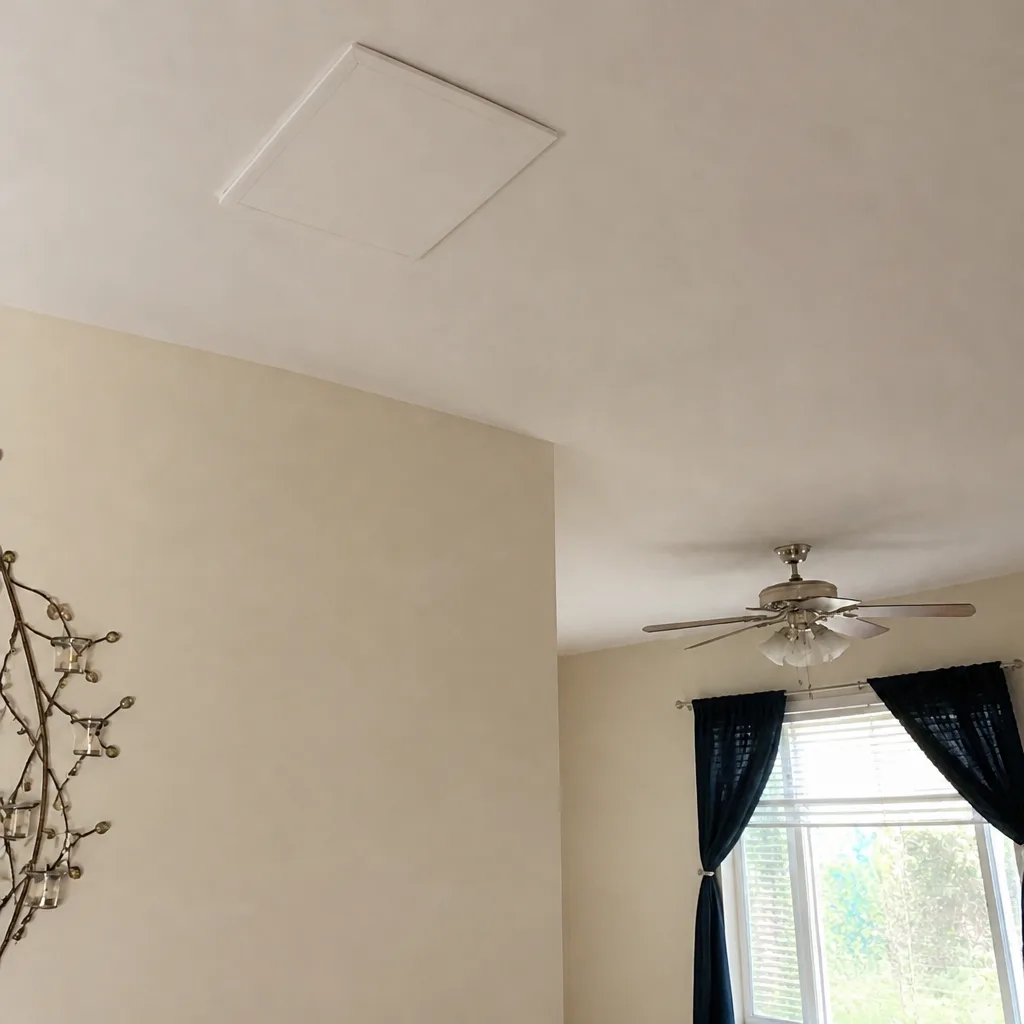 After
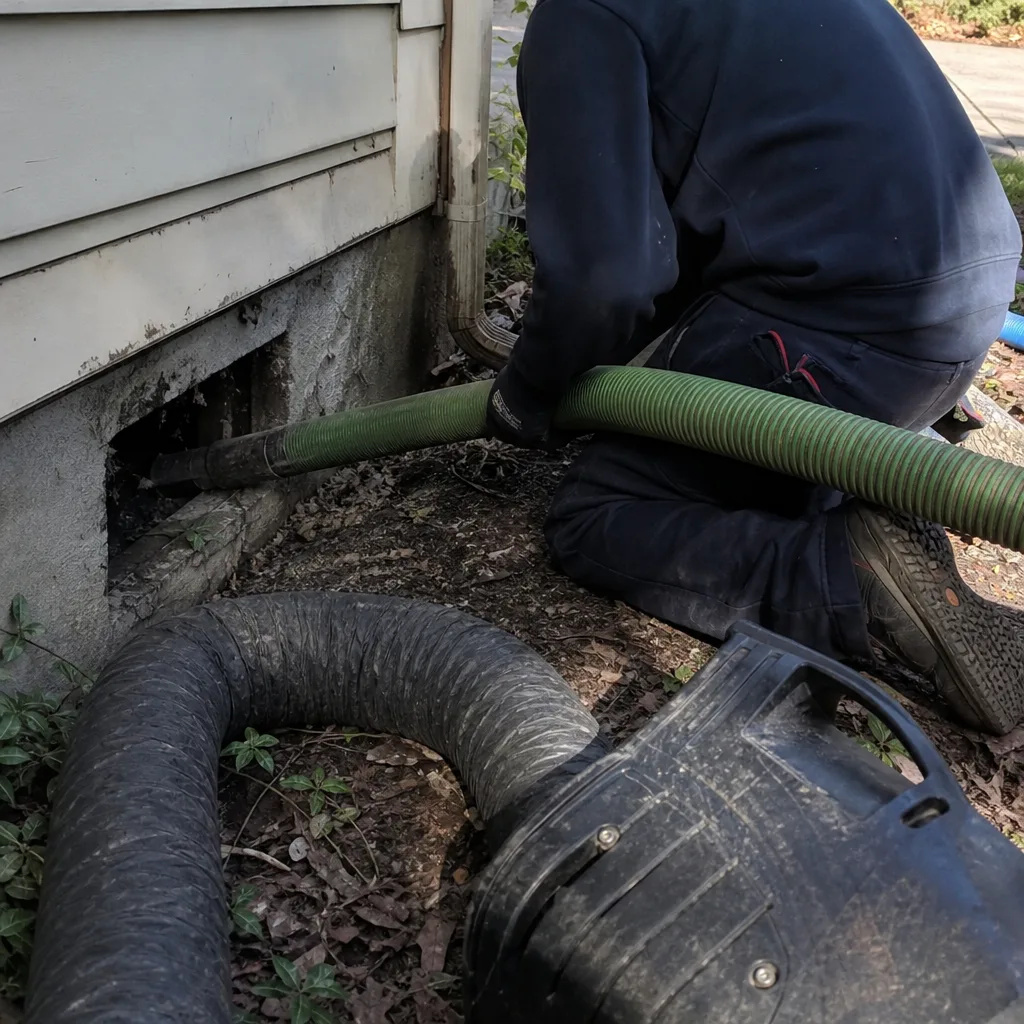 Before
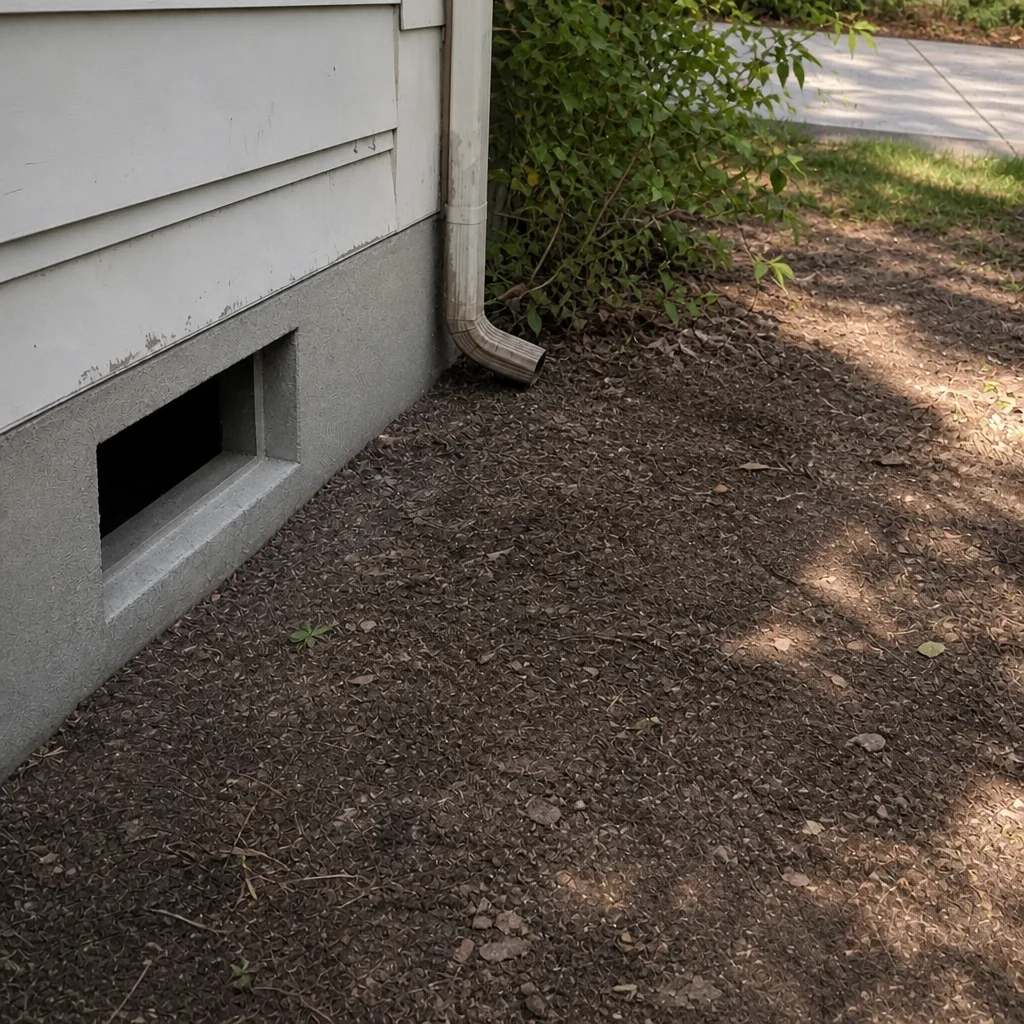 After
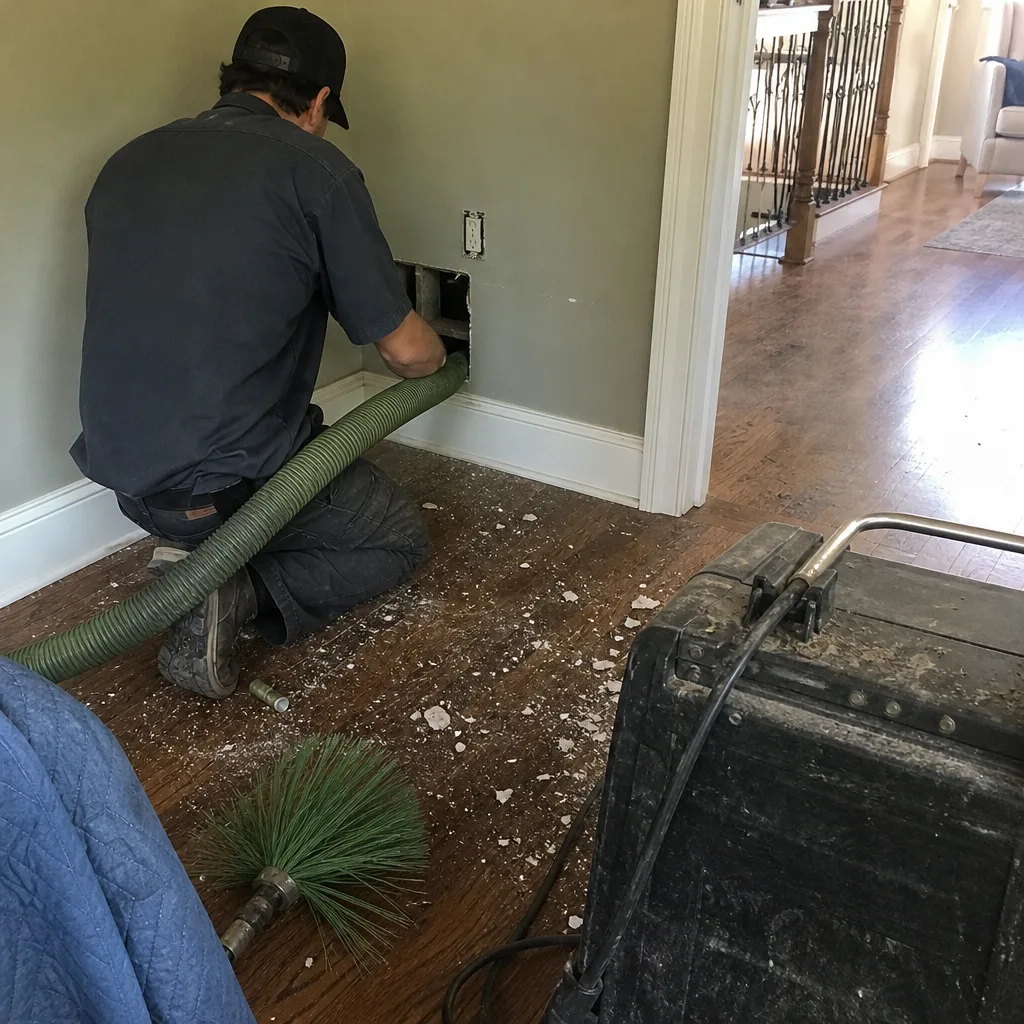 Before
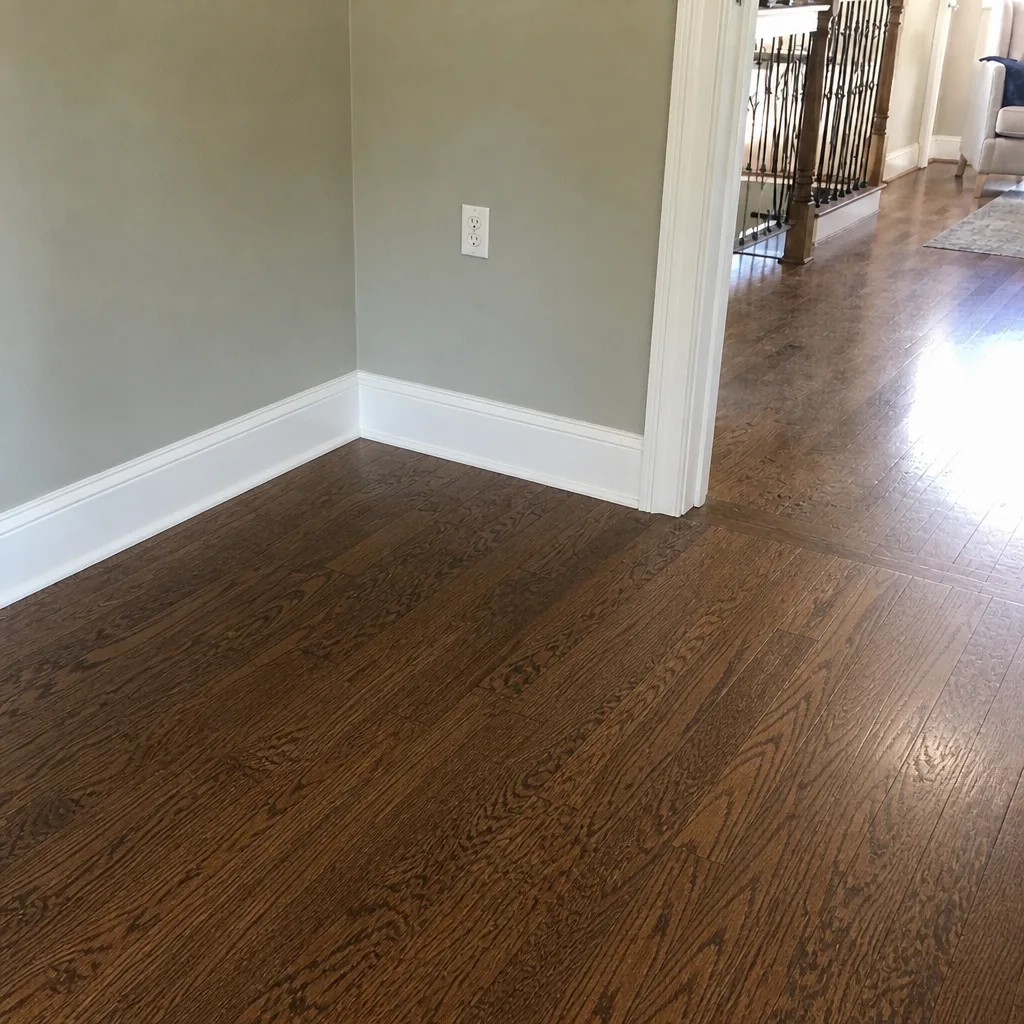 After
When to Call a Professional
Call a professional the moment you find any of the warning thresholds above: visible mold anywhere in the airstream, standing water in the drain pan, a condensate line that won’t flow, or odor that persists once the system has run. Also call when you find crushed, detached, or torn ductwork, since sealing that correctly needs a technician who can inspect the whole run. And call if it’s been more than three to five years since a full cleaning, if you’ve just moved in, or if you’ve finished a renovation. We find it, we fix it, so a single visit covers cleaning and repair. Air Duct Cleaning Ballantyne offers free estimates in Ballantyne. Call (855) 726-7841. We answer 24/7. Fast dispatch from 7am to 7pm, Sunday through Friday.
Frequently Asked Questions
Every three to five years for most homes, and sooner if you’ve renovated, recently moved in, or have pets, allergies, or a system that’s been running without a proper filter. Ballantyne’s spring pollen and summer humidity both accelerate buildup, so interim inspections between full cleanings matter more here than in drier climates. If you’re unsure where you stand, an inspection settles it: call (855) 726-7841.
The return grilles, because they pull the most air and load up fastest. A matted, linty return is the earliest visible sign that dust is bypassing the filter. Wipe it, photograph it, and if the buildup returns quickly, book an inspection: call (855) 726-7841.
Sometimes, but not reliably. Register and return condition, odor at startup, and how much debris settles on grilles give you a decent early signal. What you can’t see, inside horizontal runs, the coil, and the air handler cabinet, is where the real answer lives. A technician with a borescope settles it in one visit: call (855) 726-7841.
A faint musty note at startup during humid months is common and often clears as the coil dries. If the smell persists after several minutes of runtime, or gets stronger, it points to growth in the drain pan or ductwork and should be checked. Don’t ignore odor that’s more than a startup puff: call (855) 726-7841.
Yes, plan on it. Fine drywall dust and construction debris settle into the system for weeks after the work ends, even with covers in place. Wait until the dust has settled, then have the system cleaned and a baseline documented. To schedule it, call (855) 726-7841.
You can check airflow at the outside hood and clear the lint filter, but the hidden run needs professional extraction. A long, concealed duct holds lint a homeowner can’t reach, and that’s the portion that matters for fire safety. Have it checked on the same schedule as your ducts: call (855) 726-7841.
The Bottom Line
Duct maintenance in Ballantyne isn’t a reminder to change a filter. It’s a five-point inspection, done in order, with a pass/fail condition at each stop and a baseline to compare against. Check the grilles monthly, run interim checks after pollen season and at the end of summer humidity, document everything, and treat visible mold, standing water, and persistent odor as calls to make today. From the vent cover to the air handler, a checklist you actually follow is what keeps your air clean, sealed, and sanitized between professional visits.
Written by the team at Air Duct Cleaning Ballantyne.