
Last updated November 24, 2026
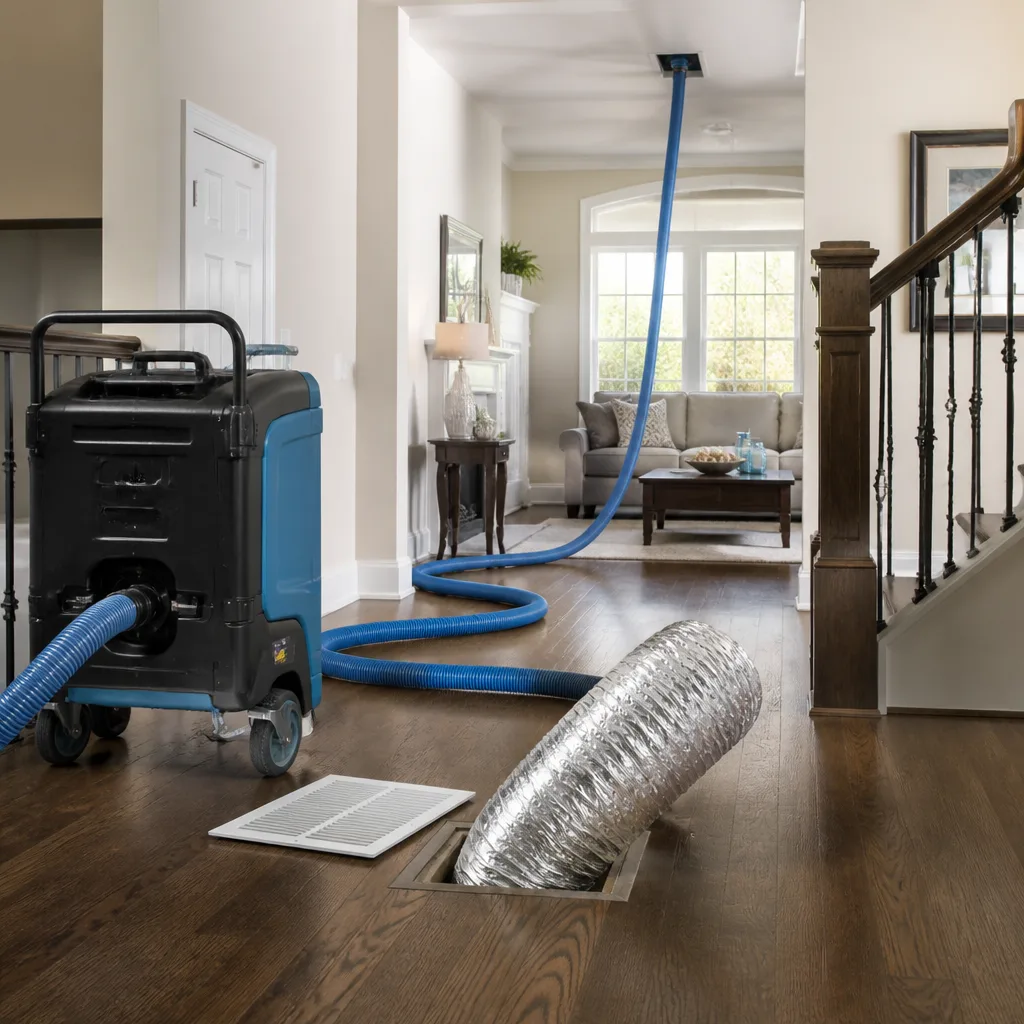 Whole-home duct cleaning
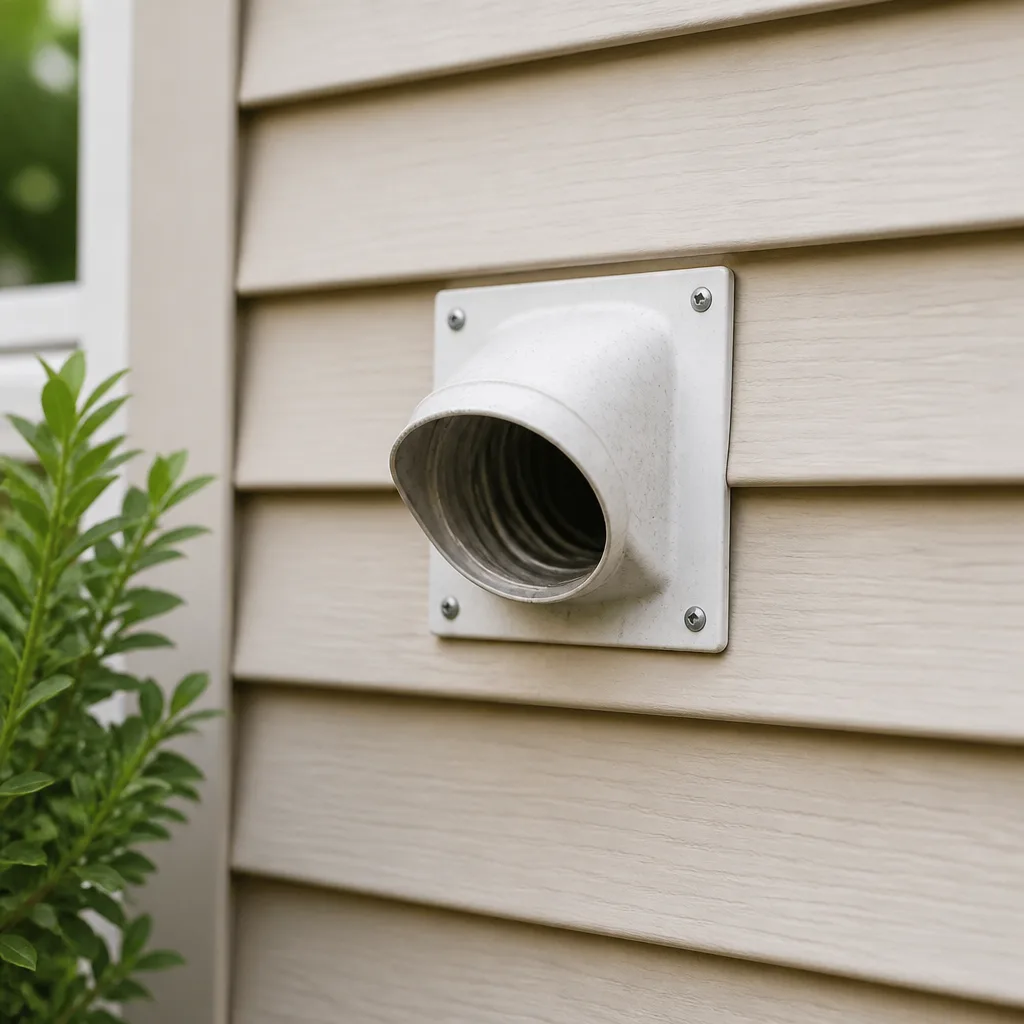 Dryer vent cleaning
 Camera inspection
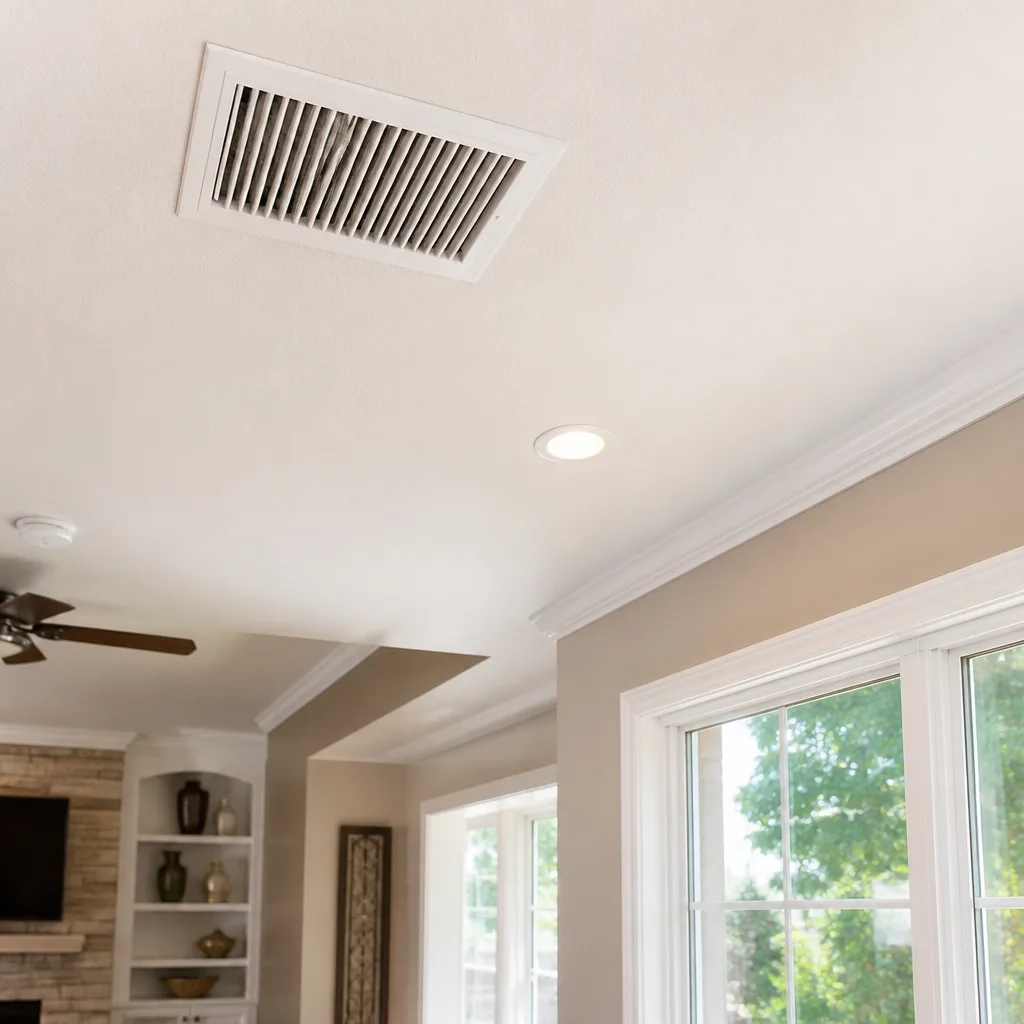 Sanitizing & deodorizing
Whole-system duct and dryer vent check with before-and-after photos - you see exactly what came out of your vents
That "$99 whole-house special" is a bait ad - the real number appears once they are in your hallway, or the "clean" is a shop-vac at the register. We photograph the inside of your ducts before and after instead.
Seasonal Air Duct Cleaning Care for Ballantyne: Year-Round Homeowner’s Guide
Most homeowners in Ballantyne think about their ductwork once – when something goes wrong. That’s backwards. Ducts here don’t get dirty on a random schedule. They collect contamination in four predictable waves across the year, each one tied to something specific about the Charlotte climate: the spring pollen dump, the summer humidity climb, the fall leaf debris pulled in through outdoor intakes, and the first cold snap that fires up the furnace. This guide walks through each of those seasons for Ballantyne homes, what’s happening inside the system at each stage, and how to time cleaning so you’re preventing problems instead of reacting to them.
Quick Answer
Air ducts in Ballantyne usually need professional cleaning once a year, with the best timing landing in late spring (after the pollen peak) or early fall (before the heating season). Homes with pets, allergy sufferers, recent renovations or a vented crawl space often need service twice a year. The seasonal risk here is driven by Charlotte’s humid summers, which push moisture into the air handler cabinet and can sustain microbial growth in duct liners if it isn’t managed.
Styles & brands we work with
- Whole-home duct cleaning
- Dryer vent cleaning
- Camera inspection
- Sanitizing & deodorizing
Table of Contents
- Why Seasonal Timing Matters More in Ballantyne Than Most Places
- The Ballantyne Contamination Calendar: Month by Month
- Why Summer Is the Highest-Risk Season for Duct Systems Here
- Protecting Ductwork During Ballantyne’s Construction Seasons
- The Fall HVAC Switchover: A Diagnostic Checkpoint Most Tune-Ups Skip
- How Often Should You Clean? Matching Intervals to Your Household
- Clean, Sealed, and Sanitized: Why Repair Belongs in the Seasonal Routine
- What Seasonal Duct Cleaning Costs in the Ballantyne Market
Why Seasonal Timing Matters More in Ballantyne Than Most Places
Charlotte sits in a climate band that punishes ductwork in ways that dry-climate cities never see. Spring allergy seasons here are among the most intense in the country, driven largely by oak and the ornamental Bradford pear that lines so many Ballantyne subdivisions. Those trees release enormous pollen loads in a short window. Every bit of that pollen that drifts into a home’s return-air grille gets pulled into the system and then redistributed through every supply vent each time the air handler cycles. The ductwork effectively becomes a pollen reservoir for the rest of the year if it isn’t cleaned after the season closes.
Summer adds a second layer. Charlotte’s dew points climb high enough through July and August that the inside of an air handler cabinet can stay damp for weeks. Mold and mildew need sustained moisture to get a foothold, and a duct system lined with dust and pollen gives it the food source to match. That combination – moisture plus organic debris – is what makes summer the season where a mildly dirty system can turn into a microbial problem.
Fall brings a third event that’s easy to miss: the first time the furnace fires up after months of dormancy, warm air moves through ductwork that’s been sitting since spring. Whatever accumulated over summer gets pushed into the living space at once, and homeowners notice a burnt, musty or dusty smell. That’s not the furnace burning off dust – it’s the whole system announcing what’s been sitting in it.
Winter is quieter for contamination but harder on the equipment, because the system runs nearly nonstop. The pattern in Ballantyne is consistent: four seasonal events, each with its own window for intervention.
The Ballantyne Contamination Calendar: Month by Month
Here’s what’s actually happening inside a typical Ballantyne home’s duct system across the year, and when the best window for service opens.
- March through May – Spring pollen load. Oak and Bradford pear pollen peaks in this window. Ducts collect pollen film on the interior surfaces of the supply runs. Best cleaning window: late May or early June, after the pollen peak closes.
- June through August – Humidity and microbial risk. Dew points stay high. The air handler cabinet and any insulated flex duct can hold moisture. If you’re prone to mold issues, this is when sanitizing matters most. A mid-summer inspection is worth it if you notice musty odors.
- September through November – Leaf debris and intake infiltration. Outdoor air intakes and fresh-air returns pull in fine leaf debris and yard dust. This is also when most Ballantyne subdivisions have active construction within a few streets. Best cleaning window: early to mid-October, before the heating season starts.
- October through November – First-heat odor event. When the furnace first runs, whatever accumulated through the summer gets pushed out. If the smell persists past a day, the system needed cleaning before the season started.
- December through February – Peak runtime, lowest contamination. The system runs heavily but pulls in less outdoor debris. This is a good window for repair and sealing work found during a fall inspection.
The takeaway from this calendar is that the two ideal cleaning windows in Ballantyne are late spring and early fall. One clears the pollen load. The other clears the summer accumulation before it gets recirculated through the heating season. Every other month is a secondary window – useful if your household has extra load, but not the primary timing.
Why Summer Is the Highest-Risk Season for Duct Systems Here
If you had to pick one season when duct contamination turns from nuisance to genuine indoor air quality problem in Ballantyne, it’s summer. The mechanism is straightforward. Charlotte’s summer dew points run high enough that the air handler cabinet, evaporator coil housing and any ductwork that isn’t perfectly sealed will be consistently damp. Mold spores are always present in household air; what they need is moisture plus a food source. Dust, pollen, pet dander and skin cells make up that food source.
Relative humidity inside the air handler cabinet matters here. When the cabinet sits above roughly 60% relative humidity for sustained periods, mold growth on interior surfaces becomes a real risk. In an air-conditioned Ballantyne home, the conditioned air itself is dry because the evaporator coil pulls moisture out of it – but the cabinet that houses that coil runs cool and collects condensate. If the condensate drain is partially clogged or the cabinet has gaps, that moisture lingers.
A few signs that a Ballantyne home’s duct system is sitting in the high-risk zone:
- A musty or dirty-sock odor from supply vents, especially in rooms closest to the air handler
- Visible moisture or water staining near the air handler cabinet
- Condensate drain lines that run slowly or back up
- Insulated flex duct with visible sagging or condensation on the jacket
- Allergy symptoms that persist indoors through July and August despite closed windows
What to do about it: the combination that actually works in a humid southeastern climate is cleaning, sanitizing and sealing. Cleaning removes the food source. Sanitizing treats the surfaces where microbial growth has established. Sealing eliminates the gaps that let humid outside air into the duct system in the first place. Brands like Air Duct Cleaning Ballantyne uses – Rotobrush for rotary brush and vacuum extraction, Nikro for high-volume negative pressure – are what make a real clean possible in a system this contaminated. Consumer-grade vacuums don’t move enough air to clear a residential trunk line.
Summer is also the best season to have your system inspected if you’ve ever had a mold concern, because the problem is active. Catching it in July gives you time to correct before the heating season pushes the same air through the house repeatedly for four months.
Protecting Ductwork During Ballantyne’s Construction Seasons
Ballantyne has been one of the most active residential construction zones in the Charlotte metro for years. New subdivisions, renovations, teardowns and rebuilds are a near constant. Every one of those projects is a dust source, and in a neighborhood where the house next door or two streets over is being built, fine construction dust makes its way into outdoor air intakes, gaps around return plenums and any ductwork that isn’t perfectly sealed.
The dust that comes off a construction site isn’t just nuisance grit. Drywall dust, sanding residue, concrete dust and insulation fibers all carry particles small enough to lodge in duct liners and on the evaporator coil. If your home sits within a block or two of active construction, your ducts are collecting more debris than a typical Ballantyne home in the same season.
Practical steps to reduce construction-season infiltration:
- Seal obvious gaps around the air handler and return plenum. Anywhere the duct system penetrates a wall or floor and there’s a visible gap, that’s an infiltration point. Caulk and mastic are cheap. The gap is the entry.
- Change filters more often during active construction season. A filter that normally lasts a few months can load up much faster when the house next door is framed. Check it monthly and replace when it looks grey.
- Keep outdoor intake dampers in good condition. Fresh-air intakes that stay partially open year-round can pull in construction dust. Confirm the damper closes properly when the system isn’t calling for fresh air.
- Schedule duct cleaning after the project finishes, not during. Cleaning mid-construction just means the ducts collect the next batch of dust from the same project.
Homes built within the last few years in Ballantyne need extra attention here, because in many subdivisions the tract homes on either side were built within a year of yours. That means ductwork can carry construction residue from both your own build and the neighbors’ – and cleaning after the whole subdivision’s initial build cycle finishes is the only way to clear it completely.
Repair and sealing goes a long way in this context. Air Duct Cleaning Ballantyne offers air duct cleaning alongside duct repair and sealing as a core service, which means a technician who finds a gap or a disconnected run during a clean can fix it in the same visit instead of leaving you to call a second contractor. That matters most during construction season, when you want the system sealed tight before the next batch of dust arrives.
The Fall HVAC Switchover: A Diagnostic Checkpoint Most Tune-Ups Skip
The first cold snap in Ballantyne triggers the annual switch from cooling to heating. Most seasonal HVAC tune-ups focus on the furnace itself – burner, igniter, blower, gas pressure. That’s half the picture. Ductwork is the other half, and it’s the half most tune-up services never touch.
A proper fall duct inspection before the heat season starts should cover these items:
- Return-air plenum and filter housing. Confirm no debris has collected over summer, and that the filter slot is holding the filter correctly with no gaps.
- Supply trunk seams. Check for separation at taped or mastic joints, especially where ductwork runs through an unconditioned space like an attic or vented crawl space.
- Flex duct supports and insulation condition. Sagging runs restrict airflow and, if the outer jacket has torn, invite moisture and debris into the inner liner.
- Air handler cabinet condition. Look for moisture at the cabinet base, corroded drain pans and any gap where humid air can enter.
- Boots at the supply terminals behind vent covers. The short duct run behind each vent cover is a common failure point – loose, torn or disconnected boots are the most missed leak in any system.
- Blower compartment cleanliness. A blower wheel caked with debris throws less air. Cleaning it as part of HVAC cleaning is part of a proper seasonal service.
- Condensate drain clear. Before heating season is the right time to clear any block so it doesn’t freeze up the first cold week.
Any of these items that fail inspection should be addressed before the heating season starts, not after. Repair and sealing capability is what turns a diagnostic find into a fix in the same visit. A seasonal tune-up that ignores ductwork tells you the furnace is fine but leaves the pathway the air actually travels through unexamined.
Why Ballantyne Homes Need Both Cooling and Heating Checkpoints
Ballantyne homes run cooling roughly seven months of the year and heating for the other five. That means the duct system runs year-round with only a brief shoulder season on either end. There’s no natural downtime for the system to dry out or settle. The dust load from one season carries into the next unless it’s cleared, which is why two checkpoints a year – spring and fall – make more sense here than the once-a-year pattern that works in milder climates.
How Often Should You Clean? Matching Intervals to Your Household
Annual cleaning is a good baseline for a typical Ballantyne home. But “typical” hides a lot of variation. Some households need service twice a year, and some can stretch past annual if the system stays sealed. Here’s how to think about the shift.
Twice-a-Year Situations
- Pets in the home. Pet dander is fine particulate that lodges in duct liners and keeps recirculating. Two dogs or three cats means twice-a-year cleaning keeps the system healthier than annual.
- Allergy sufferers in the household. If anyone in the home has respiratory allergies or asthma, a clean system after each of the two major pollen seasons makes a measurable difference in what they’re exposed to indoors.
- Recent renovation. Drywall dust, sanding residue and construction debris from a renovation enter the system within days. Cleaning after the work finishes, then again the following spring, clears both the renovation debris and the usual seasonal load.
- Vented crawl space. Homes with a vented crawl space in Ballantyne pull humid outside air into the foundation, which pushes the water vapor near the duct runs in that space. That moisture load justifies twice-a-year cleaning to keep the ducts from becoming a biological growth environment.
- Active construction within a few blocks. See the previous section – construction season is a load multiplier.
Annual or Slightly Longer Situations
- No pets, no allergy sufferers, no recent renovation. A well-sealed system in a household without those factors can often run on an annual schedule with an inspection at the same time.
- New construction within the last two years. The initial construction dust clears in the first cleaning. After that, standard intervals apply.
- Conditioned crawl space. A sealed, conditioned crawl space removes the moisture load that a vented one adds, which lets you lean toward annual rather than twice-a-year.
The other variable worth watching is home age. Ballantyne homes built in the 1990s and early 2000s often have original ductwork that’s now more than two decades old. Older duct systems with degraded flex duct jackets or taped joints that have dried out leak more than newer, sealed ones. For those homes, an inspection plus sealing before setting a cleaning interval makes more sense than cleaning on a schedule a newer home could handle.
Clean, Sealed, and Sanitized: Why Repair Belongs in the Seasonal Routine
Here’s what most air duct cleaning companies skip: the duct system is only as clean as it stays after the truck leaves. If the supply trunk has a gap at the plenum, or a boot behind a vent cover is disconnected, the next six months of infiltration undo the cleaning. That’s why the sequence matters – clean, then seal, then sanitize.
Cleaning removes the accumulated debris. Sealing eliminates the leak paths that let new debris in. Sanitizing treats whatever surfaces remain that could support microbial growth if humidity climbs again. Done in that order, the seasonal clean holds longer than a clean alone.
Topical brands matter here. Rotobrush and Nikro handle the cleaning and extraction. Abatement Technologies products are used where contaminant containment during the cleaning process is a priority – important in a home with allergy concerns or a known microbial issue, because you don’t want the cleaning itself to redistribute debris. And when the seasonal conversation turns to long-term air quality, components from Honeywell and Aprilaire (filtration, humidity control) are the natural next step, because they connect the cleaning service to the household’s year-round air quality.
Air Duct Cleaning Ballantyne offers duct repair and sealing as a named service line alongside the cleaning work, which means the seasonal visit can finish the job rather than leaving the customer to find a second contractor for the leak repairs. A duct cleaning company that hands you a list of “you’ll need to fix these yourself” is leaving the system half-corrected.
Dryer Vents Belong in the Seasonal Routine Too
dryer vent cleaning is a separate but related seasonal concern. Lint accumulation in a dryer vent is a leading cause of residential fires, and Ballantyne homes with high laundry volume benefit from annual vent cleaning timed with the fall duct service. It’s a short appointment and a genuinely different risk category from duct debris.
What Seasonal Duct Cleaning Costs in the Ballantyne Market
Pricing in the Ballantyne market for air duct cleaning runs in this range for a typical single-family home. These are typical estimates, not quotes – the written estimate after an in-person assessment sets the final price.
- Standard whole-home air duct cleaning: $350 to $650 for a typical Ballantyne home with a single HVAC system
- Larger homes or two-system setups: $550 to $950
- Duct sanitizing (add-on service): $150 to $350 depending on system size
- Duct repair and sealing: $300 to $900 depending on how many leaks and the access required
- Dryer vent cleaning: $120 to $220
- HVAC cleaning (bloweer and coil): $200 to $400
Quotes dramatically below that range are worth questioning. The most common bait-and-switch pattern in this industry is a teaser price for “duct cleaning” that turns out to cover one or two vents, with the rest of the system quoted after the technician is on site. Whole-system pricing – one flat price per system, agreed before work starts – avoids that entirely. A legitimate estimate should be based on the actual system size, number of supply and return runs, and whether the system is level (all ducts in one plane) or complex. Per-vent pricing is a signal to ask what’s actually being cleaned.
Before-and-after photos of your own ducts are the standard proof of work for a professional cleaning, and worth asking for before the visit.
Common Mistakes to Avoid
- Cleaning in the middle of spring pollen season. Cleaning in late May or June catches the whole pollen load at once. Cleaning in mid-April means the ducts fill back up within weeks.
- Skipping the pre-fall inspection because the furnace tune-up “covers everything.” Standard tune-ups don’t touch ductwork. The duct system is where the air quality problems live.
- Assuming a new-construction Ballantyne home doesn’t need cleaning. New builds carry their own construction debris, and in active subdivisions, so does the house next door. Clean once after the build cycle finishes.
- Accepting a per-vent price as a complete quote. Ask what the total price is for the entire system before any work starts. A quote for V vents that becomes a quote for the other V vents later in the visit is the classic bait-and-switch.
- Sanitizing without cleaning first. Sanitizer on a dirty surface doesn’t do much. Clean, then seal, then sanitize is the sequence that holds.
- Ignoring duct leaks found during cleaning. A gap at the plenum or a disconnected boot will reintroduce debris from outside within weeks. Have it repaired in the same visit or shortly after.
- Treating a vented crawl space the same as a conditioned one. A vented crawl space loads the ducts with moisture year-round. Those homes need a different interval than a home with a sealed, conditioned crawl.
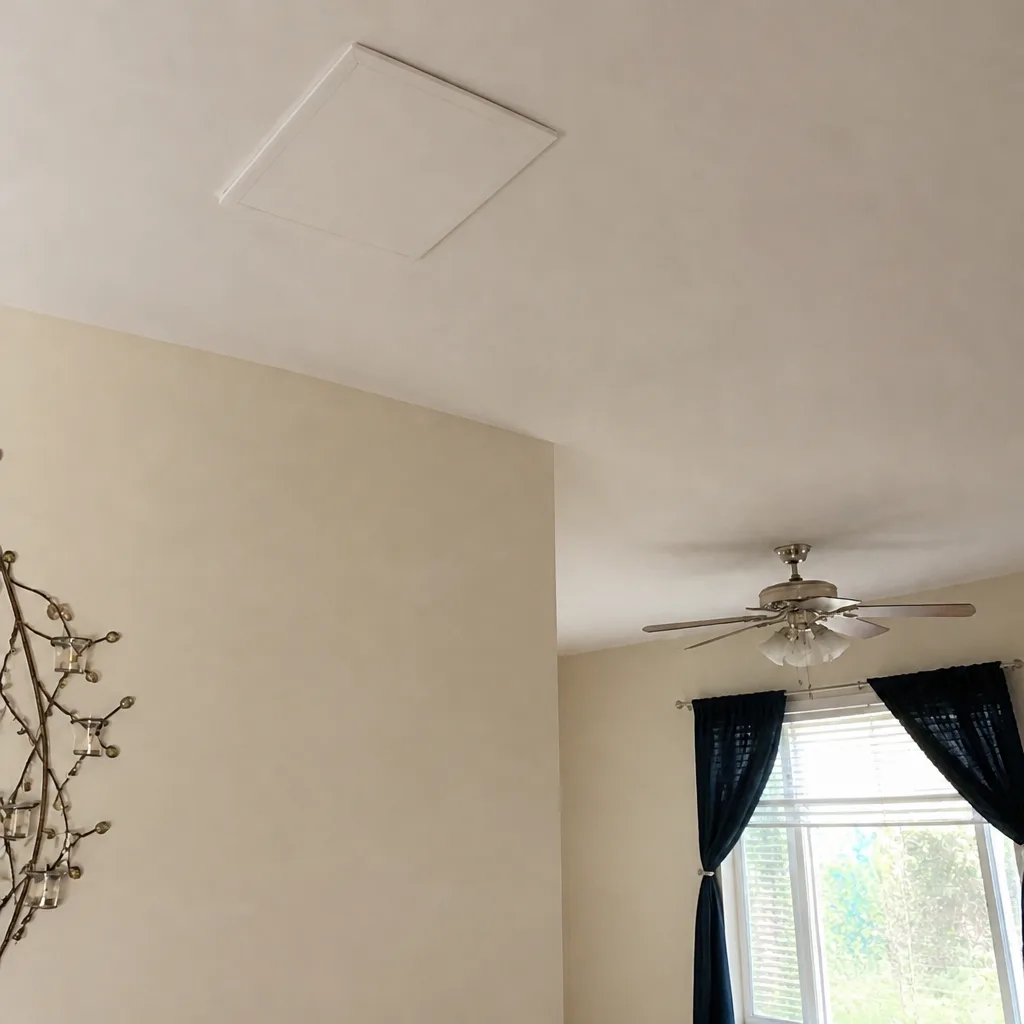
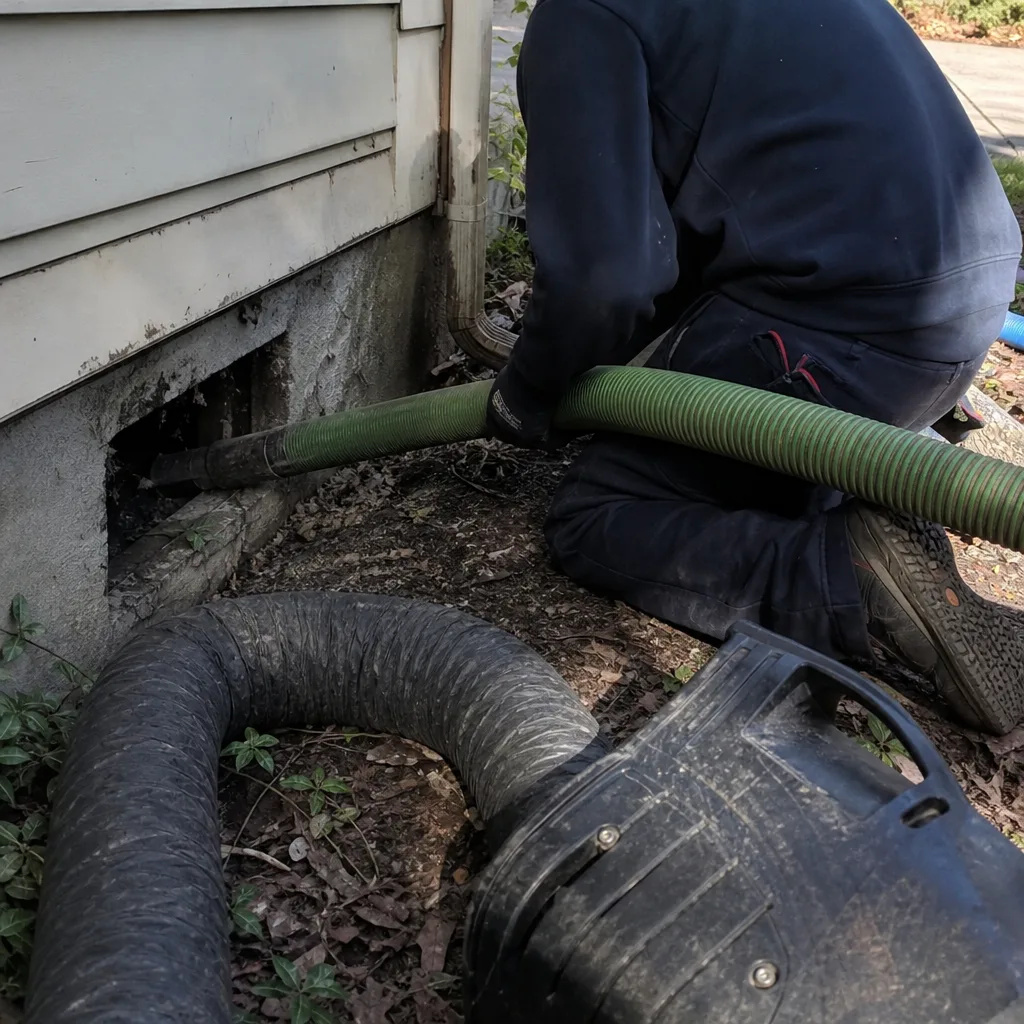
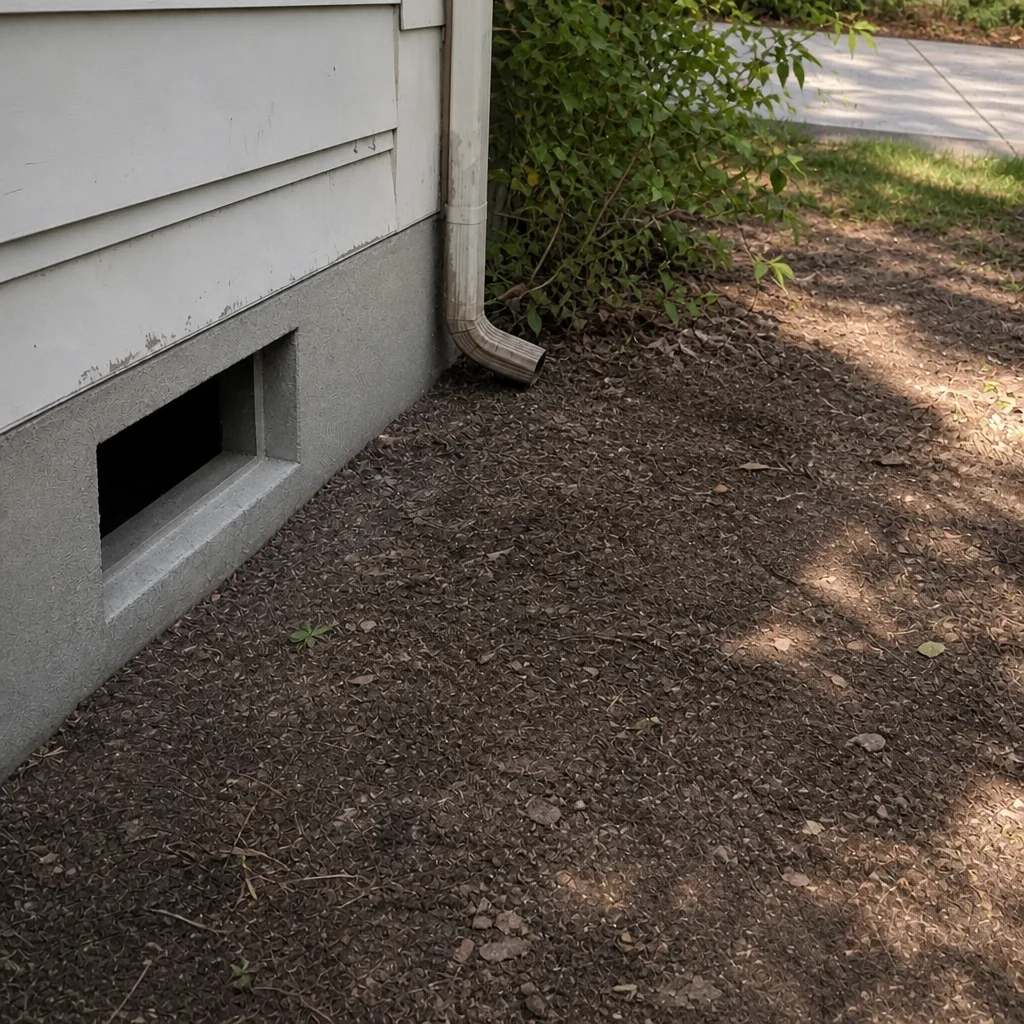
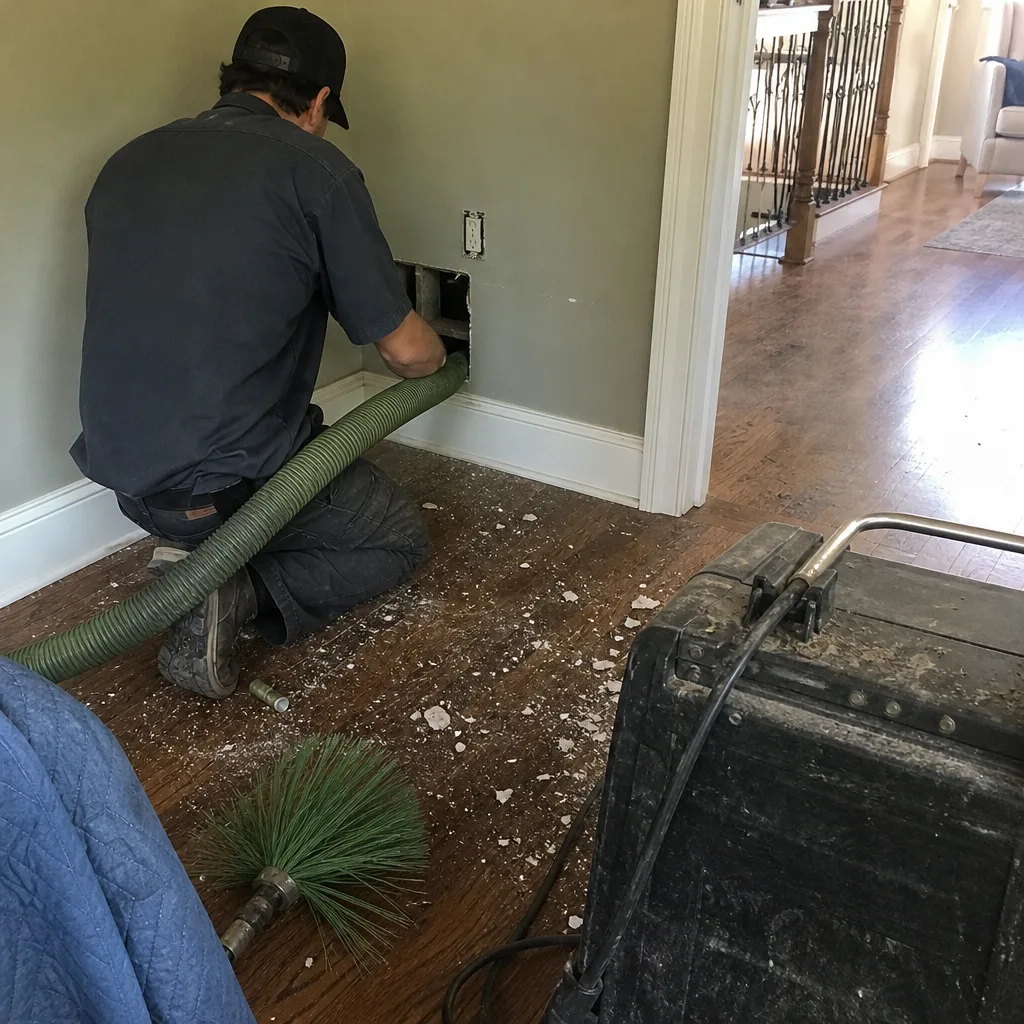
See the difference
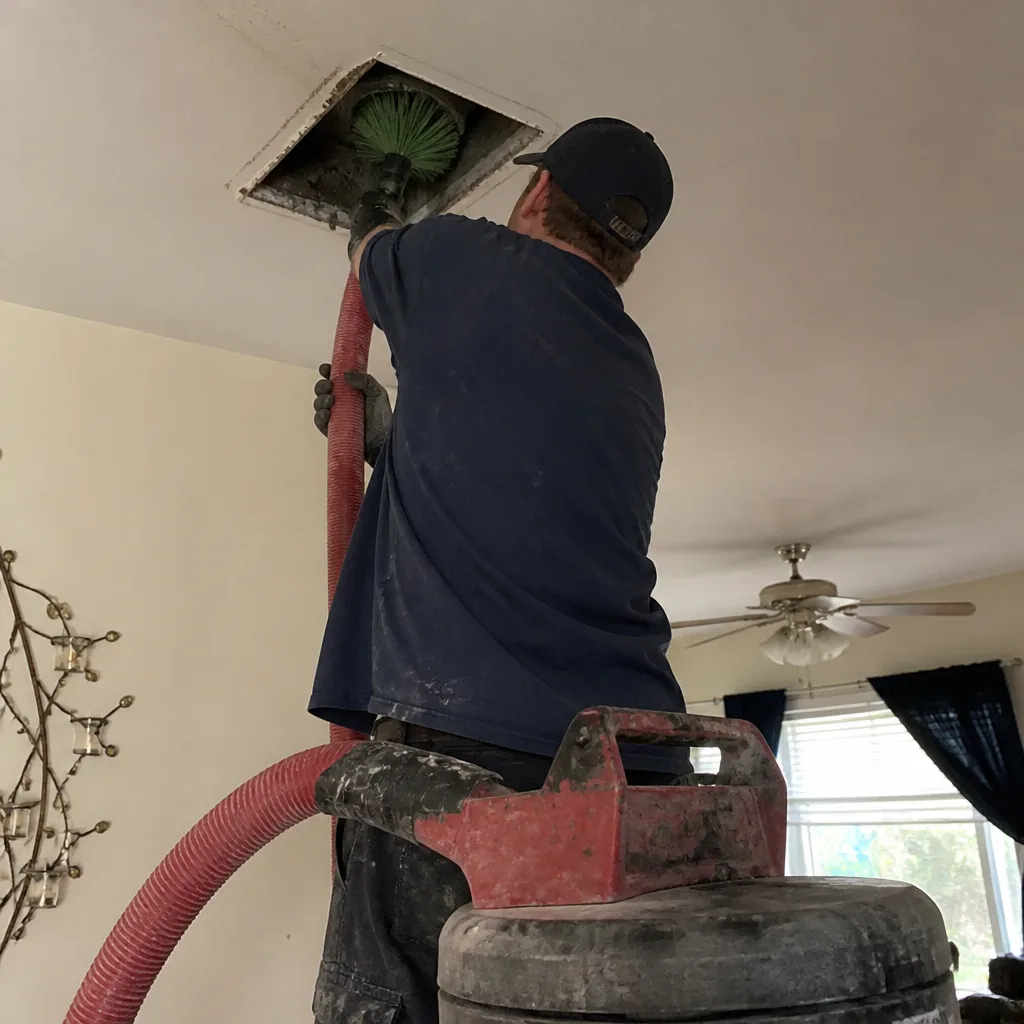 Before
 After
 Before
 After
 Before
 After
When to Call a Professional
Call a professional when you notice any of the following in your Ballantyne home: a persistent musty or dirty-sock odor from supply vents, visible dust patterns around vent covers, a first-heat smell that lingers past the first day of cold weather, allergy symptoms that flare indoors through July and August, visible moisture at the air handler cabinet, or a dryer that takes noticeably longer to dry a load of laundry. Also call if you’ve recently finished a renovation, moved into a home whose ductwork history you don’t know, or live near active construction.
Air Duct Cleaning Ballantyne offers free estimates in Ballantyne – call (855) 726-7841. We answer 24/7, with fast dispatch from 7am to 7pm, Sunday through Friday. Also reach out if you’re not sure whether your system is due – we can tell you from a short conversation.
Frequently Asked Questions
Once a year is the baseline for most single-family homes in Ballantyne, with cleaning timed to late spring (after the pollen peak) or early fall (before the heating season). Homes with pets, allergy sufferers, recent renovations, or a vented crawl space commonly need service twice a year. If your system was cleaned more than two years ago, you’re likely overdue.
Late May or early June, right after the oak and Bradford pear pollen season closes, is the strongest single window in Ballantyne. The secondary window is early October, before the furnace fires up. Mid-summer works if you’re dealing with an active musty odor or mold concern, because the problem is active then and easier to address before it gets pushed through the house all winter.
It can, if the duct system has leaks or the air handler cabinet holds moisture. Sustained high humidity inside the cabinet and any insulated flex duct that isn’t well sealed creates the conditions microbial growth needs – moisture plus a food source like dust and pollen. The fix isn’t a dehumidifier in the living space; it’s sealing the duct system so humid outside air stops entering, cleaning out the current debris, and sanitizing any surfaces that have been affected.
That smell is whatever accumulated in the duct system over the summer getting pushed into the living space the first time the air handler runs consistently. The most common culprits are dust, pollen residue and any mild microbial growth in a duct that sat damp through July and August. If the smell clears in a day, it’s a normal seasonal burn-off. If it lingers past that, the system should be inspected and likely cleaned before the heart of heating season.
A typical Ballantyne home runs $350 to $650 for whole-system cleaning, with larger multi-system homes in the $550 to $950 range. Sanitizing adds $150 to $350; duct repair and sealing typically adds $300 to $900 depending on scope. Prices are estimates – the written estimate after an assessment sets the final price. Call (855) 726-7841 for an exact quote; estimates are free.
Ask for before-and-after photos of your own ducts during the visit. A proper cleaning uses professional extraction equipment – Rotobrush or Nikro systems pull debris out under continuous negative pressure – not the shop vacuum that a low-cost operator might show up with. Confirm the quote covers the entire system (all supply and return runs plus the air handler), not a per-vent price. And ask whether repair and sealing are included in scope if leaks are found, because that’s where the value sits long-term.
The Bottom Line
Ballantyne’s climate creates four distinct contamination events per year, but only two of them really matter for scheduling – spring pollen load and summer humidity – and both are best dealt with at the same two checkpoints: late May/early June and early October. Household factors like pets, allergies, renovation history, home age and crawl space type shift the interval from annual to twice-a-year. The cleaning itself holds longer when it’s paired with repair and sealing, because a leak-free system stops the next season’s debris from getting in. If you’re not sure where your home sits on that schedule, a short conversation is worth more than a guess.
Call Air Duct Cleaning Ballantyne at (855) 726-7841 for a free estimate. We answer 24/7, with fast dispatch from 7am to 7pm, Sunday through Friday. Our technicians have up to 8 years of experience and work with professional-grade Rotobrush and Nikro extraction equipment, plus Abatement Technologies contamination control products. Every job is priced per system by the written estimate before any work starts.
Written by the team at Air Duct Cleaning Ballantyne.