
Last updated November 24, 2026
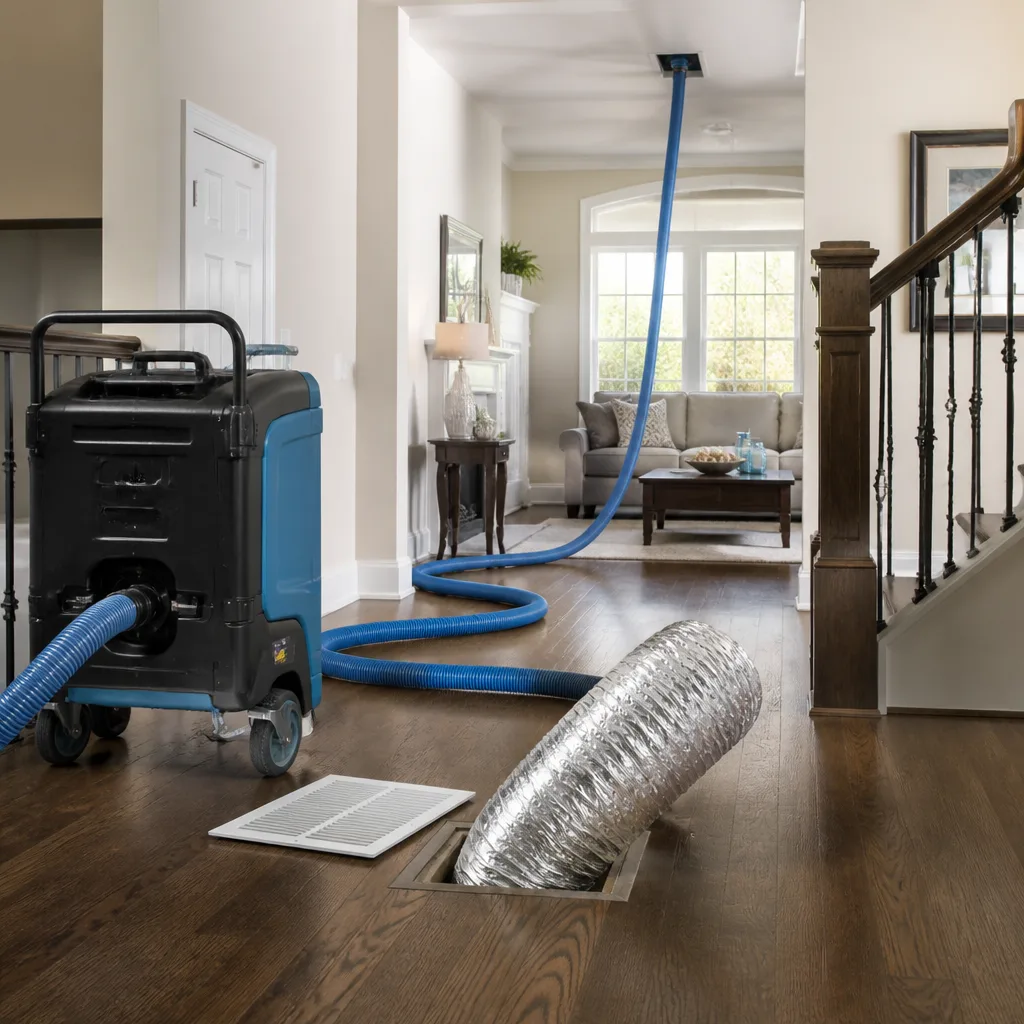 Whole-home duct cleaning
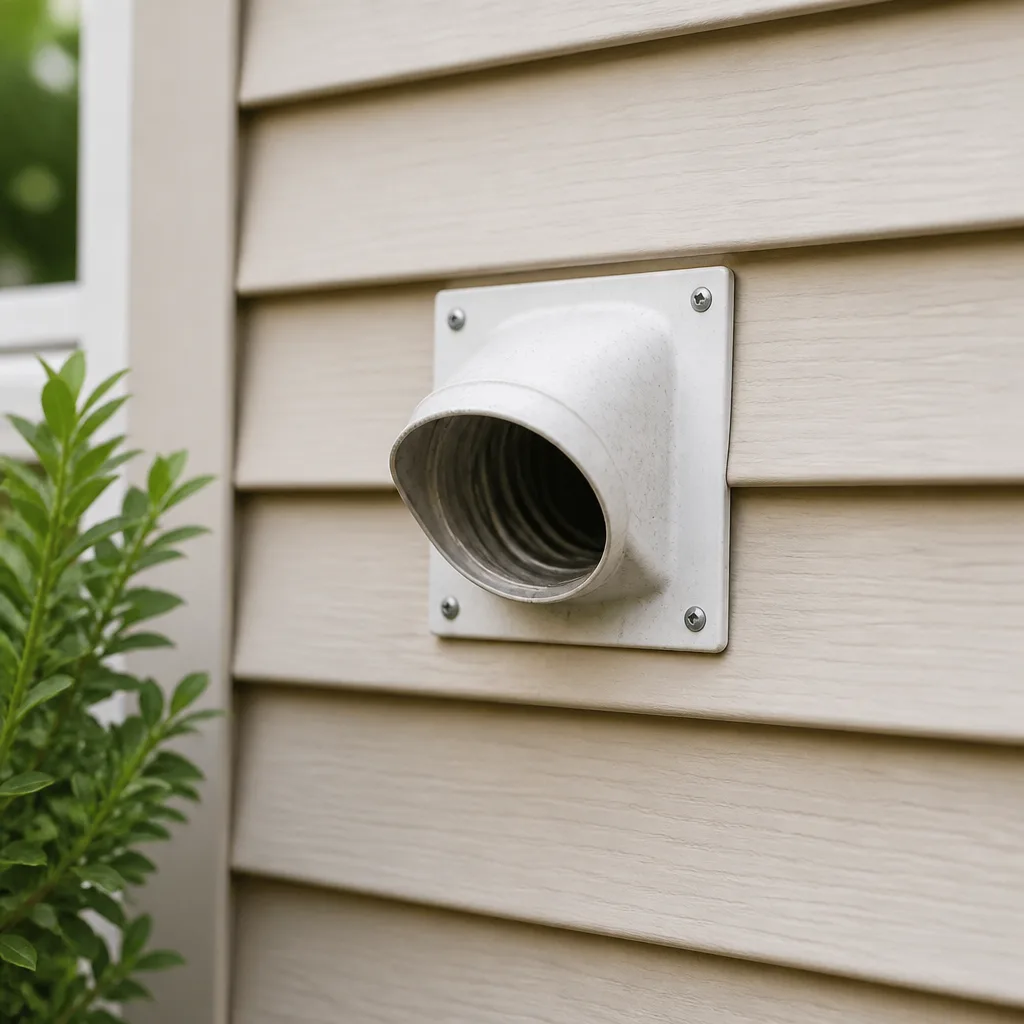 Dryer vent cleaning
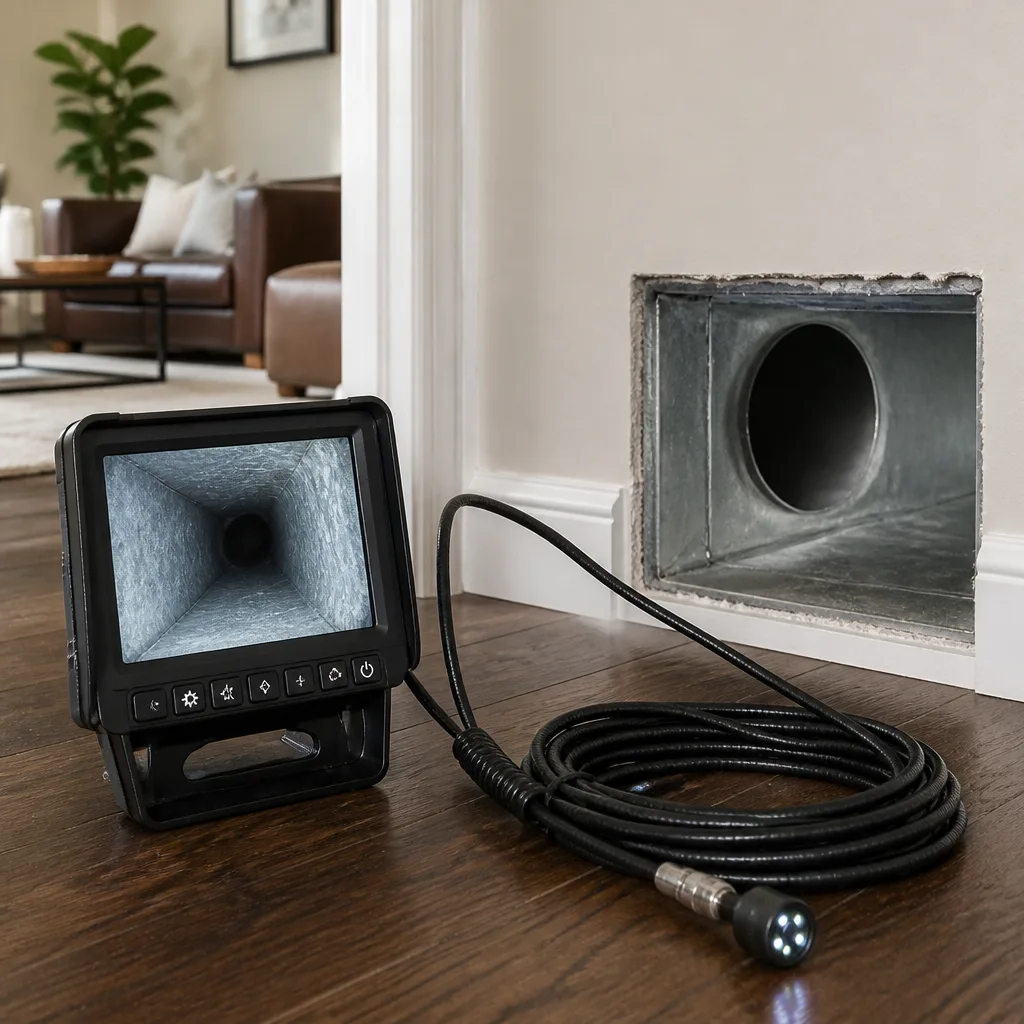 Camera inspection
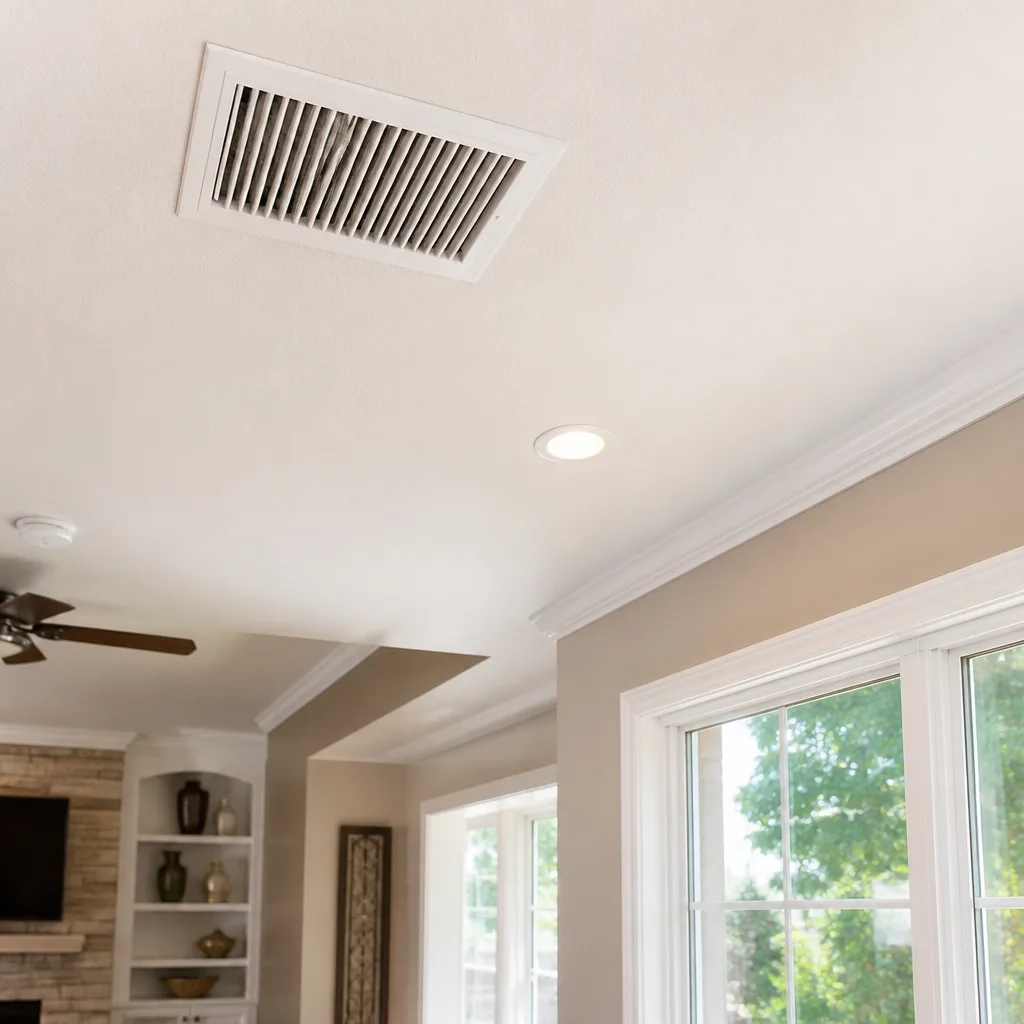 Sanitizing & deodorizing
Whole-system duct and dryer vent check with before-and-after photos - you see exactly what came out of your vents
That "$99 whole-house special" is a bait ad - the real number appears once they are in your hallway, or the "clean" is a shop-vac at the register. We photograph the inside of your ducts before and after instead.
Air Duct Cleaning Permits, Codes & Inspections in Ballantyne, NC: What You Need to Know
Cutting an access panel into a supply plenum so a rotary brush can reach the far end of a trunk line is a structural change to your HVAC system. Whether that cut needs a permit in North Carolina has almost nothing to do with the cut. It depends on what happens after the panel goes in. Here in Ballantyne, where most housing went up in the 1990s and 2000s and the home-sale paperwork is scrutinized closely, that distinction matters. This guide walks through the North Carolina Mechanical Code sections that apply, where cleaning stops and regulated repair begins, how Mecklenburg County handles unpermitted work, and what to ask before anyone modifies your system.
Quick Answer
Air duct cleaning by itself does not require a permit in North Carolina. Cutting an access hole, sealing duct joints with mastic, altering duct routing, or installing a UV germicidal light can cross into regulated work: mechanical permits under the NC Mechanical Code, and in the case of UV lights, a licensed electrical contractor. Sealing that goes beyond routine maintenance should be done by a licensed HVAC contractor, and any unpermitted modification becomes a disclosure problem when you sell a Ballantyne home.
Styles & brands we work with
- Whole-home duct cleaning
- Dryer vent cleaning
- Camera inspection
- Sanitizing & deodorizing
Table of Contents
- Does air duct cleaning require a permit in North Carolina?
- What the NC Mechanical Code says about duct modifications
- When duct sealing becomes licensed contractor work in Mecklenburg County
- Why UV germicidal lights need a licensed electrical contractor
- How Charlotte-Mecklenburg handles unpermitted HVAC work
- What to ask a duct cleaning contractor before any repair begins
- How to prepare for an HVAC inspection
Does air duct cleaning require a permit in North Carolina?
No. Routine cleaning of the duct system, supply and return, is maintenance and falls outside the permit system. Nobody from Mecklenburg County is going to inspect a brush running through a thirty-year-old flex duct. That’s the simple part.
The confusion starts because cleaning crews routinely find things. Flex duct crushed behind a joist. A trunk line that was never sealed at the collar. A return chase pulling air from an attic. Once the conversation shifts from “clean it” to “fix it,” the regulatory picture changes. North Carolina treats duct repair and alteration as mechanical work, and mechanical work has rules.
For Ballantyne homeowners, the practical point is this: ask two separate questions whenever a technician recommends something beyond cleaning. First, is this cleaning or is this repair? Second, if it’s repair, who is licensed to do it? Those questions protect you at resale, when a buyer’s inspector starts poking at the HVAC system and the title company wants a clean record.
If you want to understand what a straight cleaning visit covers, our air duct cleaning page spells out the scope. The regulatory line, though, is defined by the mechanical code, not by any contractor’s brochure.
What the NC Mechanical Code says about duct modifications
The North Carolina Mechanical Code is the document that governs residential duct systems, and two chapters matter most for this conversation. Chapter 6 covers duct systems: materials, installation, joints, supports, and sealing. Chapter 9 covers specific appliances and the venting arrangements tied to them. When a duct cleaning job turns into modification, these are the sections a code official will reach for.
Here’s how the chapters typically apply to work that starts as cleaning:
- Chapter 6, duct construction and installation: governs duct material, minimum thickness, support spacing, and how joints must be sealed. If a technician replaces a section of damaged duct or reroutes a trunk, the new work has to meet these requirements.
- Chapter 6, sealing: dictates where duct systems must be sealed and to what standard. Foil tape on a joint is different from a properly mastic-sealed collar, and the code is specific about what qualifies.
- Chapter 9, appliance venting connections: relevant when duct work intersects with the flue or venting of gas appliances, such as a furnace sharing a mechanical closet with the air handler. Getting this wrong is a safety issue, not a cosmetic one.
- Access provisions: duct systems need to be accessible for maintenance. Cutting an access panel to enable cleaning can be legitimate, but the cut and its cover have to be done in a way that preserves the system’s integrity.
Notice what isn’t on that list: the act of cleaning. The code doesn’t regulate a vacuum or a rotary brush. It regulates what the system looks like when the work is finished. A Ballantyne home built in 2001 with flex duct in the attic is subject to the same standards today as when it was permitted, and any modification should leave it in compliance.
A general rule: if the work involves new materials cut and installed into the duct system, it’s likely mechanical work. If it involves removing debris from an intact system, it’s maintenance. There’s a gray zone in the middle, and that’s exactly where a homeowner should ask who’s licensed to do what.
When duct sealing becomes licensed contractor work in Mecklenburg County
Sealing is the most common gray area in this trade, and it’s the one that catches Ballantyne homeowners off guard. A technician finishes cleaning, points out leakage at the joints, and offers to seal it. Sounds like a natural extension of the cleaning. Legally, it depends on scope.
Taping a handful of accessible joints as part of a cleaning visit is maintenance. It improves performance without altering the system. What crosses the line is anything described as duct alteration or repair under the mechanical code: replacing sections of duct, sealing an entire system as a performance measure, changing the routing of a trunk or branch, addressing leakage inside wall cavities or a conditioned attic, or adding new duct runs. That work is mechanical work, and in North Carolina it belongs to a licensed HVAC contractor.
We’ve seen plenty of homes in Ballantyne neighborhoods where this distinction was ignored. Mastic applied over a hole in flex duct. Foil tape covering a separated collar on a trunk line. The homeowner pays for sealing, the leak looks fixed, and six months later the tape has failed or the underlying damage has spread. Cleaning plus sealing is not a substitute for repair, and it isn’t a substitute for a licensed contractor when repair is what’s actually needed.
This is why having a repair capability in the same service relationship matters. If the work is cleaning, we clean. If the work crosses into repair, we can identify it, explain it, and help you get it done correctly. Our HVAC cleaning visits routinely surface these issues before they become expensive.
What the sealing sequence should look like
- Clean the duct system fully, supply and return, including the air handler cabinet if the scope calls for it.
- Identify and document all leakage points, with photos of the actual system, not stock images.
- Separate routine joint sealing (maintenance) from duct alteration (regulated work) in writing.
- For regulated work, confirm the performing contractor holds the appropriate NC HVAC license.
- If the work requires a permit, confirm the permit is pulled before the work starts, not after.
- Keep the documentation. Ballantyne resale transactions routinely ask for it.
Why UV germicidal lights need a licensed electrical contractor
A UV germicidal light is sold as an air quality add-on. Installation is electrical work. In North Carolina, the electrical code and licensing requirements apply to anything wired into your home’s electrical system, including a fixture installed inside a duct or an air handler cabinet. That means an electrical contractor licensed in the state, not just a duct cleaning technician who’s done it before.
The reason this matters isn’t paperwork for its own sake. UV fixtures draw power, need a proper disconnect, and have to be mounted in a way that doesn’t compromise the air handler cabinet or interfere with the blower. A fixture wired incorrectly is a fire and shock hazard, and a fixture wired into the wrong circuit is a nuisance every time you service the system.
We work with air quality components from Honeywell and Aprilaire, and we say this plainly: installing the fixture is not the same job as choosing the right one. The selection and placement is where the real decisions happen. A UV light positioned where it doesn’t contact moving air does nothing useful. A light in a system with chronic moisture problems treats symptoms while the source continues.
Sanitizing is a legitimate part of whole-system care, and we treat it as its own service line rather than a checkbox on a cleaning invoice. But the electrical portion of any UV or powered air quality device belongs to a licensed electrician. If a contractor offers to install a powered device without one, that’s a signal to slow down.
How Charlotte-Mecklenburg handles unpermitted HVAC work
Charlotte-Mecklenburg Code Enforcement responds to complaints about unpermitted construction, including mechanical work. The typical path for a property with unpermitted HVAC modifications runs through a code enforcement inquiry, a requirement to permit and inspect the work retroactively, and in some cases remediation if the work doesn’t meet code. You don’t need to have a complaint filed to end up in that process. It often starts when an inspector visits for something else and notices a modification with no record.
The resale consequences hit harder in practice than the enforcement itself. North Carolina requires sellers to disclose known defects and known material facts about the property. A homeowner who knows a modification was made without a permit, or who has reason to suspect it, has a disclosure obligation. Ballantyne sees a lot of resale activity, and buyers here tend to bring thorough inspectors. An unpermitted access panel cut into a supply plenum, a UV light wired without a permit, or a duct repair done without an HVAC license shows up in the inspection report and becomes a negotiation issue.
Here’s the practical checklist for a Ballantyne homeowner facing any duct repair or modification:
- Ask whether a permit is required before work starts. The answer depends on scope, and it’s fair to ask both the contractor and Mecklenburg County directly.
- Keep every document. Permits, inspection records, invoices that describe the scope of work, and before-and-after photos of the actual system.
- Record what was done and when. A one-page file with a photo of the work and the invoice attached saves arguments later.
- If you inherit unpermitted work, disclose it. Talk to your real estate attorney about the right way to handle it rather than assuming it won’t come up.
- Address it before listing. Retroactive permitting is usually simpler than negotiating a credit at closing.
The honest summary: most Ballantyne homes will never trigger a code enforcement visit for duct work. But the homes that do tend to be the ones where somebody wanted a same-week closing and skipped a step.
What to ask a duct cleaning contractor before any repair begins
This is the most important section in this guide. Cleaning is safe. Modifying is not, if the person modifying isn’t licensed to do so. Here’s what to ask, in order, before anyone cuts, seals, reroutes, or installs anything.
- “Is this cleaning or is this repair?” Ask the technician to put the answer in writing. The scope of work defines what license applies.
- “Who is licensed to do this work?” In North Carolina, duct alteration and HVAC repair belong to a licensed HVAC contractor. If the company doing the cleaning doesn’t hold that license, a separate licensed contractor needs to be involved.
- “Will a permit be pulled?” If the scope is mechanical work that triggers a permit, confirm in writing that your contractor will pull it. A permit is a buyer’s best evidence that the work was done correctly.
- “If a UV light or powered air quality device is being installed, who is the electrical contractor?” Ask for the name of the licensed electrician, not just for an assurance that it will “be handled.”
- “Will I get photos of my own system, before and after?” Not stock images. Not a generic brochure photo. Photos of the actual ductwork in your Ballantyne home.
- “What’s the flat price for the whole system, and is it agreed before work starts?” Per-vent pricing is where the industry’s bait-and-switch reputation comes from. A flat price per system, agreed in writing, is the fair structure.
- “What happens if damage is found during cleaning?” A duct cleaning company that finds damage and can’t repair it leaves you to find a second contractor. Ask upfront what happens if the cleaning surfaces a problem.
One thing worth stating clearly: our crews have up to 8 years of experience with professional-grade equipment from Rotobrush and Nikro. That’s technician experience. It doesn’t entitle anyone to skip the licensing check, and we’d never suggest it does. When the scope calls for a licensed HVAC contractor or a licensed electrician, we say so.
How to prepare for an HVAC inspection
Whether you’re pulling a permit for a duct modification, verifying work done before a sale, or asking your own inspector to look at the system, preparation makes the visit go faster and the findings go deeper. Here’s how to be ready.
- Collect the paper trail. Any permits, inspection records, and invoices for prior work. The inspector will want to see the scope that’s on file before looking at the physical system.
- Clear access. Make sure the inspector can reach the air handler, the return, and any attic or crawlspace panel that provides access to duct runs.
- Note what you know. A short written summary of anything you’ve had done or found helps the inspector focus on the right areas.
- Expect the inspector to look at the duct system, not just the appliance. The code applies to the entire system. Unsealed joints, sagging flex duct, and any modification without a permit are all on the table.
- Ask for the report in writing. Whether or not a permit was pulled, a written inspection report is useful for resale.
- If work is required, get it permitted. Retroactive permitting is normal. Skipping it isn’t.
For the non-mechanical side of cleaning, the prep is simpler: our technician will walk through what the visit covers, photograph the system before and after, and explain findings. The permit side is on the homeowner and the contractor, and it’s worth the ten minutes it takes to confirm the paperwork is right.
If you’re in a Ballantyne home with a dryer vent that hasn’t been cleaned in a while, that’s a separate item on the safety list. Lint buildup in a dryer vent is a leading cause of residential fires, and dryer vent cleaning is its own visit with its own access considerations under the building code. It’s worth asking about when scheduling anything else.
Common Mistakes to Avoid
- Assuming cleaning covers repairs. A clean duct system and a code-compliant duct system are two different things. Cleaning removes debris; it doesn’t fix crushed flex duct or separated collars. Ask which one you’re paying for.
- Letting a cleaning crew cut an access panel without confirming what happens next. The cut itself isn’t the issue. What gets installed, sealed, and permitted afterwards is. In Ballantyne, where homes sell quickly and often, an undocumented modification is a resale liability.
- Treating UV light installation as a duct cleaning add-on. It’s electrical work. If the installer isn’t a licensed electrician, the device may work today and fail inspection later.
- Sealing over a problem instead of fixing it. Mastic and foil tape over a hole in flex duct stop the symptom and hide the damage. Proper repair means the damaged section is replaced, not patched.
- Skipping the permit because the job is “small.” A small modification is still a modification. The formality of a permit is what protects you when a buyer’s inspector finds the work.
- Accepting a per-vent price without a written scope. Per-vent pricing is how the industry’s bait-and-switch reputation got built. Ask for a flat price per system in writing, with a clear description of what’s included.
- Not keeping photos. Before-and-after photos of your own ductwork are the simplest evidence that the work was actually done. If a contractor can’t provide them, ask why.
See the difference
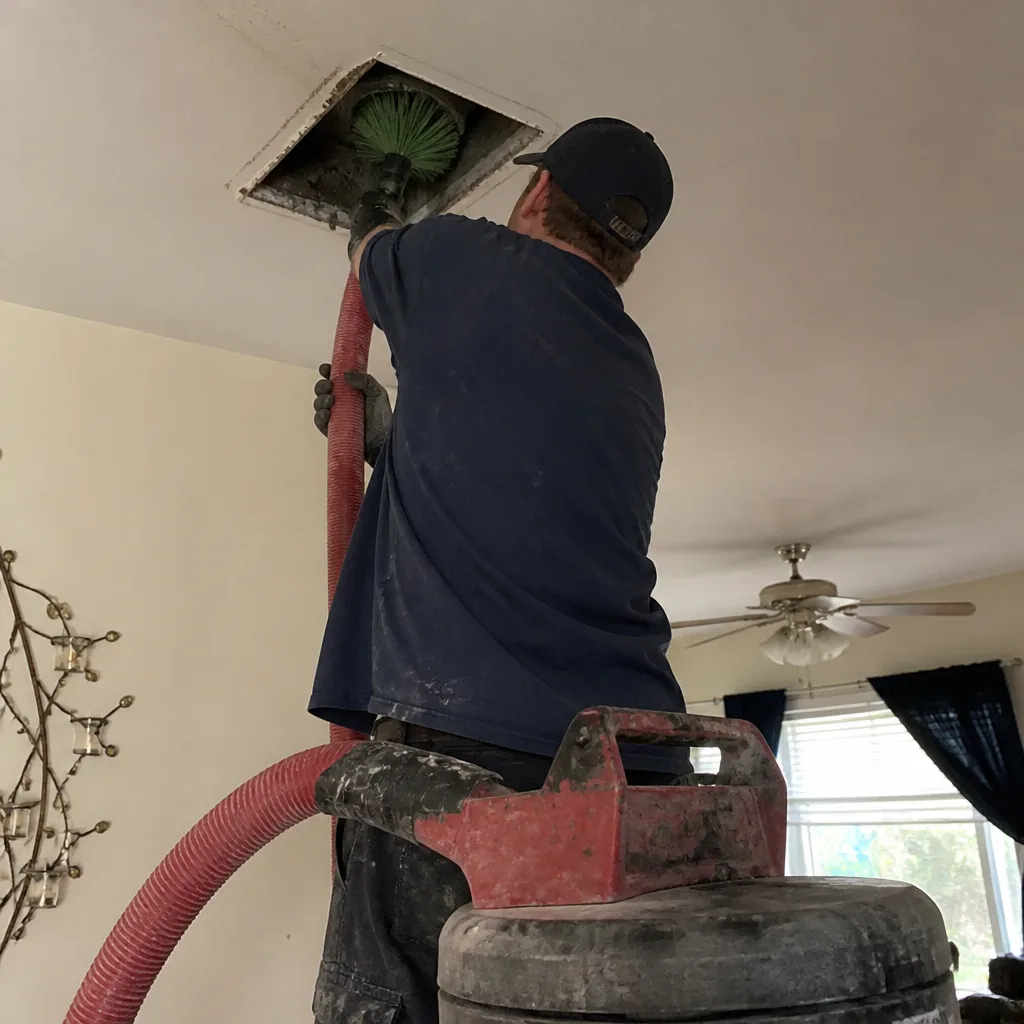 Before
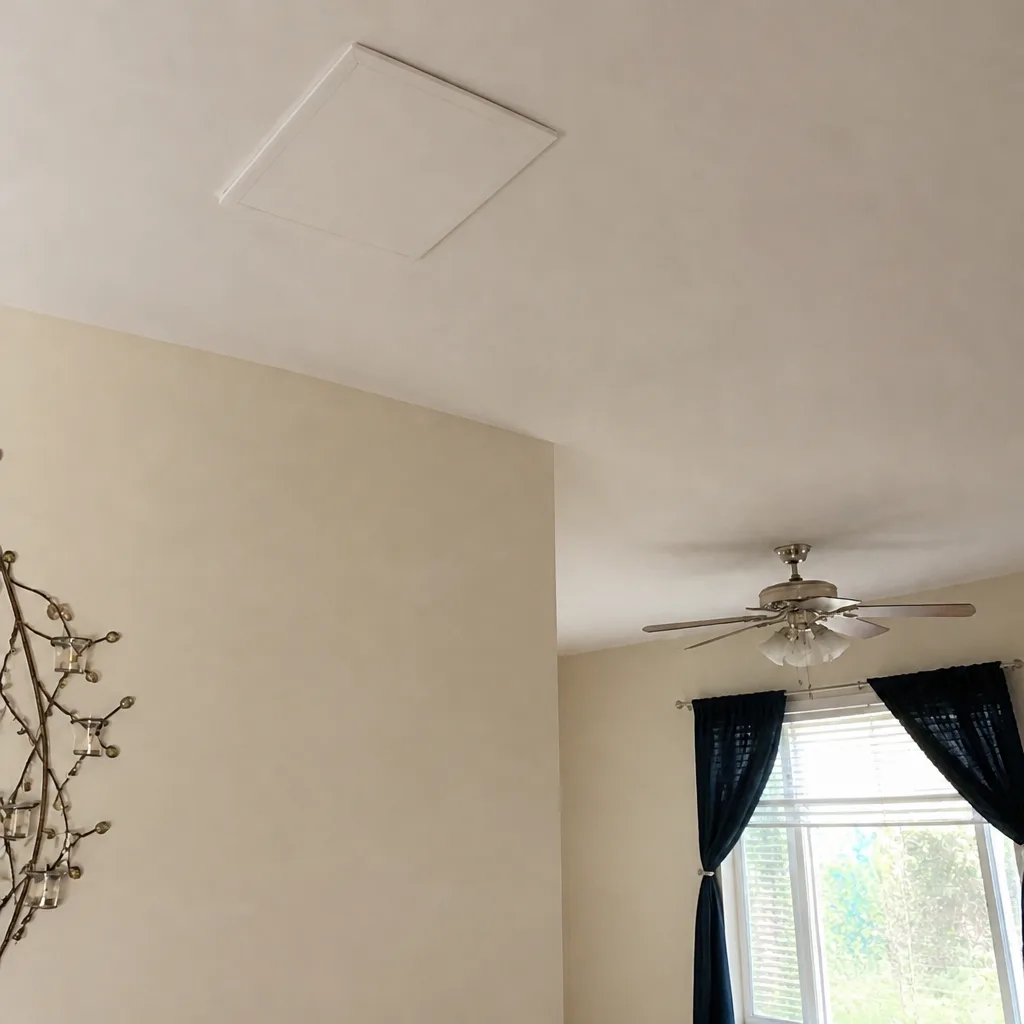 After
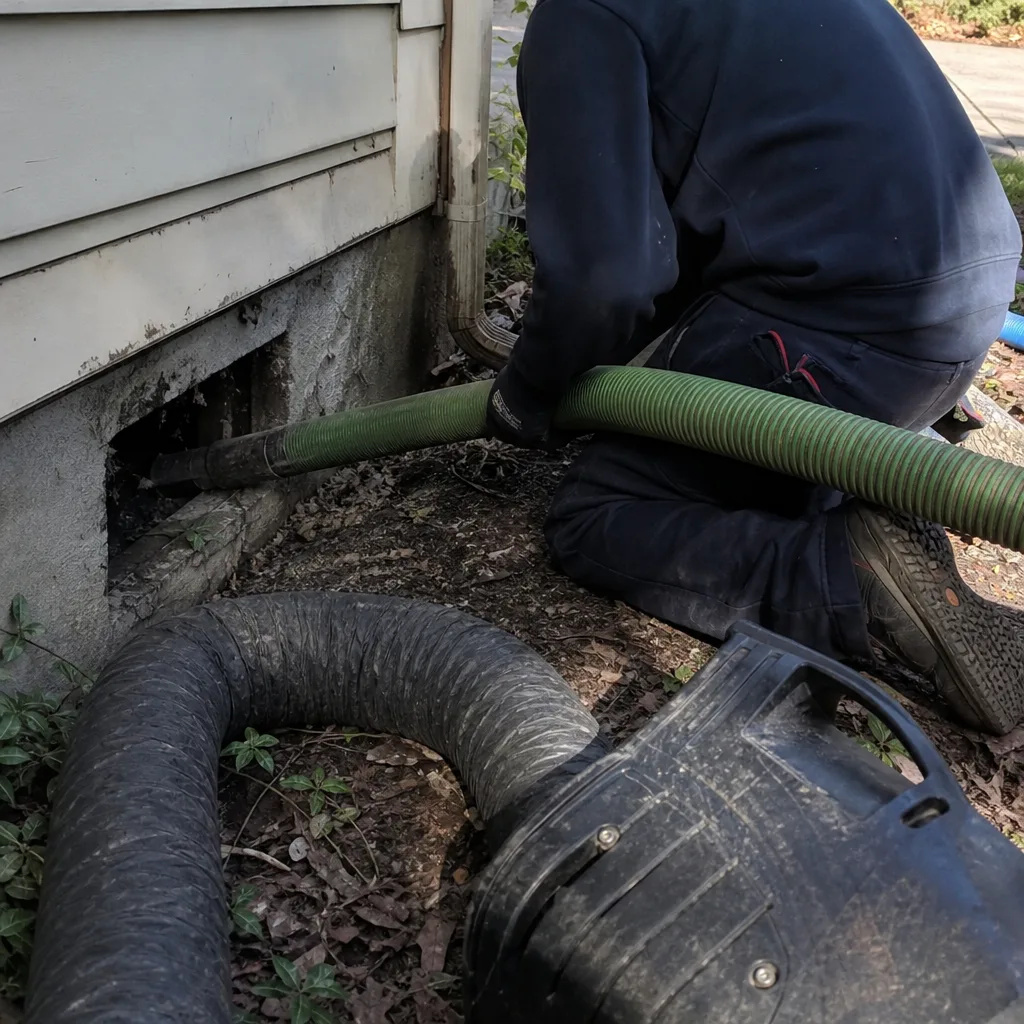 Before
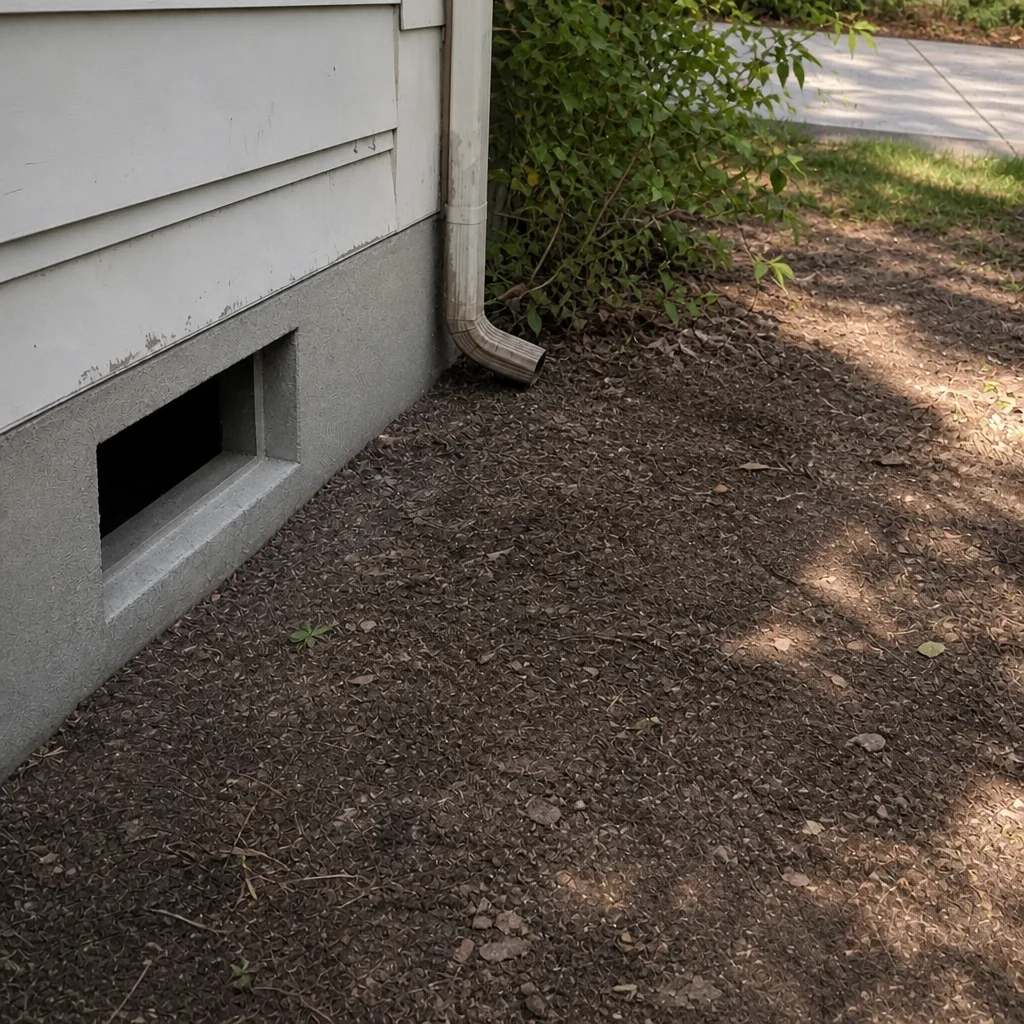 After
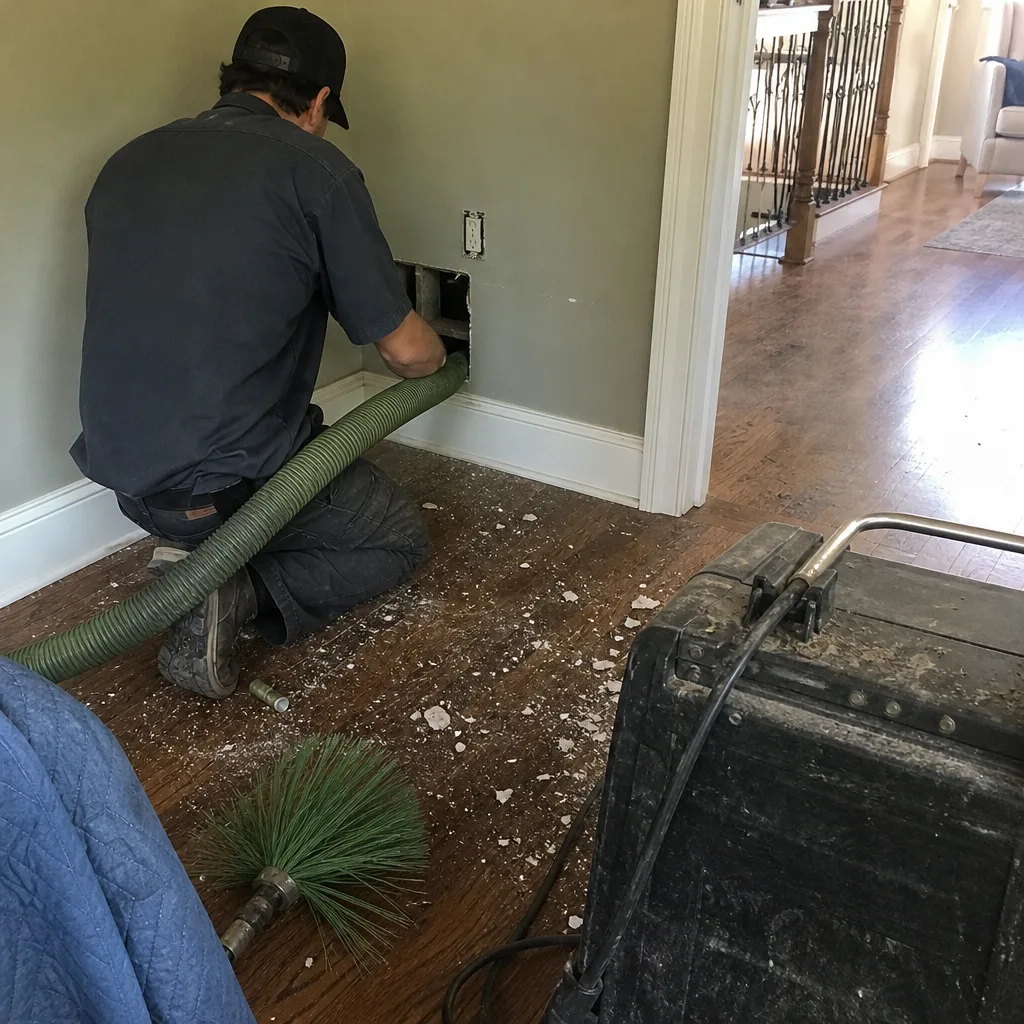 Before
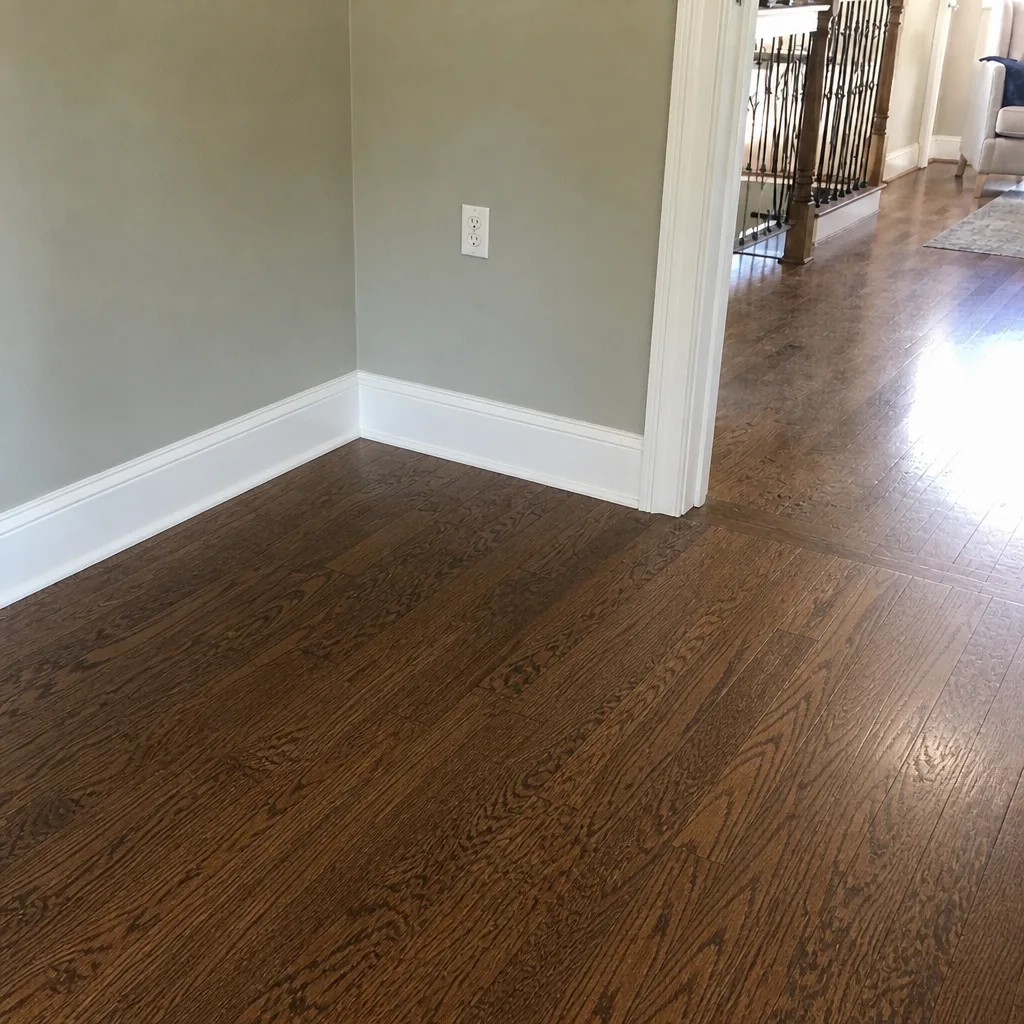 After
When to Call a Professional
Call a professional when you notice persistent musty odors that come back after a cleaning, when airflow drops in specific rooms of a Ballantyne home without an obvious cause, or when a contractor has pointed out duct damage and the scope is moving from cleaning into repair. Call if you’re preparing to sell and don’t have documentation for prior HVAC work. Call if a UV light or other powered air quality device has been added without a licensed electrician’s involvement. And call if you’ve recently renovated and aren’t sure what was done to the duct system during the remodel.
Air Duct Cleaning Ballantyne offers free estimates in Ballantyne. Call (855) 726-7841. We answer 24/7. Fast dispatch from 7am to 7pm, Sunday through Friday. The local pro we connect you with is licensed and insured as their state requires, and the written estimate sets the final price before any work begins. Photos of your own system are part of the standard visit, not an upgrade.
Frequently Asked Questions
No. Routine air duct cleaning is maintenance and does not require a permit in North Carolina. The permit question only arises when the work crosses into modification, such as cutting an access panel that alters the plenum, replacing sections of duct, adding new duct runs, or installing a powered air quality device. Call (855) 726-7841 if you’re unsure which category your visit falls into.
The North Carolina Mechanical Code is published by the state and available through the NC Department of Insurance and most municipal building departments. Chapter 6 governs duct construction and installation; Chapter 9 covers specific appliances and their venting connections. Your local building department or a licensed HVAC contractor can tell you which sections apply to a specific scope of work. For a general scope question, call (855) 726-7841.
It depends on scope. Taping or mastic-sealing accessible joints as part of routine maintenance is not a licensed contractor job. Duct alteration, replacing duct sections, sealing an entire system as a performance measure, or work inside wall cavities and conditioned attics is mechanical work that should be done by a licensed HVAC contractor in North Carolina. Ask the question in writing before any work begins.
Yes. UV germicidal lights and other powered air quality devices wired into your home’s electrical system are electrical work, and in North Carolina that work should be done by a licensed electrical contractor. A duct cleaning technician who offers to install a powered device without an electrician involved is a signal to slow down. For a full air quality scope, call (855) 726-7841.
Air duct cleaning in Ballantyne is typically priced as a flat rate for the whole system, not per vent, and the written estimate is what sets the final price. That structure is why we don’t quote per-vent teaser prices: a flat price per system, agreed before work starts, is the number you can actually plan around. Call (855) 726-7841 for a free estimate.
Disclose it and address it before selling. North Carolina requires sellers to disclose known material facts about the property, and a buyer’s inspector will likely flag unpermitted duct or HVAC work. Talk to your real estate attorney about the right way to disclose, and contact Mecklenburg County about retroactive permitting. It’s usually easier to address before listing than to negotiate a credit at closing.
The often-repeated “every few years” is a ballpark, not a rule. A Ballantyne home with a recent renovation, a pet, or a family member with allergies may benefit from a visit sooner; a clean home with no symptoms may wait longer. The most useful signal is a recommendation from a technician who has actually looked at your system. Call (855) 726-7841 to schedule a look.
The Bottom Line
Cleaning is maintenance. Modification is regulated work. That’s the entire distinction, and most Ballantyne homeowners never have to think about it until a contractor crosses the line in scope. When it happens, the questions are simple: is this cleaning or repair, who is licensed to do the repair, and will a permit be pulled if one is required. Keep the documentation. Keep photos of your own system. If a powered air quality device is being installed, confirm a licensed electrician is doing the wiring. If you’re planning to sell, address any unpermitted work before listing, not after. When in doubt, ask.
For a free estimate on air duct cleaning, duct repair and sealing, air quality and sanitizing, HVAC cleaning, or dryer vent cleaning in Ballantyne, call (855) 726-7841. We answer 24/7. Fast dispatch from 7am to 7pm, Sunday through Friday. Browse our Air Duct Cleaning Ballantyne home to see the full scope of what we do.
Written by the team at Air Duct Cleaning Ballantyne.