
Emergency Air Duct Cleaning Near Me: What Ballantyne Homeowners Should Do First
If water has entered your duct system in the last 48 hours, don’t call a cleaning company first. Call an HVAC technician to confirm the air handler is off and the system is dry enough to inspect. Cleaning a wet system, or restarting cooling before moisture is confirmed gone, can push microbial contamination into every room in the house. If you’d rather have someone walk you through the sequence, call (855) 726-7841.
What Actually Counts as a Duct Emergency in Ballantyne?
A true duct emergency is any situation where contamination is actively spreading or where moisture is sitting inside the system right now. Four situations qualify: soot and smoke residue after a fire, water intrusion from flooding or a condensate overflow, a rodent infestation discovered inside ductwork, and confirmed visible mold at a vent or register. Everything else, including musty odors, dusty vents, or a sudden increase in allergy symptoms, is urgent but not an emergency. That distinction matters because it determines whether you need a same-day visit or a scheduled one this week.
Ballantyne homes deal with a specific pattern we see often: Charlotte’s summer humidity load is heavy, and when an HVAC condensate line clogs or a drain pan overflows, water pools near the air handler and wicks into nearby flex duct. The duct exterior can look dry while the inner liner stays damp. That’s the scenario where a rushed cleaning makes things worse, because the contamination source is still active.
Here’s the short version of what qualifies and what can wait:
- Emergency (same-day): post-fire soot, standing water or visible moisture in ducts, rodent droppings or nesting material, confirmed mold growth
- Urgent but can wait 24-48 hours: strong musty odor with no visible water, a single damp spot near a register, recent water damage that’s already been dried
- Scheduled, not urgent: general dust buildup, pet dander, seasonal allergy complaints, pre-renovation cleaning
If you’re unsure which category you’re in, that’s a reasonable reason to call. We answer 24/7. Fast dispatch, 7am-7pm, Sunday through Friday.
The Order of Operations: Why Sequence Matters More Than Speed
Most duct cleaning problems after a water event or fire aren’t caused by the cleaning itself. They’re caused by cleaning in the wrong order. The correct sequence is: contain the source first, isolate the HVAC system second, inspect third, clean fourth. Skipping the containment step is exactly what turns a localized problem into a whole-home one.
Here’s why. If water is still entering, or if the air handler is running while contaminated ductwork is disturbed, the blower becomes a distribution system. Every supply register becomes an outlet for whatever was loosened. A company that arrives and immediately starts running a rotary brush without shutting down and isolating the system is doing mechanical work, not remediation.
- Source containment. Stop the water or the smoke source. Fix the condensate line, dry the pan, seal the fire-damaged area. Cleaning before this step is temporary at best.
- HVAC system isolation. The air handler gets shut off and the system gets sealed at key points so debris can’t migrate during cleaning.
- Inspection. A pre-cleaning camera inspection and moisture mapping identifies where contamination actually sits, not where it’s assumed to sit.
- Cleaning and sanitizing. Only now does mechanical cleaning begin, followed by treatment where microbial growth is confirmed.
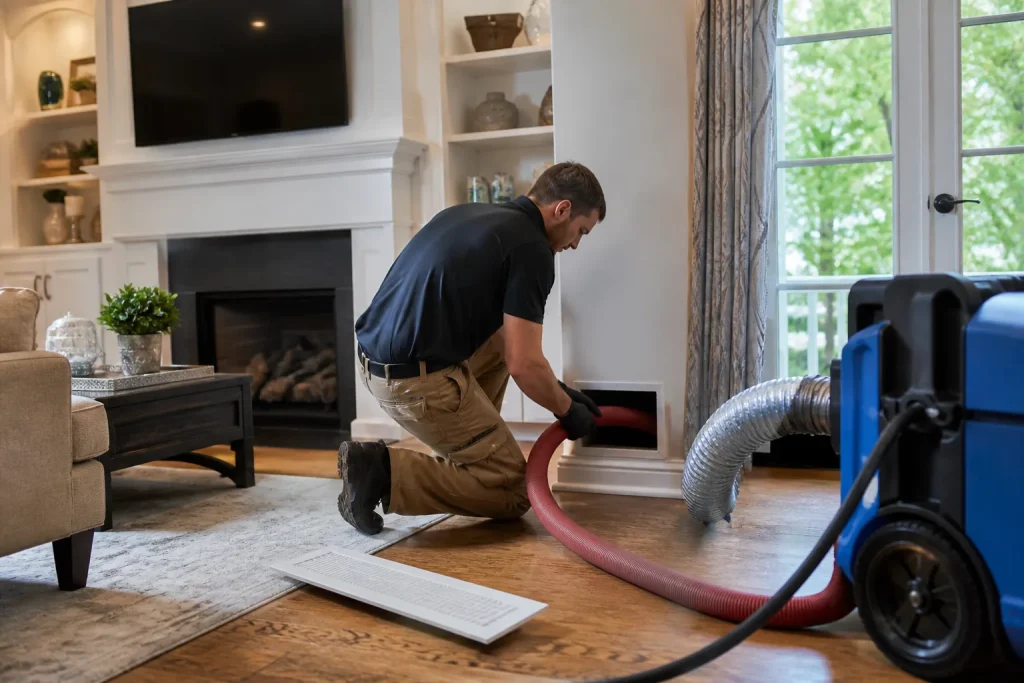
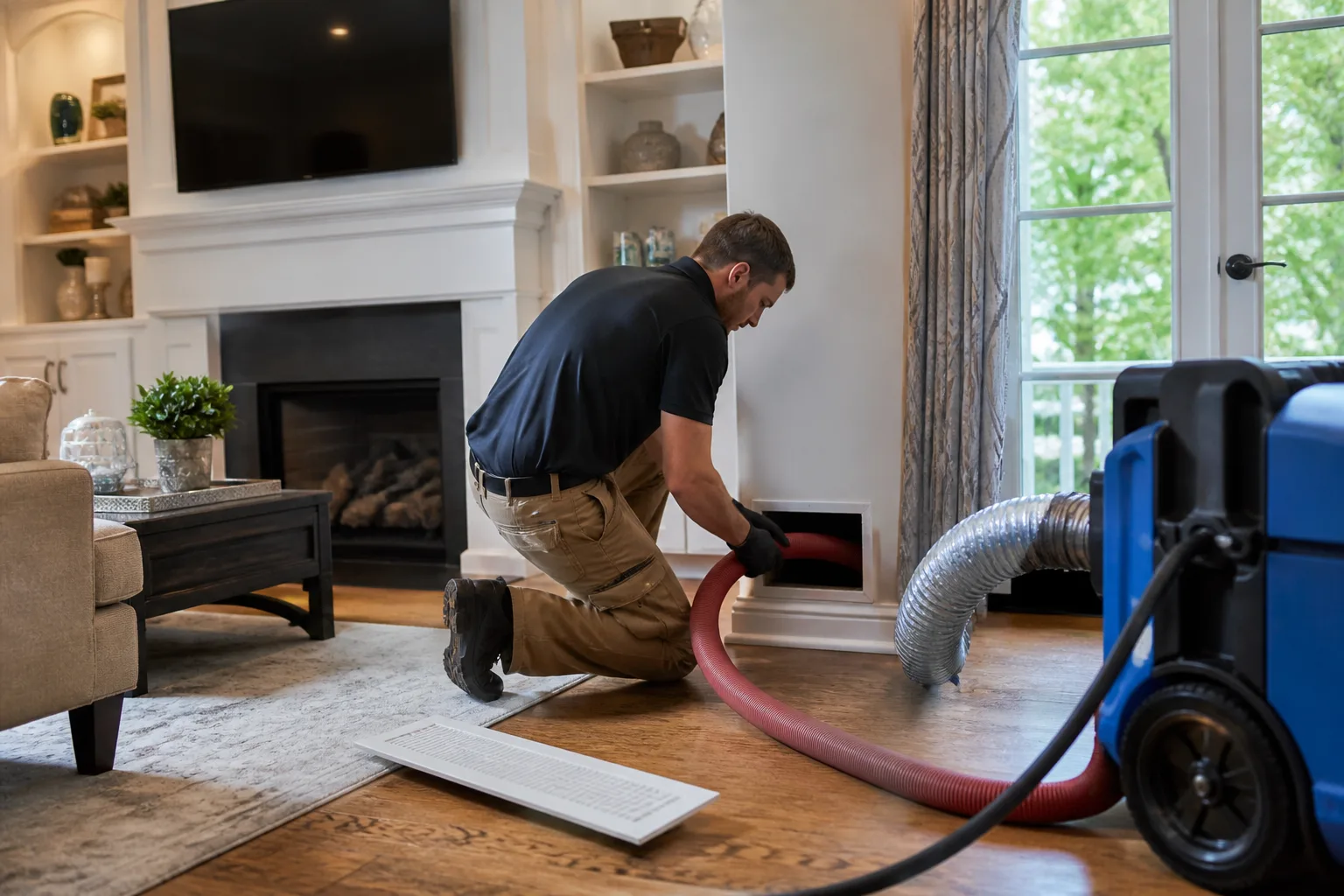
This is where professional-grade equipment matters. Rotobrush and Nikro systems give technicians control over extraction and containment that consumer-grade vacuums can’t match. When we handle a job in Ballantyne, the inspection and moisture mapping come before any brush goes into a duct.
What a Reputable Same-Day Duct Service Does on Arrival
A legitimate same-day response starts with questions and inspection, not equipment. The technician should ask when the water or smoke event happened, whether the HVAC system has run since, and whether anyone in the home has respiratory sensitivity. Then they inspect before they clean. A company that skips straight to the vacuum is telling you something about how the rest of the job will go.
What a thorough arrival looks like:
- Moisture mapping near the air handler and along duct runs to find hidden dampness
- A pre-cleaning camera inspection of supply and return ducts
- Source identification, meaning the technician can tell you what caused the problem and where it started
- A written scope before work begins, including whether repair or sealing is needed
- Containment setup before any cleaning equipment is switched on
What a rushed company skips: the moisture check, the camera, the source conversation, and often the containment. Those four omissions are how a localized problem in one Ballantyne hallway becomes a whole-house complaint two weeks later. If a technician can’t tell you where the contamination came from, they can’t confirm they removed it.
One more thing worth knowing: if inspection turns up torn flex duct liner, disconnected joints, or crushed runs, cleaning alone won’t solve it. Duct repair and sealing capability means the same visit can finish the job rather than handing you a punch list for a second contractor. We find it, we fix it.
What to Document Before Cleaning Begins in Ballantyne
If you think an insurance claim is likely, capture everything before anyone touches the ductwork. Once cleaning starts, the evidence of the original condition is gone. This is the single most common regret homeowners share after a water or fire event, and it takes about fifteen minutes to avoid.
Photograph and note:
- Wide shots of each affected room and close-ups of every vent and register
- The water line on drywall, duct insulation, or the air handler cabinet
- The condensate line, drain pan, and any standing water
- Visible mold, soot residue, or rodent evidence, with something for scale
- The date and time the damage was discovered and when the HVAC system was last running
- Any receipts from emergency drying or HVAC repairs already done
Keep a written timeline too. Insurers ask when the event happened, when the system was shut off, and who inspected it. A short dated note beats a good memory every time. Ask the cleaning company for their pre-inspection findings and moisture readings in writing as well, since those support the claim and confirm the scope of work.
Storm Water and Condensate Overflow: What It Does to Flex Duct
Flex duct has an inner liner that carries the air and an outer jacket that insulates it. When water gets between those layers, the liner can sag, separate from the jacket, or grow mold on the interior surface where you can’t see it. In Ballantyne, that scenario usually comes from two sources: heavy summer storm water finding its way into a crawlspace or attic run, and condensate overflow from a clogged drain line.
Condensate overflow is the quieter of the two. A slow drip near the air handler soaks insulation over weeks, and the first sign is often a musty smell when the system kicks on rather than a visible puddle. Storm intrusion is more obvious but does the same damage faster. Either way, the liner integrity is the question that determines whether cleaning is enough or whether a section of duct needs replacement.
This is why moisture mapping comes before cleaning in any Ballantyne water event. If the liner is compromised, cleaning it removes surface debris but leaves a damaged airway that will collect moisture again. Repair and sealing closes that loop. For the broader picture of what full-system service covers, see our air duct cleaning page.
When to Call a Pro
Call a professional if any of the following is true:
- Water, soot, or rodent evidence is inside the ductwork, not just near it
- You can see mold at a vent or smell a musty odor that returns after the system runs
- A fire, flood, or major leak has affected the HVAC system in the past few weeks
- You’re planning a renovation that will generate heavy dust through the return side
- You want documentation for an insurance claim
Two adjacent services are worth knowing about. If the concern is mechanical cleaning of the air handler and coils alongside the ducts, that falls under HVAC cleaning. If you’re also thinking about dryer safety, that’s a separate system and a separate job, covered under dryer vent cleaning. Full-system work through Air Duct Cleaning Ballantyne includes air quality and sanitizing with Honeywell and Aprilaire components, so cleaning and long-term air treatment can happen in one relationship rather than three.
Related services in Ballantyne: air duct cleaning, HVAC cleaning, duct repair and sealing, and air quality and sanitizing.
The Bottom Line
Duct emergencies are about sequence, not speed. Contain the source, isolate the system, inspect with a camera and moisture readings, then clean. Skip the first two steps and you risk spreading contamination through every room in a Ballantyne home. If water entered your system in the last 48 hours, get the HVAC side confirmed before any cleaning company starts work.
If you’re in Ballantyne and need help, Air Duct Cleaning Ballantyne offers free estimates. Call (855) 726-7841. We answer 24/7. Fast dispatch from 7am to 7pm, Sunday through Friday. Our technicians have up to 8 years of experience, and we work with Rotobrush and Nikro equipment for the extraction control these jobs demand.
Frequently Asked Questions
After water damage, ducts should be inspected within 24 to 48 hours and cleaned once the source is stopped and the system is confirmed dry. Cleaning a wet system spreads contamination instead of removing it. The inspection comes first, then the cleaning, in that order. Call (855) 726-7841 to get an inspection scheduled.
No. Running the system while ducts are wet can distribute moisture and microbial contamination to every room. Keep the air handler off until a technician confirms the system is dry and the source is fixed. That single step prevents most of the damage we see after a Ballantyne water event.
It’s an emergency if contamination is actively spreading: standing water or moisture in ducts, post-fire soot, rodent evidence, or confirmed mold. Musty odors and dust buildup are urgent but can typically wait 24 to 48 hours for a scheduled visit. When you’re not sure, call (855) 726-7841 and describe what you’re seeing.
Photograph every affected vent, the water line on duct insulation or drywall, the condensate line and drain pan, and any visible mold, soot, or rodent evidence. Note the date and time you found the damage. Once cleaning begins, the original condition is gone, and that documentation is what supports an insurance claim.
If you’re not sure what you’re looking at, call (855) 726-7841 for a free estimate. We answer 24/7. Fast dispatch from 7am to 7pm, Sunday through Friday.
Written by the team at Air Duct Cleaning Ballantyne.
Need Air Duct Cleaning Help?
Call Air Duct Cleaning Ballantyne - the local pro we connect you with is licensed and insured, with free written estimates in Ballantyne.
(855) 726-7841